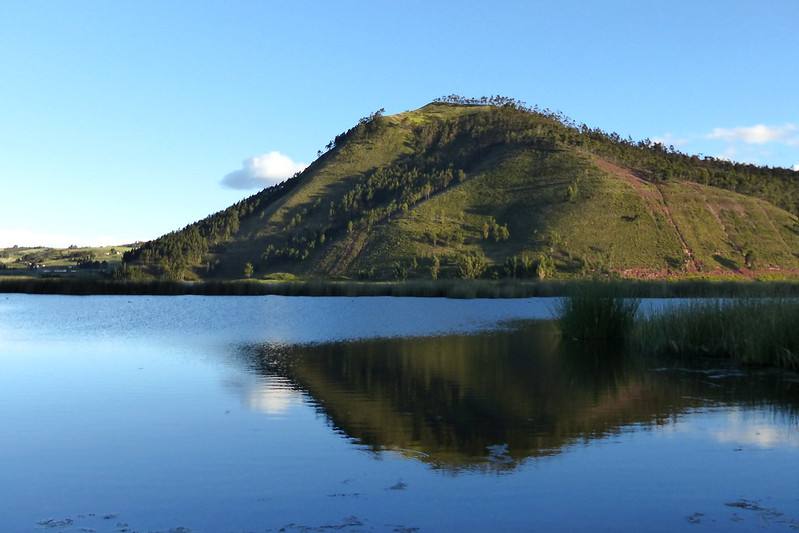
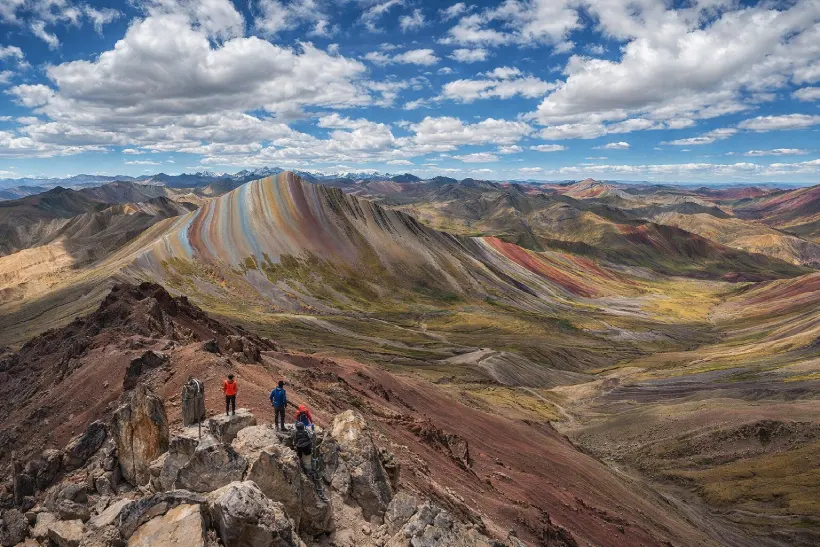
If you’re planning an adventure in Cusco and can’t decide between Humantay Lake vs Rainbow Mountain (also known as Vinicunca), you’ve come to the right place. In this blog, together with Kantu Peru Tours, we’ll compare both options in terms of distance, difficulty, crowds, altitude, and more so you can make an informed decision. Plus, we’ll share general traveler recommendations, tips for altitude acclimatization, and other useful advice.
Humantay Lake vs Rainbow Mountain
1. Hiking Difficulty: Humantay Lake or Rainbow Mountain
→ Humantay Lake: The hike is moderate and takes about 2 hours round trip. The trail is relatively flat and doesn’t require intense physical effort. You can also rent horses to make the journey easier.
→ Rainbow Mountain: The hike is more challenging, lasting around 4 hours round trip. The terrain is steeper and uneven, demanding better physical fitness.
Trekking a la Laguna Humantay
2. Tourist Crowds: Humantay Lake or Rainbow Mountain
→ Humantay Lake: Less crowded than Rainbow Mountain, offering a more peaceful experience.
→ Rainbow Mountain: One of Cusco’s most popular attractions, so expect large crowds, especially during peak season.
A group tour to the Rainbow Mountain
3. Altitude: Humantay Lake vs Rainbow Mountain
→ Humantay Lake: Located at 4,200 meters above sea level, making it more accessible for most visitors.
→ Rainbow Mountain: Reaches 5,200 meters above sea level, increasing the risk of altitude sickness.
Machu Picchu Altitude
4. Scenery: Humantay Lake or Rainbow Mountain
→ Humantay Lake: Famous for its turquoise waters and the stunning glacier surrounding it. The landscape is serene and less touristy.
→ Rainbow Mountain: Features vibrant-colored mineral-striped peaks, creating a unique and photogenic experience.
Sacred Valley Scenery in Cusco
5. Humantay Lake vs Rainbow Mountain in Rainy Season
→ Humantay Lake: Less affected by fog during the rainy season, making it a more reliable option for clear photos.
→ Rainbow Mountain: Often covered in fog during rains, which may obstruct visibility and photo opportunities.
6. Transportation: Humantay Lake vs Rainbow Mountain
→ Transport from Cusco: Both require a car ride from Cusco. You can book private transport or join an organized tour.
→ Accommodation: Only the Humantay Lake route offers capsule lodging, with an optional 2-day tour available.
Valle Rojo – Kantu Peru Tours
Prices Humantay Lake vs Rainbow Mountain
Humantay Lake
→ Entrance fee: Approximately 20 soles.
→ Transport: Renting a private vehicle from Cusco costs around 100–200 soles.
→ One-day tour: Around 70 soles per person, including transportation, entrance fee, lunch, and a bilingual guide.
→ Two-day tour: Priced between 40–130 USD per person, including transportation, capsule lodging, meals, and additional activities.
Rainbow Mountain (Vinicunca)
→ Entrance fee: Approximately 20 soles.
→ Transport: Renting a private vehicle from Cusco costs around 100–200 soles.
→ One-day tour: Around 80 soles per person, including transportation, entrance fee, lunch, and a bilingual guide.
¡Que vida el amor, en Vinicunca!
Physical Preparation & Gear
Regular exercise: Do cardio and strength training before your trip.
Essential gear: Pack everything needed for a safe and comfortable hike.
Arrive early: Get to Cusco with enough time to acclimatize.
Avoid alcohol & caffeine: These can dehydrate you and worsen altitude symptoms.
Rest properly: Give your body time to adjust to the altitude.
Montaña de Colores Vinincunca
Choosing Between Humantay Lake vs Rainbow Mountain
1. Experience level: Beginners or those preferring an easier hike to Humantay Lake. On the other hand, adventurous travelers with good fitness should do Rainbow Mountain.
2. Time available: Humantay Lake: 1-day trip or 2-day overnight option. The Rainbow Mountain requires a full-day excursion (no lodging).
3. Personal preferences: If you love glacial lakes & serene landscapes choose the Humantay Lake But if you rathher like drawn to vibrant-colored mountains the answer is Rainbow Mountain Tour.
Montaña de Colores Vinincunca
FAQs: Humantay Lake vs Rainbow Mountain
1. Which is easier, Humantay Lake or Rainbow Mountain?
Humantay Lake is easier—the hike is moderate and takes about 2 hours round trip. Rainbow Mountain Tour is more challenging and can take 4 hours.
2. Which is more crowded, Humantay Lake or Rainbow Mountain?
Rainbow Mountain is more crowded, especially during peak season. Humantay Lake is less touristy and offers a more peaceful atmosphere.
3. What’s the best time to visit Humantay Lake or Rainbow Mountain?
The best time for both is the dry season (May–October). Avoid the rainy season (November–April) to prevent fog and bad weather.
4. Do I need a guide for Humantay Lake vs Rainbow Mountain?
It’s not mandatory, but due to the physical demands, hiring a local guide is highly recommended for both routes. They provide valuable insights about flora, fauna, and culture, as well as assistance.
5. How far in advance should I plan for Humantay Lake or Rainbow Mountain?
If booking an organized tour, reserve at least 12 hours ahead. While there’s no entry limit, hotel pickups usually start around 3:40 AM.
Both Humantay Lake and Rainbow Mountain deliver incredible Cusco adventures, choose Humantay Lake for a peaceful, moderate hike with stunning turquoise waters, or opt for Rainbow Mountain if you’re up for a challenging trek with breathtaking colorful vistas.
If you need more information or assistance planning your Peruvian adventure, don’t hesitate to contact us at Kantu Peru Tours. And if you found this guide useful, feel free to share it with other travelers and help them enjoy a hassle-free experience.
Around the world, Peru is a country of breathtaking landscapes, where the Andes mountain range cuts across its territory, leaving behind snow-capped mountains in Cusco with majestic peaks that touch the sky and valleys that are a dream for many. These snow-covered mountains are not only challenges for mountaineers and natural treasures, but also spiritual guardians for the Andean cultures, who consider them sacred “Apus,” the millennial protectors of the Andean world. That is why, together with Kantu Peru Tours, we invite you to get to know the tallest and most important snow-capped mountains in Cusco and other mountain ranges in Peru.
A family in the Salkantay Treking to Machu Picchu
What is a snow-capped mountain?
A snow-capped mountain is a mountain that is permanently covered with snow and ice, usually located in high-altitude areas, such as the Andes mountain range, which branches into three main ranges in the country. In Peru, snow-capped mountains are important not only for their natural beauty, but also because they are sources of fresh water, as their melting snow feeds rivers and lakes. Moreover, many of them have a sacred meaning in the Andean worldview.
What are Apus in Perú?
Apus are mountain spirits or deities in the Andean worldview and are considered protectors of communities, providers of life and energy, and mediators between the human world and the spiritual world. Apus have been venerated since ancient times, and many people in the Andes offer them tributes and ceremonies to ask for well-being, good harvests, and protection.
Hombre andino en los nevados peruanos
What is the relationship between Apus and snow-capped mountains?
In Cusco, many snow-capped mountains are considered Apus due to their imposing presence and their importance in the lives of communities. For example, the Apu Ausangate (the Ausangate snow-capped mountain) is one of the most sacred in the region and is believed to have great spiritual power. During the Qoyllur Rit’i, an Andean festival, pilgrims climb the glaciers to honor these Apus and perform rituals. Thus, snow-capped mountains are not only sources of water and landscapes, but also pillars of the cultural and religious identity of Cusco.
Snow-Capped Mountains in Cusco of the Vilcanota Range
Ausangate Snow-Capped Mountain
The Ausangate is the tallest snow-capped mountain in the Cusco region and one of the most revered. In addition to being considered a protective Apu, it is the center of the Qoyllur Rit’i pilgrimage, one of the most important festivals in the Andean world. Snow-capped mountains in Cusco like the Ausangate offer impressive trekking routes, with glacial lakes and high-altitude grasslands that form a unique landscape. Moreover, local communities perform ceremonies and rituals in honor of this sacred snow-capped mountain.
→ Altitude: 20,948 feet above sea level.
→ Location: Quispicanchi Province, Cusco region.
Nevado-Ausangate-Nevados-en-Cusco
Callangate Snow-Capped Mountain
Continuing with the snow-capped mountains in Cusco, it is essential to mention the Callangate, also known as Collpa Ananta. It is the second tallest snow-capped mountain in the Vilcanota Range. Its melting snow feeds the Urubamba River basin, and it is considered the younger brother of Ausangate. Snow-capped mountains in Cusco like the Callangate are ideal for hiking and nature observation, with the opportunity to visit indigenous villages and learn about their culture and traditions.
→ Altitude: 20,046 feet above sea level.
→ Location: Quispicanchi Province, Cusco region.
Callangate-snow-capped-mountain
Snow-Capped Mountains in Cusco of the Vilcabamba Range
Salkantay Snow-Capped Mountain
The Salkantay is the tallest snow-capped mountain in the Vilcabamba Range and the second tallest in the Cusco region. It is known as the tutelary Apu of Cusco and has maintained a position of supremacy since the Inca period. Snow-capped mountains in Cusco like the Salkantay offer trekking with impressive views of condors and alpacas in their natural habitat and is part of one of the alternative routes to Machu Picchu.
→ Altitude: 20,574 feet above sea level.
→ Location: La Convención Province, Cusco region.
Salkantay Mountain
Humantay Snow-Capped Mountain
According to an ancient legend, Humantay is the youngest son of the Apu Salkantay and is responsible for distributing water to the population. Nowadays, many tours offer trekking to the Humantay Lake, where the emerald waters spectacularly reflect the landscape. It is an ideal place to enjoy nature and tranquility.
→ Altitude: 17,126 feet above sea level.
→ Location: Anta Province, Cusco region.
Humantay Lake drone view
Snow-Capped Mountains in Cusco of the Urubamba Range
La Verónica Snow-Capped Mountain
The La Verónica Snow-Capped Mountain, also known as Wakaywillque (Sacred Tear), is one of the tallest peaks in the Urubamba Range. Snow-capped mountains in Cusco like La Verónica offer trekking with impressive views of mountains, valleys, lakes, and rivers. Its rugged topography and steep slopes make it an exciting destination for adventure lovers.
→ Altitude: 19,003 feet above sea level.
→ Location: Urubamba Province, Cusco region.
Nevado La Verónica en Cusco
Chicón Snow-Capped Mountain
The Chicón, also known as the “Veil of the Bride,” is one of the most incredible snow-capped mountains for climbing and mountaineering. It also offers impressive views from its summit, where you can see other snow-capped mountains and the Sacred Valley. It is an ideal place for mountain and adventure lovers.
→ Altitude: 18,143 feet above sea level.
→ Location: Urubamba Province, Cusco region.
Nevado Chicón en Urubamba Cusco
Other Mountain Ranges in Peru
Huascarán – The White Giant of the Andes (Áncash)
Huascarán is the tallest peak in Peru and is located in the heart of the White Range. Snow-capped mountains in Cusco and other places like Huascarán offer mountaineering, trekking, and visits to glacial lakes in an environment of great natural beauty.
→ Altitude: 22,169 feet above sea level.
→ Location: Yungay and Carhuaz provinces, Áncash region.
Huascarán Cusco Snow-capped mountain
Yerupajá – The Most Challenging Summit (Huánuco, Áncash, and Lima)
Known as “the colossus of Huayhuash,” Yerupajá is one of the most complex challenges in South American mountaineering. Snow-capped mountains in Cusco and others like Yerupajá offer mountaineering and trekking in a high mountain environment with impressive views.
→ Altitude: 21,768 feet above sea level.
→ Location: Huayhuash Range, between the regions of Huánuco, Áncash, and Lima.
Nevado de Yerupajá en Perú
Coropuna – The Golden Mountain of the South (Arequipa)
Coropuna is the tallest mountain in southern Peru and an ancient dormant volcano. Snow-capped mountains in Cusco and other places like Coropuna offer trekking and visits to archaeological remains, demonstrating its importance as a sacred sanctuary.
→ Altitude: 21,083 feet above sea level.
→ Location: Castilla Province, Arequipa region.
Nevado Coropuna en Arequipa Perú
Huandoy – The Stone Hearth (Áncash)
Huandoy is known as “burning stone” or “mountain hearth” and is one of the most impressive snow-capped mountains in the White Range. Snow-capped mountains in Cusco and others like Huandoy offer trekking and mountaineering in a glacial environment with scenic routes.
→ Altitude: 20,981 feet above sea level.
→ Location: Yungay District, Áncash region.
Nevados en Perú – Huandoy
The snow-capped mountains in Cusco and other regions of Peru are majestic natural treasures that combine beauty, adventure, and spirituality, each snow-capped mountain, from Ausangate to Huascarán, offers unique experiences and a variety of activities. These places are not only destinations for mountaineers but also guardians of Andean culture.
Respecting and protecting these snow-capped mountains is crucial to preserve their majesty and cultural significance, and remember that for a complete and safe experience, Kantu Peru Tours offers comprehensive packages to visit Peru. We’re happy to assist with any questions or needs you may have!🌄✨
If you are traveling to Cusco and have some days off, you can visit the South Valley of Cusco, a destination that, although less known than the Sacred Valley of the Incas, offers a unique and authentic experience for travelers. That is why with this guide, together with Kantu Peru Tours, you will find all the information you need to visit it, such as its location, attractions, activities, tickets, and more, so that you have a perfect combination of history, nature, and culture that will make you feel as if you have discovered a hidden treasure.
What is the South Valley of Cusco?
The South Valley of Cusco is a region located southeast of the city of Cusco, in Peru. This valley is known for its important archaeological sites, such as Tipón and Piquillacta, and for its rich pre-Inca and Inca history. It was one of the first places inhabited in the Cusco Valley, with the Marcavalle culture populating it around 1000 B.C.
Turistas en la ruta del Bároco Andino al sureste de Cusco
Where is the South Valley located?
If you plan to visit the South Valley, you just need to travel 30 kilometers south of the city of Cusco, which means you can get there in approximately one hour by car. Most of the towns that make up the South Valley belong to the provinces of Canchis and Quispicanchis.
Mapa para llegar al Valle Sur de Cusco desde la Plaza de Armas
Activities and Attractions in the South Valley of Cusco
Tipón “Inca Hydraulic Engineering”
The archaeological complex of Tipón is a marvel of Inca engineering that should not be overlooked, as it is one of the best examples of Inca agricultural terracing. Here, ancient engineers transformed the land into a series of agricultural terraces that perfectly adapt to the terrain. What makes Tipón even more impressive is its irrigation system, which is a true example of the wisdom and precision of the ancient builders. This system of canals and water reservoirs not only allowed for efficient irrigation of crops but also served as a mechanism for controlling temperature and humidity on the terraces.
A tourist in Tipón complex in the South Valley of Cusco
The Disappeared Village of Piquillacta
Piquillacta is an impressive testament to ancient urbanism in Peru, built by the Wari culture between 700 and 900 A.D. This pre-Inca citadel is one of the largest and best-preserved in the region. It is said to have been an important political and administrative center during the Wari period, and its architecture is an example of the advanced urban planning of the time. The site consists of a series of rectangular structures, plazas, and streets that form a perfect geometric pattern.
→ Entry with the General or Partial Tourist Ticket.
Pikillacta en el Valle Sur del Cusco
Raqchi Archaeological Complex
This site in the South Valley of Cusco combines history and religion in one place, known as the “Temple of Huiracocha” or the “Inca Parthenon.” Raqchi was a pre-Hispanic religious and political center of great importance. This place was dedicated to the creator god Huiracocha, and its architecture is an example of the grandeur and devotion of the ancient Peruvians. The main temple of Raqchi is an impressive structure built with stone and adobe, which rises above the valley and offers a panoramic view of the region.
→ Entry with the General or Partial Tourist Ticket.
Turista en Raqchi Cusco Perú
Andahuaylillas Church
Known as the “Sistine Chapel of the Americas,” this church is an impressive example of how religion and art merge in one place. Built in the 17th century, it houses frescoes that are a true artistic wonder. In addition to the frescoes, it also features impressive architecture that is worth exploring. Its baroque façade and richly decorated interior are a testament to the skill and creativity of the artists and architects of the time. Visiting the Andahuaylillas Church is an experience that combines artistic beauty with spirituality and is a must-see for any lover of art and history.
→ Entry with a symbolic amount of 10 Soles.
Iglesia de Andahuaylillas in the South Valley of Cusco
Huacarpay Lagoon
This place is ideal in the South Valley of Cusco for those who seek to escape the hustle and bustle of the city and enjoy the tranquility and beauty of nature. Moreover, the lagoon is an important habitat for a wide variety of birds, making it a perfect spot for birdwatching enthusiasts. You can take a walk around the lagoon and enjoy panoramic views of the valley while observing the birds flying and perching on the water. In addition to birdwatching, Huacarpay Lagoon also offers opportunities for boat rides and picnicking on its shores.
→ Entry with a symbolic amount of 5 or 10 Soles.
Vista del Valle Sur del Cusco desde Pikillacta
Traditional Villages
The South Valley of Cusco is filled with traditional villages that offer a unique glimpse into rural life in Peru. Two of the most notable villages are Saylla and Oropesa.
→ Saylla is known for its chicharrón, a traditional dish of fried pork that is a delight for food lovers. Here, you can visit the local markets and try this typical dish while enjoying the welcoming atmosphere of the village.
→ Oropesa, on the other hand, is known as the city of bread. This village is famous for its artisanal bread, which is baked in traditional clay ovens as in the San Pedro Market.
Mercado de San Pedro Cusco
South Valley Tourist Tickets
Tickets to visit these places are already organized by MINCETUR. In fact, you can currently purchase them with the Partial Tourist Ticket or the General Tourist Ticket, which cost 70 and 140 soles, respectively. Note that both types of tickets only guarantee access to Tipón and Pikillacta in the South Valley of Cusco. The difference is that the first one gives you access to the most famous museums in Cusco to visit in 2 days, while the second one guarantees entry to many more attractions that you can visit in 10 business days.
Boleto Turístico para el Valle Sagrado
Recommendations and Precautions
1. Acclimatization: Make sure to acclimatize in Cusco for at least two days to adapt to the altitude of 3,300 meters.
2. Respect for Ruins: Remember that these are heritage sites and should be respected.
3. Connecting with Locals: Talking to locals can enrich your experience and give you a unique perspective on the local culture.
4. Learning Quechua: Learning basic Quechua words can open the door to a deeper connection with the people and their culture.
Ollantaytambo town
What to Pack in Your Backpack for the South Valley?
1. Water and snacks: It is important to stay hydrated and have something to eat during the tour.
2. Comfortable and appropriate clothing for the weather: Bring lightweight clothing for the daytime heat and warm clothing for the nighttime cold.
3. Comfortable footwear: Walking or hiking shoes are ideal for exploring the trails and ruins.
4. Camera: You won’t want to miss the opportunity to capture the stunning landscapes and archaeological sites.
5. Documentation and money: Don’t forget your ID or passport, and bring some cash for minor expenses.
Aves en el trekking al Lago Humantay
Frequently Asked Questions
1. What is the best time to visit the South Valley of Cusco?
The best time to visit the South Valley is during the dry season, from May to October. During these months, the weather is more stable and rainfall is scarce, which facilitates the exploration.
2. Is it necessary to hire an organized tour to visit the South Valley?
Hiring an organized tour is not mandatory for the South Valley of Cusco, but it can be an excellent option for those seeking comfort and a deeper understanding of the valley’s history and culture.
3. Is it safe to visit the South Valley of Cusco?
The South Valley of Cusco is a safe destination for tourists. However, as in any place, it is important to take basic precautions such as looking after your personal belongings and not leaving them unattended.
Tour Valle Sur en Cusco| Parque Arqueológico de Tipón
Finally, the South Valley of Cusco is a destination full of history, culture, and natural beauty that has something to offer everyone. Whether you decide to explore it on your own or on an organized tour, this valley will provide you with an unforgettable experience. Make sure you are prepared and enjoy every moment in this wonderful place.
If you need more information or assistance in designing your packages to visit Peru, do not hesitate to contact us, as Kantu Peru Tours offers comprehensive services. We’re happy to assist with any questions or needs you may have!🌄✨
Cusco, the navel of the Inca world, is a destination that demands preparation. That’s why these recommendations for traveling to Cusco in 2025 are the result of years of local experience and tourist knowledge. If you want to fully enjoy this cultural wonder in 2025, pay attention to each of these Cusco recommendations for traveling that we have prepared for you, together with Kantu Peru Tours.
1. Book your tickets in advance
In 2025, Cusco is expected to remain one of the most visited destinations in Peru, where tickets to attractions like Machu Picchu often sell out, especially during the high season (June-August). Therefore, as part of these Cusco recommendations, we suggest purchasing your Machu Picchu ticket online at least 3 months in advance, and likewise, your train tickets to Machu Picchu.
→ Tourist Train: It is very difficult to find available seats at the last minute on the local train and even more so for the tourist train.
Tu boleto cultura
2. Acclimatization: Avoid altitude sickness
Cusco is located at 3,400 meters above sea level, and altitude sickness (soroche) can ruin your first few days. Keep in mind that natural attractions such as the Rainbow Mountain or Humantay Lake are at higher altitudes, exceeding 4,000 meters above sea level. Therefore, it is not recommended to visit them during the first days of your stay in Cusco. Follow these Cusco recommendations:
→ Take 2 days to acclimatize before doing demanding tours.
→ Consider altitude sickness pills (consulting a doctor).
Escaleras de la muerte Huayna Picchu
3. Choose the best time to travel
Continuing with these Cusco recommendations, remember that to fully enjoy your Peruvian adventure, it is key to choose the best time to travel according to your preferences. Keep in mind that there are only two very distinct seasons:
→ Dry season (April-October): With clear skies, ideal for trekking and photography, but with more tourist traffic.
To ensure your trip through Peru is safe and hassle-free, it is essential to choose reliable tour operators. Avoid scams! Always check that the agency has an official license from MINCETUR and read traveler reviews in addition to the following Cusco recommendations:
→ Check that the agency has a tourism license (DIRCETUR).
→ Compare prices and read reviews on TripAdvisor or Google.
→ Ensure they have a physical office in the city center.
Machu Picchu Guided Tour
5. Safe transportation: Plane, bus, or train?
This recommendation for traveling to Cusco covers a critical aspect. Book your Lima-Cusco flights in advance, choose Peru Rail or Inca Rail for Machu Picchu, and avoid overnight buses if you are sensitive to altitude sickness. Many people overlook this Cusco recommendations; transportation is very susceptible to weather conditions.
1. Plane: The fastest way to get to Cusco from Lima (1h 30min). LATAM and Sky Airline are the most reliable airlines.
3. Bus: Ideal for exploring the Sacred Valley or external routes such as Humantay or Rainbow Mountain, usually offered by travel agencies.
4. In the city: Use Uber or InDrive for safer urban transportation. Check travel apps in Cusco.
Joven-fotografiando-las-calles-de-Cusco
6. Accommodation: Where to stay in Cusco?
Among the recommendations for traveling to Cusco, this one emphasizes location over luxury. Stay close to the Plaza de Armas or San Blas to easily access restaurants and attractions, as it will save you time and transportation.
→ Historic Center: Ideal for walking to plazas and restaurants (boutique hostels or hotels like Casa Andina or Palacio del Inka).
→ San Blas Neighborhood: More bohemian, with budget hostels and incredible views.
→ Aguas Calientes: If you are visiting Machu Picchu, staying here for one night allows you to get there early.
→ Cusco: Consider staying in an Airbnb if you are traveling with your family; there are many options in the city.
Pareja-aclimatándose-en-las-calles-de-Cusco
7. Try local cuisine
Among the recommendations for traveling to Cusco, this one protects your stomach. Try the delicious local food, but do it gradually. Avoid raw foods during the first few days to prevent digestive problems.
→ Roast guinea pig (a traditional Andean dish).
→ Lomo saltado and aji de gallina.
→ Chicha morada and pisco sour.
→ San Pedro Market: To try fruits, juices, and typical foods at a good price.
Tour Gastronomico Cusco
8. Pack appropriate clothing
Our recommendations for traveling to Cusco include a special focus on clothing. Pack layers (cold mornings, warm afternoons), non-slip shoes for cobblestone streets, and always bring a raincoat. This recommendation for traveling to Cusco is valid all year round.
→ Comfortable shoes (cobblestone streets and trekking).
→ Raincoat (during the rainy season).
→ Sunscreen and hat (the Andean sun is intense).
Mujer tomando foto en Machu Picchu
9. Money and payments
One of the most important recommendations for traveling to Cusco is to remember that you cannot pay for any tickets with a card; only cash is accepted. However, there are many currency exchange offices for different currencies on Av. el Sol. Bring only cash if you visit the San Pedro Market. Also, try to learn some Quechua phrases and ask for permission before taking photos.
→ Bring Peruvian soles (many places do not accept cards).
→ ATMs in the city center charge fees (better to withdraw money in Lima).
→ Negotiate prices in artisan markets (but respectfully!).
A woman with a lbaby alpaca in Cusco Peru
10. Budget with a safety margin
When traveling to Cusco, always include an extra 20% in your budget for unexpected expenses. The altitude (3,400 meters above sea level) may require altitude sickness medication, additional taxis due to fatigue, or entrance fees to unplanned sites. Also, consider that some tours or restaurants may be more expensive during the high season. Better to be safe than sorry—so you can enjoy your trip without worries.
¡Que vida el amor, en Vinicunca!
These 10 recommendations for traveling to Cusco are your map to an authentic and hassle-free experience. Each recommendation for traveling to Cusco that we have shared is designed to maximize your enjoyment while minimizing risks. Remember: in Cusco, preparation is everything. Follow these recommendations for traveling to Cusco and turn your trip into an unforgettable adventure.
By following these tips and planning, your trip will be unforgettable. And remember, for a complete and safe experience, Kantu Peru Tours offers comprehensive packages to visit Peru. We’re happy to assist with any questions or needs you may have!🌄✨
If you’re looking for a unique destination to relax and connect with nature, the Chimur Hot Springs in Paucartambo are an unmissable option. Rich in minerals, they not only offer health benefits but also a magical setting surrounded by Andean landscapes. At Kantu Peru Tours, we invite you to discover this hidden paradise, where tranquility and well-being blend with adventure. Join us as we explore everything these Chimur Hot Springs have to offer.
What are the Chimur Hot Springs?
The Chimur Hot Springs are a set of natural hot springs located in the district of Paucartambo, in the Cusco region. These waters, known for their therapeutic properties, emerge from the depths of the earth, providing a relaxing and revitalizing experience. If you’re looking to escape the stress of the city, the Chimur Hot Springs are the ideal place to immerse yourself in an atmosphere of peace and well-being.
Chimur Hot Spring in Paucartambo Perú
Healing properties of the Hot Springs
The waters of the Chimur Hot Springs are rich in minerals such as sulfur, magnesium, and calcium, making them an ideal option for relieving joint pain, improving circulation, and reducing stress. Additionally, their warm temperature helps relax muscles, turning every visit into a rejuvenating experience. If you’re seeking a natural alternative for your well-being, these hot springs are an excellent choice.
How were the Chimur Springs formed?
Regarding the history of this attraction, the Chimur Hot Springs were formed thanks to the geothermal activity of the area, where underground water is heated by the earth’s magma before rising to the surface. This natural process, which can take thousands of years, results in hot springs with unique mineral properties, making the Chimur Hot Springs a special destination for those seeking relaxation and health.
Baños termales de Chimur en Paucartambo
Why to visit the Chimur in Paucartambo?
Visiting the Chimur Hot Springs is an experience that combines well-being, adventure, and connection with nature. In addition to their therapeutic benefits, the natural surroundings of Paucartambo offer stunning landscapes, perfect for ecotourism. If you love unconventional destinations, the Chimur Hot Springs will surprise you with their peaceful atmosphere and unique beauty.
Chimur Hot Springs altitude
This attraction is located at over 3,000 meters above sea level, in an area with cold nights and mild daytime temperatures. Therefore, it is advisable to get acclimatized to avoid Cusco altitude sickness, bring warm clothing if you plan to visit, especially during the rainy season (November to March). Despite the low temperatures, the natural heat of the hot springs makes the experience extremely pleasant.
Chimur Hot Springs in Cusco
Where are the Chimur Hot Springs Located?
The Chimur Hot Springs are located in the district of Paucartambo, in the province of the same name, in the Cusco region. This destination, far from urban noise, is perfect for those looking to disconnect and enjoy a natural and relaxed environment.
How to get to Chimur in Paucartambo?
Option 1: Independent Travel: To reach the Chimur Hot Springs from Cusco, you must take transportation to Paucartambo (approximately 3 hours). From there, you can hire a local taxi or walk if you prefer a more adventurous route. However, the path can be challenging, so caution is advised.
Option 2: Organized Tour: Suppose you prefer a more comfortable and secure experience. In that case, Kantu Peru Tours offers tourist packages that include transportation, guided services, and everything you need to enjoy the Chimur Hot Springs without worries fully.
Mapa para llegar a los Baños Termales de Chimur
Nearby Attractions in Paucartambo
1. Sanctuary of the Virgin of Carmen (Festival in July)
One of the most iconic places in Paucartambo is the Sanctuary of the Virgin of Carmen, the town’s patron saint, therefore, every year, from July 15 to 18, its famous festival takes place, declared a National Cultural Heritage event.
→ Colorful processions with traditional dances like the Qhapaq Qolla, Saqras, and Waka Waka.
→ Andean music and traditional bands filling the streets with joy.
→ Religious fervor mixed with ancestral traditions.
Festividad de la Virgen del Carmen
2. Colonial Bridge of Paucartambo
This stone bridge, built during the colonial era, is a historic symbol of Paucartambo and an example of the architecture from that period.
→ A well-preserved stone structure crossing the Paucartambo River.
→ Panoramic views of the river and surrounding landscapes.
→ Ideal for photography and appreciating colonial engineering.
Miradores dentro de Paucartambo
3. Tres Cruces Viewpoint
Located on the border between the jungle and the Andes, this Tres Cruces viewpoint is one of the most magical places in Peru, known for the natural spectacle of the “Dawn of the Sun.”
→ An optical phenomenon where the sun appears to “dance” as it rises among the clouds, creating unique light effects (best seen between May and August).
→ Views of the low jungle and the transition between the highlands and the Amazon.
→ Considered one of the best places in the world to watch sunrises.
People in the Tres Cruces Viewpoint in Paucartambo
Recommendations for Your Visit
1. Prepare for the weather: Bring warm clothing for cold nights and a swimsuit to enjoy the hot springs.
2. Be mindful of altitude: Stay hydrated, avoid strenuous activity on the first day, and consider altitude sickness pills if needed.
3. Wear proper footwear: Choose comfortable, non-slip shoes for walking around archaeological sites and trails.
4. Respect cultural heritage: Do not touch ancient structures, stay on marked paths, and take your trash with you.
5. Trust your guide: If traveling with Kantu Peru Tours, always follow instructions to ensure your safety and maximize your enjoyment.
Los baños termales de Chimur en Cusco
Peru is a destination that has it all: ancient history, breathtaking landscapes, and world-renowned cuisine. By following these recommendations—from preparing for the weather and altitude to respecting cultural sites—you can make the most of every experience.
By following these tips and planning, your trip will be unforgettable. And remember, for a complete and safe experience, Kantu Peru Toursoffers comprehensive packages to visit Peru. We’re happy to assist with any questions or needs you may have!🌄✨
Whether you’re an adrenaline junkie or simply looking for unique experiences in one of the world’s most incredible destinations, you’re in the right place, Cusco isn’t just known for its rich Inca history and stunning landscapes – it’s also a paradise for extreme sports. In this guide, brought to you with Kantu Peru Tours, we present the Top 15 extreme sports in Cusco, from mild to wild, including locations and prices so you can choose the adventure that best suits your bravery and skill level. Get ready to experience excitement in every corner of this wonderful city!
1. ATV Ride to Rainbow Mountain (Vinicunca)
The 7-Colored Mountain, also known as Vinicunca, is one of the most popular hikes in the region, and this new adventure will take you through surreal landscapes of the Red Valley with the adrenaline of ATVs, where you can also admire the multicolored geological formations that give this place its name while saving over 2 hours of hiking. This activity is ideal for beginners and families, as the difficulty is moderate, although Cusco’s altitude can be challenging.
📍 Where: Red Valley, Pitumarca (3 hours from Cusco).
⏳ Duration: 1 day (2-hour round trip).
💰 Price: 20-40 USD (tour with guide, meals and transportation).
📢 Difficulty: Easy-Moderate (5,200 masl).
Valle Rojo en Vinincunca
2. Cycling in Maras & Moray
Cycling Maras Moray is an excellent way to actively explore Cusco’s beauty, and this route will take you from Chinchero to the Maras Salt Mines, passing through Moray’s Inca agricultural terraces and ancestral landscapes of the Sacred Valley. It’s a perfect activity that combines top tourist attractions with one of Cusco’s best extreme sports for all cycling levels, as the terrain is mixed and requires no prior experience.
📍 Where: Sacred Valley (Chinchero → Maras Salt Mines).
⏳ Duration: Half day (30 km ride).
💰 Price: 40-80 USD (includes bike, gear and guide).
📢 Difficulty: Easy-Moderate (mixed terrain).
Familia en Moray en Cusco Perú
2. ATV Ride in Maras-Moray
ATVs to Maras Moray are one of the most exciting and accessible activities in Cusco, like the previous extreme sport in Cusco, this route takes you from Chinchero to the Maras Salt Mines and Moray’s Inca terraces. It’s a perfect adventure for all levels as it requires no experience. Plus, if traveling with family, you can enjoy driving an ATV while others explore the region’s unique landscapes on a double ATV.
📍 Where: Chinchero → Maras Salt Mines → Moray.
⏳ Duration: Half day (30 km off-road).
💰 Price: 40-100 USD.
📢 Difficulty: Easy (no experience needed).
Deportes extremos en Cusco-Cuatrimotos Maras Moray
4, Trekking to Humantay Lagoon
Trekking is another of Cusco’s most popular extreme sports you shouldn’t miss, and Humantay Lagoon is a hidden gem in the Peruvian Andes that should be on your Cusco itinerary. This hike takes you through scenic trails to a turquoise lagoon surrounded by the majestic Humantay snowcap. Many travelers do this trek as the difficulty is moderate and the effort is worth it when you see the natural beauty awaiting you at the end.
📍 Where: Salkantay Route (3 hours from Cusco).
⏳ Duration: 1 day (1.5-hour uphill hike).
💰 Price: 30-50 USD (includes breakfast and lunch).
📢 Difficulty: Moderate (4,200 masl).
Trekking a la Laguna Humantay
5. Zip-lining in the Sacred Valley
Zip-lining is one of Cusco’s most exciting and accessible extreme sports for everyone. Would you like to fly like a condor over the Sacred Valley’s canyons and rivers? With cables up to 500 meters long, you’ll enjoy an exciting yet safe adventure, ideal for all family members, available just 2 hours from Cusco in Cusipata or after your Machu Picchu trip in Santa Teresa’s Hydroelectric Route with 3 types of zip-lines for greater intensity.
Rafting on the Urubamba River is one of the most exciting activities you can do in Cusco. Depending on high or low season, waters can range from moderate to very intense, guaranteeing a unique adventure. With experienced guides and safety equipment, you’ll enjoy the thrill of paddling through turbulent waters while admiring the stunning Andean landscapes, perfect for those seeking some adrenaline without too much risk in these Cusco extreme sports.
📍 Where: Chuqui (Sacred Valley) or Apurímac River.
⏳ Duration: Half day (Class II-IV depending on season).
💰 Price: 50-90 USD.
📢 Difficulty: Moderate (best May-September).
River Rafting as part of the Extrime Sports in Cusco
Suppose you’re looking for a complete adventure. In that case, the Inca Jungle Tour is for you, as it combines trekking, mountain biking and intense river rafting all in one package, plus includes a visit to Cocalmayo Hot Springs in Santa Teresa. You’ll start with a hike on Inca trails, followed by an exciting mountain bike descent and finish with a river adventure. It’s the most adventurous route to Machu Picchu and a unique experience you shouldn’t miss among these Cusco extreme sports!
📍 Where: Cusco → Santa María → Santa Teresa → Machu Picchu.
⏳ Duration: 4 days / 3 nights.
💰 Price: 200-350 USD (all inclusive).
📢 Difficulty: Moderate-High (challenging bike descent and trekking).
Biking on the Inca Jungle Trek
8. Rappelling or Rock Climbing (Cachimayo)
Rock climbing is one of Cusco’s most challenging and exciting extreme sports. Whether you’re a climbing enthusiast or just want to try this activity, Cachimayo is the ideal spot just 30 minutes from Cusco city. There you’ll find natural rock walls with routes for all levels, from beginners to experts – a physical challenge and an opportunity to enjoy stunning Sacred Valley views while pushing your limits.
📍 Where: Cachimayo (30 min from Cusco).
⏳ Duration: 3-4 hours (routes for beginners and experts).
💰 Price: 50-90 USD (equipment included).
📢 Difficulty: Moderate-High.
Rappel in Cusco as an extrime sport
9. Via Ferrata (Climbing with Safety)
The Via Ferrata is an excellent option for those who want the thrill of climbing without the risks of free ascent. This activity allows you to scale a mountain with the security of steel anchors and hanging bridges, making it perfect for families and beginners as it combines adventure excitement with professional safety equipment. For an extra cost and advance booking, you can even spend the night in one of the suspended capsules to complete your experience.
The Skybike is one of the most unique and newest experiences in Cusco. This activity lets you pedal a bike suspended 60 meters high above the Sacred Valley in Cachimayo. It’s an adventure that combines the thrill of cycling with the adrenaline of heights—perfect for those looking for something different and exciting among Cusco’s extreme sports. You can also combine this experience with rappelling or rock climbing.
Paragliding is one of the most relaxing and beautiful activities in Cusco, taking place in Chinchero, just 50 minutes from Cusco city. You’ll soar over the Sacred Valley and enjoy breathtaking panoramic views. This activity is perfect for all levels, as you’ll fly with a professional instructor from start to finish. It also includes photo and video equipment to capture the experience.
📍 Where: Chinchero (flight over the Sacred Valley).
⏳ Duration: 20 min (with instructor).
💰 Price: 80–120 USD (photos/video included).
📢 Difficulty: Easy-Moderate (best from April to October).
Parapente en el Valle sagrado de los Incas
12. Puenting at Cunyac Bridge
Continuing with Cusco’s most extreme activities, Puenting at Cunyac Bridge offers a 60-meter free fall over a river, guaranteeing an unforgettable experience. This activity is perfect for those who want to push their limits and live a truly thrilling adventure among Cusco’s extreme sports. Located in the Apurímac Canyon (3 hours from Cusco at 1,750 masl), it’s an ideal spot for the jump.
📍 Where: Apurímac Canyon (60m height).
⏳ Duration: 15 min (includes preparation).
💰 Price: 50–80 USD.
📢 Difficulty: High (only for the brave!).
Deportes extremos en Cusco – Una mujer haciendo puenting
13. Bungee Jumping (The Highest in Latin America)
Bungee Jumping in Poroy, just 20 minutes from Cusco’s Plaza de Armas, is undoubtedly one of the most extreme activities in Cusco. It’s a 122-meter free fall, considered the highest jump in Latin America—a perfect adventure for those seeking a truly thrilling and challenging experience. If you’re thinking about doing it, just prepare yourself to feel pure adrenaline as you leap into the abyss!
📍 Where: Action Valley, Cusco (122m drop).
⏳ Duration: 15 min (includes preparation).
💰 Price: 80–120 USD.
📢 Difficulty: Extreme (not for those with heart conditions).
Bungge Jumping in Cusco Poroy
14. Inca Trail to Machu Picchu
This Inca trek to Machu Picchu is the perfect mix of adventure and culture, along the way, you’ll pass through stunning mountain landscapes, cloud forests, and Inca ruins—all while preparing for the grand finale at Machu Picchu. The route includes significant ascents and descents, making it challenging but incredibly rewarding. Perfect for those seeking a unique adventure and a deep connection with Inca history—just make sure to book at least 6 months in advance.
📍 Where: Starts at Km 82 or near Ollantaytambo.
⏳ Duration: 4 days / 3 nights.
💰 Price: 250–450 USD (all-inclusive, depending on the tour operator).
📢 Difficulty: Moderate-High (requires good fitness and prior acclimatization).
Inca Trail a on of the most extreme sports in Cusco
15. Mountaineering in Ausangate or Salkantay
Mountaineering in Ausangate or Salkantay is one of the most challenging and beautiful adventures in Cusco. These routes take you through breathtaking landscapes and extreme altitudes, offering a unique experience for nature and adventure lovers. It requires prior technical trekking experience, but the effort is worth it when you reach the summits of these majestic mountains. It’s the ultimate challenge for extreme sports enthusiasts in Cusco!
✔ Best Season: April to October (dry season) is ideal for these adventures—sunny days and stable weather ensure the best experience.
✔ Acclimatization: If coming from low altitudes, spend at least 2 days in Cusco before intense activities to avoid altitude sickness.
✔ Reliable Agencies: Choose reputable operators like Kantu Peru Tours for safe, well-organized adventures with expert guides.
✔ Physical Preparation: Some activities require good fitness—train beforehand to enjoy each experience fully.
✔ Safety First: Always follow guide instructions, use proper gear, and avoid unnecessary risks.
A group tour to the Rainbow Mountain
Cusco is Peru’s ultimate extreme sports destination, offering everything from easy family hikes to heart-stopping jumps. Whether you want a mild adventure or an extreme challenge, this city has something for everyone. Which of these extreme sports would you try first? Contact Kantu Peru Tours and share this guide with adventurers! 🚵♂️💥
Experiential tourism in Cusco is an authentic adventure that allows you to live like a local, interact with Indigenous communities, and take part in their ancient traditions. Beyond Machu Picchu, Cusco is a treasure trove of culture, history, and connection with nature. This activity invites you to become part of daily life in Andean villages, learning their customs, cuisine, and spirituality. Therefore in this guide, we’ll share the best destinations, activities, tips, and how to get there. Keep reading and prepare for an unforgettable experience with Kantu Peru Tours!
What is Experiential Tourism in Cusco?
Unlike conventional tourism, experiential tourism in Cusco focuses on direct interaction with rural communities. You won’t just visit places—you’ll:
→ Live with local families in their adobe homes and learn their language (Quechua).
→ Participate in daily activities, such as farming, weaving, and traditional cooking.
→ Discover Andean cosmovision, including rituals honoring Pachamama (Mother Earth).
→ Contribute to sustainable development, as tourism directly benefits local families.
A photo of a family doing experiential tourism in Chinchero
The best destinations to experience Andean Culture
Experiential tourism in Cusco takes you beyond traditional routes, immersing you in villages where time seems to stand still. These communities, guardians of ancestral traditions, open their doors to share their way of life, customs, and deep connection with the land. If you’re looking for an authentic experience, these are the places you can’t miss:
1. Huilloc Community in Ollantaytambo
Just 1.5 hours from Ollantaytambo, Huilloc is a hidden gem where the descendants of the Incas proudly preserve their identity. Here, women wear vibrant awayos (traditional shawls), and men don hand-knitted chullos, each design carrying unique symbolism.
→ Learn to weave as their ancestors did, using alpaca wool and natural dyes.
→ Take part in potato planting with the chaquitaclla, an ancient Inca farming tool.
→ Share a pachamanca (earth-cooked meal) while listening to local legends.
💡 Did you know? In Huilloc, the colors in their textiles aren’t just decorative—they represent their worldview, with symbols of nature and sacred mountains.
Jóvenes de la comunidad de Patacancha en Ollantaytambo
2. Chinchero, Where the Rainbow Became Textiles
Located 40 minutes from Cusco, Chinchero offers an experiential tourism that feels like stepping into a painting: adobe houses, terraced fields, and skies painted with colors at sunset. But the true highlight is its people, especially the master weavers who keep the art of backstrap loom weaving alive.
→ Discover the secret of natural dyes: Participate in a workshop using cochililla (a natural dye from insects).
→ Explore the Sunday market, where bartering still exists, and try roasted guinea pig.
→ Join a Pachamama offering, a ritual giving thanks for the harvest with flowers.
💡 Fun fact: Chinchero is one of the last places where barter (trueque) is still practiced. Farmers trade potatoes for corn and quinoa for beans, sustaining a solidarity-based economy.
A family holding llamas as part of experiential Tourism
3. Maras and Moray, Where Agriculture is an Art
Just an hour from Cusco, these two sites are a journey into the Inca past. Moray, with its mysterious circular terraces, was an agricultural laboratory. Maras, with its thousands of salt pools, is a dazzling white spectacle under the Andean sun.
→ Walk on sacred land: In Moray, plant quinoa or corn using Inca techniques.
→ Become a “salt harvester” for a day: In Maras, collect salt with local families.
→ Brew chicha de jora: Ferment this sacred drink, once used in festivals and ceremonies.
💡 A secret of Moray: The Incas used these terraces as a microclimate laboratory. Each level had a different temperature, allowing them to cultivate unique plant varieties.
Experiential tourism in Maras Moray
How is the experiential Tourism in Cusco?
1. Live with Local Families
Imagine waking up in a cozy adobe house, smelling firewood burning in the hearth and hearing farm animals in the yard. Staying with a local family is the best way to understand their way of life. You’ll become part of the household—helping prepare breakfast, feeding the animals, and sharing stories under a blanket of stars at night. Did you know many families still speak Quechua in their daily lives? This is your chance to learn some basic words and truly connect with your hosts.
Mujeres en Chinchero que brindan el Turismo Vivencial en Cusco
2. Andean Cuisine & Ancient Gastronomy
In this experience, you won’t just taste delicious dishes—you’ll prepare them with your own hands. Learn to make authentic pachamanca, discovering how food is cooked underground with hot stones. Be amazed as corn transforms into chicha de jora, the sacred Inca drink. And the best part? You’ll enjoy everything you’ve made alongside your new local friends.
A family doing experiential tourism in Chinchero
3. Ancient Farming Like the Incas
You’ll use traditional tools like the chaquitaclla, the manual plow used by the Incas, natives will teach you how to plant native potatoes following the moon cycles, just as farmers have done for centuries. If you’re lucky, you might even help herd alpacas—those adorable animals so important to local culture. This experience will give you a deep appreciation for working the land.
Alpacas in a typical Chinchero house
4. Sacred Andean Spiritual Rituals
Andean cosmology has a unique way of understanding the world, and today, you’ll be part of it. Participate in an emotional Pachamama (Mother Earth) gratitude ceremony, learning the meaning behind each offering. You’ll be fascinated by how coca leaves are used for divination and how medicinal herbs can cleanse your energy. These rituals, passed down through generations, will show you a whole new perspective on humanity’s relationship with nature.
A native couple in the Sacred Valley on the Incas
5. Textile Art & Living Masterpieces
In vibrant weaving workshops, local women will reveal the secrets behind their stunning textiles. You’ll learn to spin alpaca wool, create natural dyes from plants and insects, and maybe even weave your own bracelet with traditional patterns. Every color and design tells a story—ready to discover the message in your creation?
Ladies natrurals from Ollantaytambo weaving
6. The Maras Salt Pans
Prepare for a landscape that feels otherworldly—thousands of salt pools cascading down the mountainside. Here, local families will teach you the ancient art of salt harvesting, just as their ancestors have done since Inca times. You’ll walk among the crystalline ponds and take home some of this famous pink salt, prized for its flavor and mineral richness.
Salineras de Maras-Grupo familiar en tour
How to Get to Cusco’s Experiential Tourism Destinations?
1. Ollantaytambo
1️⃣ From Cusco by bus or colectivo (1.5–2 hrs, S/10–20) – enjoy the Sacred Valley
2️⃣ From the station, walk or take a mototaxi to communities (15–30 min)
3️⃣ Coordinate directly with local families for your immersive experience
2. Chinchero
1️⃣ Public transport from Cusco (40 min, S/3–5)
2️⃣ Sunday market: Perfect for meeting local artisans
3️⃣ Weaving workshops in family-run studios (S/20–50)
3. Maras & Moray
1️⃣ Colectivo to Urubamba (1 hr, S/5), then taxi to Maras (30 min, S/30–50)
2️⃣ Salt pans entrance: S/10
3️⃣ Recommended: Self-guided bike tour from Urubamba
Mapa de los destinos para turismo vivencial en Chinchero
Why choose experiential tourism in Cusco?
Experiential tourism in Cusco offers a real, authentic connection with Quechua communities—direct descendants of the Incas—where 85% of your spending directly benefits host families. This unique experience lets you:
→ Live like a local: Sleep in adobe homes, share meals, and take part in daily traditions.
→ Learn ancestral knowledge: From backstrap loom weaving to Inca farming techniques still used today.
→ Connect with Andean spirituality: Join Pachamama ceremonies and understand their sacred bond with nature.
→ Support real impact: Your visit fosters sustainable development in these communities.
Experiential Tourism in Cusco- Chinchero
Best time for Experiential Tourism in Cusco
Ideal season (April–October):
✔️ Sunny days (15–20°C) & cool nights (0–5°C in June/July)
✔️ Harvest season (May–August)—help gather corn and potatoes
✔️ Traditional festivals like Inti Raymi (June)
✔️ Clear skies for outdoor activities
Rainy season (November–March):
⚠️ Frequent rains (especially Jan–Feb)
⚠️ Some rural paths may be difficult to access
⚠️ Fewer farming activities (planting season)
⚠️ Some communities reduce visitor intake
A men playing music in experiential tourism in Cusco
Key recommendations for experiential tourism
For the Traveler: Bring school supplies or seeds as useful gifts, and wear warm, waterproof clothing for the cold weather and rural paths.
Cultural Behavior: Ask for permission before taking photos, follow instructions during ancestral rituals, and avoid haggling, as prices are fair and fixed.
Interaction: Respect local customs, participate humbly in activities, and value the communities’ artisan work.
Physical Preparation:Acclimate to the altitude (3,400 masl), stay well-hydrated, and bring sun protection.
Budget: Carry cash in soles (small bills), as there are no ATMs in the communities and few places accept cards.
Mujeres con ropa tradicional en Patacancha Ollantaytambo
FAQs About Experiential Tourism in Cusco
1. Is it safe?
Yes! Communities are welcoming and accustomed to visitors. For extra ease, book with responsible tour operators.
2. What languages are spoken?
Spanish and Quechua. Learn basics like “Rimaykullayki” (please) or “Sulpayki” (thank you)—it’s deeply appreciated!
3. Are there vegetarian/vegan options?
Yes! Andean cuisine features quinoa, native potatoes, corn, and beans. Inform dietary needs when booking.
4. What gifts are appropriate?
School supplies, seeds, or basic medicines. Avoid unplanned donations like sweets.
5. How does altitude affect the experience?
Cusco sits at 3,400m, and some communities are higher. Hydrate well and take it slow!
A tourist with a young girl from Ollantaytambo
Experiential tourism in Cusco is more than a trip—it’s a chance to immerse yourself in Andean culture, learn ancient traditions, and directly support local communities. With good preparation and respect, you’ll gain not just new landscapes but a transformed worldview.
Did this article inspire you to explore authentic Andean life? Share it with fellow travelers to promote meaningful tourism! Questions about planning your adventure? Kantu Peru Tours is ready to help design your perfect experience. 🚀
Nestled in the shimmering waters of Lake Titicaca, Taquile Island is a living testament to Peru’s rich Andean heritage. Well known for its intricate textiles, breathtaking landscapes, and deeply rooted Quechua traditions, this UNESCO-recognized destination offers travelers an authentic and sustainable cultural experience. Whether you’re drawn by its handwoven artistry, stunning viewpoints, or unique communal lifestyle, Taquile promises an unforgettable journey into Peru’s past and present, therefore, discover everything you need to know with this practical guide from Kantu Peru Tours, including its history, significance, features, what to see, how to get there, tips, prices, and more. Keep reading!
What is Taquile Island?
Titicaca Lake is very famous not only for being the highest navigable lake but also for its islands, and Taquile Island is one of them. Characterized by its small area, a picturesque island located 45 km northeast of Puno in the heart of Lake Titicaca. Measuring just 5.5 km long and 1.6 km wide, this remote paradise is home to a tight-knit Quechua-speaking community that has preserved its traditions for centuries.
Unlike other tourist spots, Taquile remains largely untouched by modernity. Here, time moves slowly, and ancient customs—like textile weaving and communal decision-making—still shape daily life.
Aymara natural del Lago Titicaca
History of Taquile Island in Puno
Long before the Incas, Taquile was home to Pukara and Colla cultures. The Incas later used it as a ceremonial site, leaving behind terraces that are still visible today. After this, during Spanish rule, it became a prison until locals reclaimed it in the 20th century. In 2005, UNESCO honored Taquile’s textile art as an Intangible Cultural Heritage, preserving its unique traditions.
Mirador de la Isla Taquile en Puno
The living culture of Taquile
Taquile’s living culture revolves around communal traditions and extraordinary textiles. Nowadays, thanks to tourism, the community practices collective work (Ayni), while their famous weavings – made by men (knitting) and women (spinning) – tell stories through patterns, furthermore, this Island is recognized by UNESCO, because these textiles serve as a cultural language, with each piece conveying identity and traditions through its designs.
Músicos en la Isla Taquile
Why visit Taquile Island?
→ Breathtaking Views – Panoramic Lake Titicaca vistas from 4200m peaks.
→ Authentic Textile Art – Buy directly from master weavers.
→ Sustainable Tourism – Income supports local families.
→ Cultural Immersion – Experience festivals, music, and Quechua traditions.
Viewpoint in the Taquile Island
Location & Taquile Island Altitude
At 3,950 meters (12,959 ft) above sea level, Taquile Island’s high altitude demands proper acclimatization to avoid altitude sickness. Located about 45 km from Puno (a 3-4 hour boat ride), visitors should spend at least 1-2 days in Puno (3,827m) adjusting before making the journey, at this allure the thin air at this elevation can cause headaches, nausea and fatigue if you ascend too quickly, so gradual adaptation is essential. Drink plenty of water, avoid alcohol, and consider coca tea to help your body adjust to the lower oxygen levels.
Mapa para para llegar a la isla Taquile
How to get to Taquile Island?
Option 1: Independent Travel: Ideal if you prefer planning Puno in your itinerary at your own pace and saving money:
1️⃣ Travel to Puno by bus (6-10 hrs, from S/30) – Enjoy the Andean landscapes.
2️⃣ Take a boat from the port (3-4 hrs, S/30-80) – The views of Titicaca are incredible. It departs around 7:30 AM!
3️⃣ Organize your stay on the island: Find a host family and try local food (more budget-friendly).
Option 2: Organized Tour: Perfect if you want everything ready for you, with no worries other than enjoying the trip:
1️⃣ Book a package (S/250-500) – Depending on the tour operator for Taquile, it includes everything from Cusco.
2️⃣ Relax and enjoy: Transport, guide, meals, and lodging are included.
3️⃣ Unique live experiences: Stay with local families and visit neighboring islands in a compact Lake Titicaca tour.
Turista en la Isla Taquile de Puno
Activities to do on Taquile Island
1. Hike to Scenic Viewpoints: Pachamama Hill provides panoramic views of Lake Titicaca, making it ideal for photography and appreciating the island’s natural beauty. On the way, the Ancient Inca Terraces, still actively farmed today, demonstrate the advanced agricultural techniques developed by the Inca civilization.
2. Learn Textile Art from Masters: The island’s men specialize in knitting intricate hats, with each design indicating the wearer’s marital status and social position; moreover, women maintain the traditional skill of spinning alpaca wool using methods preserved across generations.
3. Taste Local Cuisine: The fresh trout, sourced directly from Lake Titicaca and grilled or fried, offers an authentic taste of the region. In the same way, Quinoa soup and native potatoes represent staple Andean dishes, reflecting the local diet and agricultural heritage.
4. Participate in Festivals (Seasonal): The Fiesta de Santiago on July 25th features traditional music, dances, and cultural rituals, in the same way as the Carnaval Taquileño during the first weeks of February showcases vibrant celebrations with colorful costumes and community events.
5. Observe Unique Customs: The community resolves disputes through collective decision-making without a formal police presence. The marriage traditions involve extended cohabitation before official ceremonies, reflecting the society’s values.
Gastronomy of the Taquile Island in Puno
Combine your visit with more wonders of Puno
If you have extra time, don’t miss these other incredible destinations near Taquile Island in Puno:
→ Amantani Island: Famous for its 9 km² and well known for its peaceful atmosphere.
→ Floating Uros Islands: Built entirely of totora reeds – a unique spectacle.
→ Sillustani: An impressive pre-Inca burial site with ancient chullpas (funerary towers).
Vista de la Isla Amantaní desde lo lejos
Travel Tips for Taquile
1. Acclimate properly by spending 1-2 days in Puno before your visit to adjust to the high altitude.
2. Dress in layers and wear sturdy shoes for cold mornings, warm afternoons, and uneven terrain.
3. Carry sufficient cash, as there are no ATMs on the island, and handmade textiles have their costs.
4. Always ask permission before taking photos of locals to respect their privacy and traditions.
5. Purchase textiles directly from the weavers to support the local community and artisans.
Handycrafts of womans in Taquile Island
FAQs About Taquile Island
1. Is there accommodation available on Taquile?
Yes, basic homestays are available (~S/30-60 per night), which typically include meals.
2. What is the entrance fee?
The fee is approximately S/10-15, which helps support local community projects.
3. Is Taquile suitable for children or elderly visitors?
Yes, but visitors should be cautious due to the high altitude and steep walking paths.
4. Are there restaurants or food options on the island?
Yes, small family-run restaurants serve local dishes like trout and quinoa soup.
5. How do I get to Taquile from Puno?
Boats depart daily from Puno (3-4 hour trip); tours or public transport are available.
Foto del borde de la Isla Taquile en Puno
Taquile Island isn’t just a destination—it’s a living museum of Quechua culture. From its UNESCO-listed textiles to its stunning landscapes, every moment here connects you to Peru’s ancestral roots. Ready to explore? Whether you choose an independent adventure or a guided tour, Taquile promises an authentic, meaningful experience unlike any other.
Did this blog inspire your Puno travels? Leave a 👍 like and share with fellow adventurers! Need help planning your Peru trip? Kantu Peru Tours is happy to assist! Ready for adventure? Amantaní Island will leave you spellbound!
Looking for an authentic destination full of culture, tradition, and stunning landscapes? Then Amantaní Island in Puno is the perfect place for you. Located in the heart of Lake Titicaca, this island will amaze you with its magical combination of history, nature, and ancestral customs. The Quechua communities will welcome you with open arms, offering a unique tourist experience. Discover everything you need to know with this practical guide from Kantu Peru Tours, including its history, significance, features, what to see, how to get there, tips, prices, and more. Keep reading!
What is Amantaní Island?
Amantaní Island in Puno is one of the most fascinating jewels of Lake Titicaca, covering approximately 9 km². Known for its peaceful atmosphere that brings mental tranquility to travelers, its friendly people, and breathtaking natural viewpoints, Amantaní maintains a traditional way of life where ancestral customs are still alive.
Vista de la Isla Amantaní desde lo lejos
History of Amantaní Island
The origins of Amantaní Island in Puno date back to pre-Inca times, inhabited by Aymara and Quechua communities. With the expansion of the Inca Empire, the island gained religious importance, evidenced by its ceremonial temples dedicated to Pachatata (Father Sky) and Pachamama (Mother Earth). Today, the locals keep their traditions alive, passing them down through generations.
Cultural significance of Amantaní island
One of the biggest attractions of Amantaní Island in Puno is its rich culture. The Quechua-speaking community preserves its ancestral dances, music, and rituals. Additionally, the island is famous for its handmade textiles, where women weave garments using techniques inherited from their ancestors. Without a doubt, visiting Amantaní means immersing yourself in a world full of symbolism and tradition.
Luna llena en Puno Lago Titicaca
How was Amantaní island formed?
Geologically, Amantaní Island in Puno was formed by tectonic movements that raised part of Lake Titicaca, like the other islands. Its terrain is mostly rocky, so it’s recommended to wear hiking shoes to explore its small agricultural terraces where potatoes, quinoa, beans, and other organic products are grown. A curious fact: The island has no motorized vehicles, contributing to its peaceful and pollution-free environment.
Casas locales en la Isla Amantaní de Puno
Why to visit Amantaní island?
If you’re still wondering why to include Amantaní Island in Puno in your itinerary, here are some compelling reasons:
✔ Breathtaking landscapes: From its viewpoints, you’ll enjoy panoramic views of Lake Titicaca.
✔ Immersive tourism: You can stay with local families and participate in their daily activities.
✔ Living culture: Witness traditional dances and ancestral rituals.
✔ Absolute tranquility: No car noises—just the sound of wind and waves.
Vistas desde la Isla Amantaní en el Lago Titicaca Perú
Amantaní Island location
Amantaní Island in Puno is located 38 km northeast of Puno city, in the heart of Lake Titicaca. It is the largest island in the area after Taquile and is part of the Titicaca National Reserve. If you’re traveling from Cusco, the island is about 380 km southeast of Cusco.
Mapa para llegar a la isla Amantani y la Isla Taquile
How to Get to Amantaní Island?
Option 1: Independent Travel: Ideal if you prefer planning your trip at your own pace and saving money:
1️⃣ Travel to Puno by bus (6-10 hrs, from S/30) – Enjoy the Andean landscapes.
2️⃣ Take a boat from the port (3-4 hrs, S/30-80) – The views of Titicaca are incredible!
3️⃣ Organize your stay on the island: Find a host family and try local food (more budget-friendly).
Option 2: Organized Tour: Perfect if you want everything ready for you, with no worries other than enjoying the trip:
1️⃣ Book a package (S/250-500) – Depending on the tour operator for Amantani, it includes everything from Cusco.
2️⃣ Relax and enjoy: Transport, guide, meals, and lodging are included.
3️⃣ Unique live experiences: Stay with local families and visit neighboring islands in a compact Lake Titicaca tour.
Turista con un niño local de Puno en el Lago Titicaca
What to Do on Amantaní Island?
1. Visit the Pachatata and Pachamama viewpoints: These two sacred hills offer the best views of Lake Titicaca. At sunset, the landscape becomes magical. Many visitors build an apacheta (stacked stone offering).
2. Stay with a local family: Community lodging is one of the most enriching experiences. As a native island, you’ll share time with a Quechua or Aymara family, learn about their cuisine, and participate in their daily activities.
3. Enjoy traditional dances and rituals: At night, locals organize celebrations where tourists can join traditional dances, dressed in authentic clothing, and take part in Pachamama ceremonies.
4. Buy handmade crafts and textiles: The island’s women weave beautiful garments from sheep and alpaca wool. Taking home a handmade souvenir is a great way to support the local economy.
Turistas en la Isla Amantaní
Discover more wonders of Puno
If you have extra time, don’t miss these other incredible destinations near Amantaní Island in Puno:
→ Taquile Island: Famous for its textiles, declared UNESCO Intangible Cultural Heritage.
→ Floating Uros Islands: Built entirely of totora reeds – a unique spectacle.
→ Sillustani: An impressive pre-Inca burial site with ancient chullpas (funerary towers).
Isla Amantani view from away
Travel tips for Amantani Island
For the perfect trip to Amantaní Island in Puno, follow these recommendations:
✔ Acclimate properly – Puno’s altitude (3,827m) is significantly higher than Cusco’s.
✔ Pack warm layers – Nights get very cold by the lake.
✔ Use strong sunscreen – High altitude intensifies UV rays.
✔ Respect local customs – Always ask permission before taking photos.
✔ Bring cash – There are no ATMs on the island.
Apachetas en la Isla Amantaní Puno
Frequently Asked Questions
1. Is there accommodation on Amantaní Island?
Yes! Local families offer simple but cozy lodging for S/30-S/60 per night, including traditional dinner and breakfast.
2. How much does the trip from Cusco cost?
→ Independent travel: ~S/100-S/150 (bus + public boat)
→ Organized tour: ~S/250-S/500 (all-inclusive with reputable operators like Kantu Peru Tours)
3. Is Amantaní Island safe to visit?
Absolutely. The community warmly welcomes visitors as tourism is their main income source. Just keep valuables secure.
4. What activities are available?
→ Hike to sacred Pachatata viewpoint
→ Join traditional festivals (if timing aligns)
→ Immerse yourself in local family life
5. Should I book in advance?
Highly recommended during peak season (June-September). Off-season, arrangements can be made upon arrival in Puno.
Locales en camino al mirador de la Isla Amantaní
Amantaní Island in Puno isn’t just a destination – it’s an unforgettable cultural experience. If you want to disconnect from modernity and immerse yourself in ancient traditions, this corner of Lake Titicaca awaits with open arms.
Did this blog inspire your Puno travels? Leave a 👍 like and share with fellow adventurers! Need help planning your Peru trip? Kantu Peru Tours is happy to assist! Ready for adventure? Amantaní Island will leave you spellbound!
During the Holy Week in Cusco, the historic capital of the Inca Empire transforms into a stage of religious fervor, ancestral traditions, and unique festivities found nowhere else in the world. Here, the Catholic faith blends with Andean rituals, creating a cultural experience unlike any other. From colorful processions to sacred feasts, this blog—thanks to Kantu Peru Tours—reveals the 10 things you’ll only see in Cusco during these dates, along with seasonal characteristics, weather, and practical tips to make the most of your stay in 2025. Keep reading!
What is the holy week in Cusco?
Holy week in Peru and many other countries is one of the most important Christian celebrations, commemorating the Passion, Death, and Resurrection of Jesus Christ. But in Cusco, this festival takes on a unique twist, attracting not only the faithful but also thousands of tourists:
→ Religious syncretism: Catholic processions blend with offerings to Pachamama (Mother Earth).
→ Sacred gastronomy: Dishes prepared only during these dates, like the 12 dishes of Good Friday.
→ Spectacular processions: Religious statues carried by devotees dressed in traditional attire.
Señor de los Temblores – Cusco en Semana Santa
10 Unique Experiences in Cusco During Holy Week
1. Palm Sunday: The Ritual of the Blessed Palms
As part of the Cusco’s festivities calendar 2025, on this day, in front of Cusco’s Plaza de Armas, devotees gather at the Cathedral of Cusco from early morning, carrying crosses intricately woven from palm leaves brought from the warm valleys of Q’osñipata. After a solemn Mass, the Archbishop blesses these palms around 5:00 AM.
According to records from the Archbishop’s Archive, this tradition dates back to the 16th century. The blessed palms are later placed on doorways as protection—a custom that merges Christianity with ancient Andean beliefs about safeguarding the home.
Domingo de Ramos en Cusco
2. Holy Monday: Procession of the Lord of the Earthquakes
On this day, the image of the Cristo Moreno (dating back to 1650) travels through the streets starting at 3:00 PM, departing from the Cathedral and winding through the historic center. What makes this day special—aside from the massive crowds—is the attire of the “Taytacha de los Temblores“, who wears only a half-body garment. Research from San Antonio Abad University reveals that its pigments come from cochineal dye, symbolizing the blood of Christ.
Another tradition unique to Cusco during Holy Week is gathering or buying ñucchu flowers (Salvia oppositiflora), a red medicinal Andean plant that blooms during the transition from rainy to dry season.
The Holy Week in Cusco – Procession of the Lord of the Earthquakes
3. Holy Tuesday: Candles in Colonial Churches
Though there’s no procession on this day, you can witness 1,200 beeswax candles illuminating the Church of the Society of Jesus as part of a local tradition. While the church’s lighting system was designed to highlight Baroque altarpieces without damage from smoke, it’s said that year after year, the Lord of the Earthquakes—originally painted in light tones—grows darker. Many devotees now refer to him as the “Dark Christ.”
4. Holy Wednesday: San Pedro Market
Don’t miss the delicious manjar blanco-filled empanaditas, a traditional dessert only found in Cusco during Holy Week. Local bakeries stack lamb-shaped breads, hand-decorated and ready to be blessed and shared with family. These treats, inherited from colonial times, are an essential part of the celebrations—a sweet example of Cusco’s cultural syncretism, available at the San Pedro Market fair.
Mercado San Pedro Cusco
5. Maundy Thursday: Flower Carpets
The day begins early with preparations for the procession of the Cristo Moreno, therefore, a unique feature of Holy Week in Cusco is how the residents of Santa Clara use local flowers like kantutas, chilcos, and carnations to create intricate floral carpets along the procession route. If you visit, you’ll witness how this tradition has preserved the syncretism since the Spanish conquest. Research from DDC Cusco shows that these carpets combine Spanish processions with the Inca’s ancient flower-adorned paths along the Qhapaq Ñan.
6. Good Friday: The 12 Dishes
In Cusco, Good Friday is celebrated with the traditional 12 dishes, honoring the apostles with unique flavors like sopa de chochoca, chupe de pescado, fried trout, and classic arroz con leche. This gastronomic experience, documented by Gastón Acurio, blends Catholic tradition with Andean ingredients. You can enjoy it in Cusqueño homes or local restaurants, even in the San Pedro Market—a true sacred feast exclusive to these dates.
12 platos tradicionales en Cusco
7. Holy Saturday: Silence
At exactly 3:00 PM, when Cusco commemorates Christ’s death, something extraordinary happens: the entire city falls into absolute silence by municipal decree (No. 025-2001). The bustling traffic stops, markets pause, and even tourists stand still. This “civic minute” is one of the most awe-inspiring moments of Holy Week in Cusco—a collective pause where time seems to stop, uniting locals and visitors in a spiritual respect unique to Peru.
8. Easter Sunday: The Mass in the Andean Language
As holy Week concludes, San Cristóbal Church holds a bilingual Mass where Quechua Collao, the Cusco dialect, resonates. Beyond being a cultural spectacle, attendees receive blessed bread made with a 16th-century recipe known as “ch’uspillu”, its anise-infused dough perfuming the ancient streets. The most moving part? This tradition keeps the language of the Incas alive.
Misa de Semana Santa en Cusco
9. The Carguyocs: Guardians of a Millennial Tradition
The bearers of the floats display extraordinary strength honed through rigorous training with stones from Sacsayhuamán. UNMSM’s Anthropology School research documents that these men can carry up to 120 kg while executing a peculiar zigzag run. Interestingly, this technique is directly inherited from the Inca chasquis, showing how pre-Hispanic traditions fused with Catholic rituals.
10. Q’ochutaki: The Secret Feast That Closes the Celebration
When the official Holy Week ends, hidden courtyards in neighborhoods like San Blas come alive with Q’ochutaki. According to IEP research, these intimate gatherings preserve ancestral dances like the “Qachampa” and culinary rituals like the “huatia”, where potatoes are roasted in earthen ovens. What seems like the end is yet another example of how Cusco transforms religious traditions into unique cultural experiences.
Carguyoc woman during the Holy Week in Cusco
Features of Cusco in the Holy Week
Visitor influx and crowds
During Holy Week, Cusco welcomes a large number of domestic and international tourists, creating a festive yet crowded atmosphere in the historic center. Major processions, such as that of the Señor de los Temblores (Lord of the Earthquakes), can draw over 10,000 people to the Plaza de Armas. To avoid overcrowding, it’s best to visit iconic sites early in the morning or explore less crowded churches like San Cristóbal or San Blas.
A group tour to the Rainbow Mountain
Prices and costs during the season
Holy Week marks one of Cusco’s peak tourist seasons, and the changing weather also impacts prices. To secure the best rates, it’s advisable to book accommodations and activities 2-3 months in advance:
→ Hotels increase rates by 20-30%
→ 12-dish menu in restaurants: S/50 – S/120 per person
→ Specialized tours rise by around 15%
Procession of the Lord of the Earthquakes
Iconic Places to Experience the Tradition
During major processions (especially on Holy Monday and Good Friday), traffic restrictions and road closures are implemented in the Plaza de Armas, Av. Sol and San Pedro Mrket, but the peatonal places that are must for your experience are the following ones:
→ Cusco Cathedral – Center of the main ceremonies
→ San Pedro Market – Try traditional sweets
→ Santa Clara Street – Most impressive floral carpets
→ San Blas Church – More intimate celebrations
→ Nearby communities – Andahuaylillas offers authentic experiences
Begining procession of the Lord of the Earthquakes
What’s the weather like during the Holy Week in Cusco?
Cusco’s weather during Holy Week features sunny days with temperatures between 15°C and 18°C (59°F – 64°F), but frequent drizzles in the afternoon. Nights, regardless of the season, are quite cold, dropping to around 5°C (41°F). Given the city’s altitude (3,400 meters / 11,150 ft), proper acclimatization to avoid Altitude Sickness in Cusco is essential—expect unpredictable weather as part of the unique experience of celebrating Holy Week in this Andean wonder.
Una mujer local dentro de la catedral orando a Jesucristo
Tips to enjoy the Holy Week in Cusco
✔ Carry cash (many vendors don’t accept cards).
✔ Dress in layers (cold at dawn, warm at midday).
✔ Try chiri uchu (a traditional Holy Week dish).
✔ Avoid Plaza de Armas on Good Friday (peak crowds).
✔ Respect processions (don’t interrupt or take intrusive photos).
Lechón degustation finishes the Holy Week in Cusco
Traveling to Cusco in the Holy Week means immersing yourself in a multisensory experience where devotion, history, and Andean culture intertwine. From vibrant processions to the 12 symbolic dishes that carry centuries of syncretism, every moment leaves an unforgettable mark. The scent of incense mixed with ñucchu flowers, the sound of Quechua in Mass, the taste of freshly baked blessed bread, and the awe of watching carguyocs (float bearers) defy gravity—all create a one-of-a-kind experience found nowhere else in the world.
Ready to be part of this magic? If this blog inspired you to visit Cusco for Holy Week, leave a 👍 like and share it with fellow adventurers! Still have questions about planning your trip to Peru? At Kantu Perú Tours, we’re happy to help!
The Qeswachaka Bridge, the last remaining Inca suspension bridge made entirely of ichu (Andean straw), is a living marvel of engineering and tradition in the heart of the Andes. Every year in June, Quechua communities renew it in an ancestral ritual declared an Intangible Cultural Heritage of Humanity by UNESCO.
For this reason and more, in this guide with the help of Kantu Peru Tours, we’ll tell you everything you need to know to visit it: how to get there, what to see, the best time to go, and the unique experiences offered by this corner of Cusco, where history and nature intertwine.
What is the Qeswachaka Bridge in Cusco?
The Q’eswachaka Bridge is the only Inca suspension bridge still in use thanks to a thousand-year-old tradition. Built entirely of ichu (Andean straw), this impressive 28-meter-long bridge is part of the Qhapaq Ñan, the Inca road network. Additionally, every year in June, local communities renew it in a ritual declared an Intangible Cultural Heritage of Humanity by UNESCO.
Renovación del puente qeswachaca en Cusco
History of the Qeswachaka Bridge
This bridge dates back to the Inca Empire, when it served as a vital connection for trade and communication between regions. Unlike other colonial bridges, the Q’eswachaka has maintained its original essence thanks to oral tradition and ancestral techniques passed down through generations.
How was the Qeswachaka Bridge made?
The construction of the Qeswachaka Bridge is a community process involving four Quechua communities:
1. Rope weaving: Thick ropes of ichu are braided.
2. Anchoring to stones: The bases are tied to Inca stone structures.
3. Placing the walkway: The central path is woven.
4. Blessing with offerings: An Andean ritual concludes the reconstruction.
Turistas en el tour al puente qeswachaka
Why visit the Qeswachaka Bridge in Cusco?
→ Unique in the world: It’s the last authentic Inca bridge.
→ Living tradition: You can witness its annual renewal (June).
→ Unique adventure: Crossing it is an exhilarating experience (at 3,700 meters above sea level!).
→ Quechua culture: You’ll meet the communities preserving this heritage.
Soga de pasto seco para hacer el puente de qeswachaka
At what altitude is the last Inca bridge located?
This straw bridge sits at 3,700 meters above sea level (masl) in the heart of the Andes mountain range. Its altitude makes it a destination that requires some acclimatization, especially if you’re coming directly from lower-altitude cities like Lima or Arequipa.
Where is the Qeswachaka Bridge located in Cusco?
It is located in the district of Quehue (Canas province), about 180 km from Cusco (3.5 hours by car). Additionally, the bridge crosses the Apurímac River, in an area surrounded by breathtaking Andean landscapes.
Mapa para llegar al Puente Inca de Qeswachaka
How to Get to the Q’eswachaka Bridge?
Option 1: Independent Travel from Cusco
First, take a bus to Combapata (3-hour trip), usually costing S/15 – S/20 soles. You’ll need to pay attention to get off at the right stop, then, head from Combapata to Qeswachaka (an additional hour). For this leg, you can take a shared van or taxi from Combapata’s main square, which costs around S/10 – S/15 soles. However, finding transportation is rare except on Sundays, so you may need to hire a private taxi to the bridge, which can cost up to S/80 soles.
Option 2: Organized Tour from Cusco
If you prefer not to deal with logistics, this is the perfect option for you. While it’s not as budget-friendly as destinations like Humantay Lagoon or Rainbow Mountain, you can visit this attraction in one day (departing from Cusco). Most authorized travel agencies include transportation, breakfast, lunch, a guide, and visits to nearby lagoons in their packages, with prices starting at $40 USD, moreover, they combine this tour with the 4 Lagoon circuits in Cusco.
A group tour to the Rainbow Mountain
What to see at the Qeswachaka Bridge?
The Q’eswachaka Bridge
The Q’eswachaka Bridge is the last original Inca suspension bridge still standing, built entirely of ichu (Andean straw) using ancient techniques. This impressive 28-meter-long and just 40 cm-wide structure sways over the deep Apurímac River canyon. Its stone foundations and hand-braided ropes showcase the Incas’ advanced engineering knowledge, kept functional thanks to the annual maintenance performed by local communities.
The Renovation Ritual (June)
In June, the bridge becomes the stage for a unique ceremony declaring the Intangible Cultural Heritage by UNESCO. Quechua communities gather to completely rebuild the bridge in a process that includes weaving new ropes, offerings to Pachamama (Mother Earth), and a ceremonial first crossing. This four-day event is accompanied by traditional music, dances, and a deep sense of cultural identity.
Panoramic Views of the Apurímac Canyon
The bridge offers one of the most spectacular landscapes in the Andes, suspended over the imposing Apurímac River canyon. From natural viewpoints, you can admire the depth of the abyss and the contrast between the golden ichu structure and the river’s turquoise waters. At sunset, the surrounding mountains glow in golden hues, creating a perfect scene for unforgettable photos.
Puente Qeswachaka en Cusco – Hombres renovando el puente
Discover more wonders on the way to Qeswachaka
Pomacanchi and Acopia Lagoons
On the way from Cusco to Q’eswachaka, the Pomacanchi and Acopia lagoons dazzle with their crystal-clear turquoise waters. These natural mirrors, surrounded by mountains and ichu (Andean straw), are ideal for panoramic photography, spotting local birds like Andean ducks, or simply enjoying the scenery. Many tours include a stop here for breakfast and a stretch break.
Traditional Andean Life
The communities of Huinchiri, Chaupibanda, Choccayhua, and Ccollana Quehue, guardians of the Q’eswachaka Bridge, keep their ancestral traditions alive. Along the drive, you can learn about:
• Agricultural techniques on Inca terraces.
• Traditional textiles made from alpaca wool.
• Andean rituals of reciprocity with Pachamama (Earth).
Archaeological Sites
The area hides little-explored archaeological remains, such as:
• Inca Raqay: Small Inca checkpoints along the Qhapaq Ñan (Royal Road).
• Ancient colcas (stone storage houses) near Yanaoca.
• Petroglyphs featuring condors and llamas in the canyon.
A tourist visiting the Qeswachaka Inca Bridge
Visit Recommendations
✔ Wear non-slip shoes (the bridge is unstable)
✔ Acclimate for 1-2 days in Cusco (it’s at 3,700 masl)
✔ Respect local rituals (ask permission before taking photos)
✔ Hire a local guide (supports community economy)
A woman in the tour to the Qeswachaka Bridge
Frequently Asked Questions
1. Can you cross the bridge year-round?
Yes, except during the 4-day renewal period (June). It’s open to the public the rest of the year.
2. Is it safe to cross Qeswachaka Bridge?
Yes, but be careful: it’s narrow (40 cm) and sways. Not recommended for people with vertigo.
3. Is there an entrance fee?
Yes, admission costs S/10 soles (supports local communities). Tours already include this cost.
4. How high is the bridge above the Apurímac River?
It’s suspended 15 meters above the river at 3,700 masl.
5. Are there restrooms and restaurants nearby?
Only basic restrooms are available. Bring snacks or book a tour that includes meals.
Camino al Puente qeswachaka
The Qeswachaka Bridge is much more than a tourist attraction: it’s a connection with Peru’s living history. Crossing its narrow ichu ropes, witnessing its annual renewal, or talking with the guardians who maintain this tradition are experiences that will connect you with Inca heritage and Quechua culture.
Whether you visit on a tour from Cusco or on your own, this destination will leave you with amazing photos, unforgettable stories, and deep respect for the communities preserving this heritage. If this article inspired you to take the Qeswachaka Bridge Tour, give us a 👍 like and share it with other adventurers! Still have questions about planning your trip to Peru? At Kantu Peru Tours we’re happy to help!
Suppose you’re traveling to Peru and looking for what to do during your stay. In that case, the Circuit of the 4 Lagoons (Pomacanchi, Acopia, Asnaqocha, and Pampamarca) is a hidden gem just 2.5 hours from Cusco, perfect for those seeking authentic nature without crowds. With turquoise waters, Andean landscapes, and living culture, this route between 3,700 and 4,100 meters above sea level offers a unique experience combining light trekking, photography, and connection with local traditions. In this blog post with Kantu Peru Tours, that’s why we’ll tell you everything you need to know about the 4 Lagoons Circuit in Cusco – from its history and features to its location, how to get there, and what to expect from your visit.
What is the 4 Lagoons Circuit in Cusco?
The 4 Lagoons Circuit is a scenic route in the Andes of Cusco that connects four beautiful glacial lagoons: Pomacanchi, Acopia, Asnaqocha, and Pampamarca. Located above 3,800 meters, this journey combines spectacular landscapes, living culture, and adventure, making it an excellent alternative to more crowded destinations like Humantay.
Turistas en el mirador de una de las lagunas de Pomacanchi
History of the 4 Lagoons in Cusco
These lagoons were formed thousands of years ago by melting glaciers. Local legends say the entire city of Cusco was once a giant lake called Morkill. Over time during the Inca era and through natural changes, remnants of this lake remained. This particular circuit was part of sacred routes and water worship sites. That’s why today, Quechua communities consider them “eyes of water” (sources of life) and maintain ancestral traditions along their shores.
Una de la laguna a visitar en el circuito 4 Lagunas en Cusco
The Andean Geese (Wallatas) in the 4 Lagoons Circuit
The wallatas (Andean geese) are iconic birds that inhabit these lagoons. They’re characterized by their black and white plumage, symbolizing water purity in Andean cosmology, though adults develop a pinkish chest similar to flamingos. An interesting fact is that these birds are commonly seen swimming in pairs, especially in Pomacanchi and Acopia, as they are monogamous.
Wallatas visibles en el circuito de 4 lagunas en Cusco
Why Visit the 4 Lagoons Circuit?
→ Fewer tourists: This circuit doesn’t get as crowded as Humantay or Vinicunca → Emerald and turquoise waters: Perfect for photography → Living culture: You can interact with Quechua communities → Easy trekking: The route is accessible (no experience required)
Vistas a la laguna en el circuito de las cuatro lagunas en Cusco
Altitude of the Lagoons in the Circuit
→ Pomacanchi (3,700 masl): The lowest and most accessible lagoon, ideal for starting the route and activities like kayaking. → Acopia (3,850 masl): At mid-altitude, famous for its turquoise waters and populations of Andean birds like the wallatas. → Asnaqocha (3,950 masl): Surrounded by bofedales (high Andean wetlands), requires slightly more effort to visit. → Pampamarca (4,050 masl): The highest lagoon in the circuit, with impressive views of the Vilcanota mountain range. → Highest point (4,100 masl): Some viewpoints around Pampamarca reach this altitude, offering spectacular panoramas.
Turistas en el circuito a las 4 lagunas de Cusco
Where is the 4 Lagoons Circuit Located?
If you want to visit this place, let us tell you that the 4 Lagoons Circuit is a hidden treasure just 2.5 hours from Cusco, in the picturesque province of Acomayo, 115 km southeast of Cusco (2.5 hours by car). The route connects the lagoons Pomacanchi (3,700 masl), Acopia (3,850 masl), Asnaqocha (3,950 masl), and Pampamarca (4,050 masl) via a 25 km rural road passable by vehicles, with the highest viewpoints reaching 4,100 masl in altitude.
Mapa para hacer el circuito de las 4 lagunas en Cusco
How to Visit the 4 Lagoons Circuit in Cusco?
Option 1: Independent Travel
If you prefer independence, cost savings, and flexible schedules, you can go on your own—though keep in mind that transportation in Acomayo can be challenging to arrange:
→ By public bus: From Cusco, take a bus to Acomayo (S/15, 2-hour trip). From there, negotiate with a shared taxi to take you to the 4 lagoons (~S/30 round trip).
→ By private car: Drive via the Cusco – Urcos – Acomayo route (2.5 hours). The road is paved until Urcos, then gravel. It’s best to leave early to make the most of your day.
Turistas en la ruta del Bároco Andino al sureste de Cusco
Option 2: Organized Tour
If you want comfort, a planned itinerary, and no worries about transport, cultural insights, or meals, booking a tour with an authorized agency like Kantu Peru Tours is the best choice that combines this tour with the Qeswachaka Inca Bridge along the way:
→ Duration: Full day (~5:00 AM departure, ~6:00 PM return).
→ Includes: Round-trip transport, tour guide, breakfast, traditional lunch, and site admissions (prices start at $40 USD).
Turistas en el mirador de una de las lagunas de Pomacanchi
Humantay Lagoon vs. 4 Lagoons Circuit
Aspect
Humantay
4 Lagoons
Diffculty
Moderate-high (4,200 masl)
Easy-moderate (3,700-4,100 masl)
Crowds
Very busy
Few tourists
Experience
Strenuous trek
Scenic drive + short walks
How Much Does It Cost to Enter the 4 Lagoons Circuit?
Currently, access to the 4 Lagoons is free, as there is no official entrance fee. However, consider these points:
• Voluntary contribution: Some local communities may request a small fee (S/5–S/10 per person) at certain viewpoints or parking areas, especially in Pomacanchi and Pampamarca. This helps with trail maintenance and conservation.
• Parking: If traveling by car, some spots may charge ~S/5 for parking.
Acopia, uno de los lugares por donde se hacer el circuito de 4 Lagunas en Cusco
Recommendations for visiting this place
✔ Warm clothing (cold year-round).
✔ Comfortable shoes for walking to viewpoints.
✔ Drink coca tea to prevent altitude sickness.
✔ Bring cash (no ATMs or shops nearby).
✔ Respect nature: Do not litter or disturb wildlife.
Four Lakes circuit in Cusco_ A photo of the viewpoints
Frequently Asked Questions
1. Where exactly is the circuit located?
It is 115 km from Cusco (2.5-hour drive) in Acomayo province, connected by a rural road.
2. Is there an entrance fee?
Yes, ti is free, but some viewpoints may ask for a small voluntary contribution (S/5–S/10).
3. Can it be done in a day from Cusco?
Yes! Tours depart early (5:00 AM) and return by evening (6:00 PM).
4. Is the trek difficult?
No, easy to moderate. The route between lagoons is gradual (3,700m to 4,100m).
5. Which lagoon is the most beautiful?
Acopia (turquoise waters) vs. Pampamarca (mountain views)—depends on your preference!
6. Are there restrooms or restaurants?
Only basic restrooms in Pomacanchi. Bring snacks and water.
7. Can you swim in the lagoons?
No. The water is cold (≤10°C) and sacred to local communities.
Tour recommended (includes transport, guide, and meals). If going solo, use a high-clearance vehicle (roads are unpaved).
Laguna de Acopia en el circuito a las 4 lagunas
The 4 Lagoons Circuit gifts you dreamlike Andean landscapes where crystal-clear waters and sacred mountains blend in perfect harmony. Discover the magic of Pomacanchi, Acopia, Asnaqocha, and Pampamarca—four hidden jewels that capture the most authentic essence of the southern Andes.
Did this article inspire you to visit the 4 Lagoons Circuit? 👍 Like and share with fellow adventurers! Still have questions about planning your trip to Peru? Kantu Peru Tours is happy to help! ✨
If you’re traveling to Peru, the Muñapata Turquoise Waters Canyon is one of Cusco’s most stunning yet lesser-known natural treasures. Famous for its crystal-clear waters and breathtaking landscapes, this destination has become a must-visit for travelers seeking adventure, beauty, and tranquility. Thanks to Kantu Peru Tours, this blog will tell you everything you need to know about the Muñapata Turquoise Waters Canyon—from its history, features, and location to how to get there and what to expect during your visit.
What is the Muñapata Turquoise Waters Canyon?
Let us tell you—the Muñapata Turquoise Waters Canyon is a unique geological formation in Cusco that has amazed countless travelers. It’s famous for its turquoise pools surrounded by towering rock walls that form the canyon. This place is perfect for ecotourism lovers and photographers, thanks to its natural beauty and peaceful atmosphere.
Foto de un joven en las Aguas Turquesas de Muñapata
History of the Muñapata Turquoise Waters Canyon
The formation of the Muñapata Turquoise Waters Canyon is the result of centuries of river and mineral erosion, which carved the rocks, creating crystal-clear pools of intense turquoise that contrast with the canyon’s arid landscape.
Though the canyon has existed for thousands of years, its popularity among tourists is recent. Local communities have long known about this place, and in recent years, it has become an unmissable attraction in Cusco—protected and managed by them.
The Muñapata Turquoise Waters Canyon in Cusco
Why Visit the Muñapata Turquoise Waters Canyon?
This hidden gem offers crystal-clear swimming spots, incredible photo backdrops, and peaceful hiking trails – all without the crowds of more famous sites. It’s the ideal spot to connect with nature and experience Peru’s breathtaking landscapes in a more authentic, relaxed way.
Fotografía dentro de las Aguas Turquesas de Muñapata
Altitude of the Muñapata Turquoise Waters Canyon
This canyon sits at 3,800 meters above sea level (masl), a significant altitude where oxygen is scarcer compared to Cusco City (3,399 masl). At this height, unacclimatized visitors may experience altitude sickness (soroche), with symptoms like headaches, nausea, fatigue, and dizziness. That’s why we recommend spending your first days acclimatizing with gradual tours in Cusco and visiting this site only after your third day in the region.
Where is the Muñapata Turquoise Waters Canyon Located?
The Muñapata Turquoise Waters Canyon is a hidden natural gem in the Pitumarca District, Canchis Province, Cusco Region, Peru. It’s about a 3-hour drive (120 km) from Cusco City, following a scenic route through Andean landscapes, traditional communities, and vast mountain ranges—along the same path as the Rainbow Mountain.
Mapa para llegar al Cañon de las Aguas Turquesas Muñapata
How to Get to the Muñapata Turquoise Waters Canyon?
To visit this stunning natural wonder, you have two main options: traveling independently or booking an organized tour. Below, we explain each option step by step so you can choose what best fits your travel style.
Option 1: Independent Travel (For Solo Adventurers)
If you prefer planning your own itinerary, moving freely, and having a more authentic experience, this option is ideal—though it requires more preparation.
Step 1: Travel from Cusco to Pitumarca: Start in Cusco by taking a bus or combi (shared public transport) to Pitumarca, These depart from Huayruropata Avenue, and the trip takes about 3 hours on paved roads with stunning Andean views, the ticket costs around S/15–25 PEN.
Step 2: Local Transport from Pitumarca to the Canyon: In Pitumarca’s main square, hire a shared taxi or 4×4 truck to reach the canyon, the ride takes 1 hour on unpaved rural roads with spectacular mountain views, and the price is around S/50–80 PEN (round trip, negotiable).
Step 3: Final Hike to the Turquoise Pools: The transport drops you near the canyon, followed by a 20 to 30-minute hike to the pools. The trail is accessible but has some slopes and uneven terrain—wear proper shoes and bring water.
Ingreso a las Aguas Turquesas Muñapata
Option 2: Organized Tour (For Convenience)
If you prefer hassle-free travel, booking a tour with a licensed agency like Kantu Peru Tours is the best choice—though you may need a private tour due to limited demand.
1. Booking the Tour in Cusco: Reserve online or with a trusted agency in Cusco packages include transport, guide, and sometimes lunch, the price usually ranges from S/100 to 150 PEN (varies by season).
2. Early Departure from Cusco: Pickup at 4:00–5:00 AM from your hotel in a private van, scenic stops for photos along the way.
3. Guided Canyon Visit: A professional guide leads the hike, explaining the geology and ecology, 1.5–2 hours to explore, take photos, and enjoy the views, return to Cusco by 4:00–6:00 PM.
Caminata a las Aguas Turquesas Muñapata
What to do at the Muñapata Turquoise Waters Canyon?
→ Photograph the turquoise pools – Best between 10 AM–2 PM when sunlight enhances their color.
→ Moderate hike – Explore the canyon (1–2 hours) and its rock formations.
→ Birdwatching – Spot condors in the mornings or evenings as they soar over the cliffs.
Viewpoint of The Muñapata Turquoise Waters Canyon in Cusco
Entrance Fee for Muñapata Turquoise Waters
If you plan to visit this incredible destination, the entrance fee covers the maintenance of the site and directly contributes to the development of the local Muñapata community, which is responsible for preserving this beautiful natural area. Here is the updated information on admission prices:
→ Adults: S/15.00 PEN
→ Students (with ID): S/10.00 PEN
→ Children (5–12): S/5.00 PEN
→ Under 5: Free
A photo of the Muñapata Turquoise Waters Canyon in Cusco
Visiting hours for Muñapata Turquoise waters
The Muñapata Turquoise Waters Canyon has set visiting hours to ensure visitor safety and preserve the natural environment. Access is permitted from 7:00 a.m. to 4:00 p.m., and all tourists must leave the area by 5:00 p.m.
Guía local para recorrer destinos turísticos
Must-See Nearby Attractions
Urcos Lagoon
Located just 45 minutes from Cusco in the Urcos district, this sacred lagoon offers a peaceful setting, ideal for boat rides during the dry season (April–October). Visitors can spot waterfowl like wild ducks and gallinules, while the nearby Sanctuary of Urcos—an ancient Inca ceremonial site—adds a fascinating historical element linked to water worship and legends about Atahualpa’s gold.
Chapel of the Purified Virgin of Checacupe
A gem of 17th-century Andean Baroque, this chapel surprises visitors with its mural paintings of indigenous-featured “arcabucero angels” (musket-wielding angels) and its gold-leaf altarpiece. The fusion of Catholic elements with Andean symbolism (such as suns and moons) makes it a unique testament to cultural syncretism during colonial times, standing out as a must-see stop on the Andean Baroque Route.
Temple of San Pedro Apóstol de Tinta
Built in 1600, this historic temple houses works by the renowned indigenous painter Diego Quispe Tito and the remains of Túpac Amaru II. Its red-stone facade with floral carvings and interior adorned with mestizo art make it a key monument for understanding evangelization and colonial rebellions in the Andes.
Combapata Church
Notable for its stunning stone portal carved with motifs of mermaids and Andean fruits, this church showcases the splendor of mestizo colonial art. Its main altar, combining gold leaf with natural pigments, reflects the mastery of indigenous artisans who reinterpreted European Baroque with Andean sensibility.
Two hours from Pitumarca, this iconic destination captivates with its intense mineral stripes (reds, greens, and purples) formed over millions of years of erosion. The viewpoint at 5,200 masl offers breathtaking panoramic views—it’s best visited early to avoid crowds and fully appreciate the Andean landscape.
Red Valley (Palccoyo)
A lesser-known alternative to Vinicunca, Palccoyo amazes with its reddish rock formations and a surreal stone forest. With three accessible viewpoints and fewer tourists, it’s ideal for those seeking to connect with nature amid vibrant colors but with more tranquility than its famous neighbor.
Montaña de Colores-Una mujer con dos llamas
Visiting Recommendations to Muñapata
✔ Acclimatize – Rest a day in Cusco before going.
✔ Warm clothing – High-altitude weather is cold, especially mornings.
✔ Sturdy shoes – The terrain is rocky and uneven.
✔ Sunscreen – UV radiation is intense at this elevation.
✔ Water & snacks – No food vendors on-site.
The trail to Muñapata Turquoise Waters Canyon in Cusco
TOP FAQs About Muñapata
1. Is there cell phone reception in the area?
Coverage is limited and intermittent, however, the Movistar line has a better signal than Claro, thus, we recommend informing your contacts that you’ll be temporarily out of reach.
2. Can you swim in the pools?
No, swimming is not allowed, actually, the water contains minerals that must be preserved, and it’s extremely cold (around 8°C / 46°F).
3. Are there restrooms or restaurants?
Only basic toilets are available at the entrance; moreover, here are no restaurants or food stalls, so bring your snacks and enough water (recommended: 2 liters per person).
4. Can I visit during the rainy season (November–April)?
Yes, but with caution, normally the pools have a more intense color during the rainy season, but trails can be muddy, and fog is more common.
5. Is there parking at Muñapata Turquoise Waters?
Yes, there’s a parking lot at the entrance (S/5 per car), and 4×4 vehicles can reach it, but low-clearance cars must park elsewhere.
Foto del Cañon de Aguas Turquesas en Urcos
The Muñapata Turquoise Waters Canyon is one of Cusco’s most stunning hidden treasures, where nature showcases its beauty in turquoise hues and unique rock formations. For an unforgettable experience, consider combining your visit with other nearby attractions like the Rainbow Mountain.
If this article inspired you to visit the Muñapata Turquoise Waters Canyon, give us a 👍 like and share it with fellow adventurers! Still have questions about planning your trip to Peru? Kantu Perú Tours is happy to help! 💙
Have you ever felt a place connect you to something greater? At the Tres Cruces Viewpoint in Paucartambo, the sunrise doesn’t just light up the sky—it illuminates the spirit. Picture yourself there, wrapped in a blanket of clouds, as the first rays of the Sun God Inti pierce the horizon in an indescribable spectacle of colors. This sacred corner of Cusco is more than just a destination—it’s a transformative experience.
Thanks to Kantu Peru Tours, you’ll discover everything you need to know about the Three Crosses Viewpoint in Paucartambo: its location, how to get there (on your own or with a travel agency), unique features, legends, entrance fees, nearby attractions, packing tips, and more. Keep reading!
Why is the Tres Cruces Viewpoint in Paucartambo Unique in the World?
Only two places on Earth (Peru and Japan!) offer such a magical natural phenomenon: the sun “floating” among the clouds at dawn. From this cloud-viewing platform at 3,700 m.a.s.l., the valley turns golden as the mountains—seemingly small from this height—blend with the mist. Andean priests know it well: here, the energy of Pachamama (Mother Earth) and the Apus (mountain spirits) can be felt in every ritual, a tradition dating back to pre-Hispanic times.
People in the Tres Cruces Viewpoint in Paucartambo
The Legend Behind the Three Crosses Viewpoint
Locals say this natural balcony is a gateway to Hanaq Pacha (the Upper World). Souls, guided by the light of Inti (the Sun), come here to shed their burdens before ascending. Could this be why the air at this cloud-viewing platform feels so pure?
Altitude & Weather: Prepare for Adventure
The Three Crosses Viewpoint in Paucartambo sits at 4,000 m.a.s.l., with unpredictable weather—sunny days up to 22°C (72°F) and freezing nights below zero. The best time to visit? June and July, when the winter solstice gifts the most dramatic sunrise. Don’t forget warm layers and a camera to capture the moment!
Zona de Amortiguamiento en el mirador de Tres Cruces
Features of the Three Crosses Viewpoint
The Three Crosses Viewpoint is one of the few places in the world where the winter solstice (June-July) creates a uniquely intense spectacle. From this “Balcony of the East,” you’ll witness:
→ Sacred Views: The Ausangate snow peak and Apu Apuqañaqway, the guardian of the Antisuyo region.
→ Unique Phenomenon: A breathtaking “three-sun sunrise”, where the sun appears to dance between the clouds! → Manu National Park: A protected natural area—harming flora or fauna is strictly prohibited. → Photographer’s Paradise: Perfect for long-exposure shots and capturing surreal landscapes.
Sunrise at the Tres Cruces Viewpoint in Paucartambo
Where is this Cloud Mattress viewpoint located?
The Tres Cruces Viewpoint is located within Manu National Park, in the province of Paucartambo (Cusco, Peru), at an altitude of 3,640 meters above sea level (with the Abra Acjanaco pass reaching 3,800 meters above sea level). It is 109 km from Cusco, which takes approximately 4-5 hours by car, and 45 km from Paucartambo, adding about 1.5 more hours of travel.
Mapa para llegar al mirador de Tres Cruces Paucartambo
How to get to the Tres Cruces Viewpoint in Paucartambo?
Option 1: With a Travel Agency (Recommended)
1. Choose a reliable agency: Look for operators like Kantu Perú Tours or other local agencies with good references.
2. Book your tour: Make sure it includes transportation, a guide, permits, and accommodation in Paucartambo.
3. Wake up early for sunrise: Depart around 4:00 AM to witness the “cloud mattress” spectacle.
1. Travel from Cusco to Paucartambo: Take a bus from Av. Diagonal Angamos or San Jerónimo (4 hours, around 20 soles).
2. Arrange transportation to Abra Acjanaco: Rent a car or hire a taxi in Paucartambo (another 1.5 hours).
3. Hike to the viewpoint: From Abra Acjanaco, follow the marked trail (buffer zone of the park).
4. Organize your accommodation: Book in advance in Paucartambo (basic options) or ask about authorized camping areas.
5. Plan your return: Fill up your gas tank in Cusco before leaving, as there are no gas stations along the route.
Ruta para llegar al mirador de Tres Cruces
Entrance Fees to Visit the Tres Cruces Viewpoint
Access to the breathtaking Tres Cruces Viewpoint is affordably priced for all visitors. Remember to bring cash in Peruvian soles (PEN) for ticket purchases, as card payments or foreign currencies are not accepted in the area. Tickets can be purchased at the viewpoint’s entrance checkpoint:
Important: As part of Manu National Park regulations, all visitors must enter accompanied by an authorized park ranger. This measure ensures tourist safety and protects the fragile ecosystem of this natural wonder.
Miradores dentro de Paucartambo
The “White Ray” at Tres Cruces Viewpoint
Known as the “Balcony of the East,” this viewpoint is one of only three places in the world where a unique phenomenon occurs: Between May and July, at dawn (around 4:30 a.m.), sunlight pierces through the humid cloud layer, creating the magical “White Ray.” This optical illusion makes it appear as though three suns rise on the horizon.
This spectacle—where light refracts as if through a natural prism—blends science with Andean mysticism. Indigenous cultures consider it a bridge between the Hanak Pacha (upper world) and Earth, making it not just a visual experience but a spiritual one as well!
Hombres Andinos en el mirador de Tres Cruces
Where Else to Enjoy Magical Sunrises in Peru?
Peru’s diverse geography offers some of the world’s most spectacular sunrises. Beyond the Tres Cruces Viewpoint in Paucartambo, don’t miss these unique destinations:
1. Machu Picchu (Cusco) – Experience the first rays of sunlight illuminating the Inca citadel from the Sun Gate (Inti Punku), blending history, mysticism, and breathtaking landscapes.
2. Lake Titicaca (Puno) – The world’s highest navigable lake (3,812 m / 12,507 ft) gifts visitors with golden sunrises over its tranquil waters, best seen from the Uros Floating Islands or Taquile Island.
3. Huacachina (Ica) – The desert dunes turn fiery red at dawn, creating a surreal contrast with the oasis. Perfect for adventurers who combine this visual spectacle with sandboarding.
4. Colca Canyon (Arequipa) – As the sun rises over one of the world’s deepest canyons, you can witness the majestic flight of Andean condors.
Colchón de nubes en el mirador de Tres Cruces Paucartambo
What Other Places to Visit in Paucartambo?
Beyond the stunning Tres Cruces Viewpoint, Paucartambo welcomes you with these fascinating attractions, blending culture, history, and nature:
1. Festival of the Virgin of Carmen – Immerse yourself in this explosion of color and faith (July 15-18), declared a National Cultural Heritage event. Traditional masked dancers fill the colonial streets in a unique fusion of Catholic and Andean traditions.
2. Ninamarca Chullpas – Discover these mysterious pre-Inca funerary towers from the Lupaca culture, just 30 minutes from town, offering a fascinating glimpse into the past alongside stunning valley views.
3. Route to Manu National Park – Embark on this natural adventure starting from Paucartambo, crossing the spectacular Abrá Acjanaco Pass (3,850 m / 12,631 ft) and descending into the magical cloud forests leading to the Amazon rainforest.
4. Paucartambo’s Historic Center – Stroll through charming cobblestone streets lined with colonial houses, visit the iconic Carlos III Bridge, and learn about local history at the Qhapaq Ñan Museum.
Qollpa de loros en el Parque Nacional del Manú
What to Pack for Visiting the Tres Cruces Viewpoint in Paucartambo?
1. Essential Clothing for Changing Weather: Paucartambo’s temperatures fluctuate drastically—from below freezing at dawn to over 20°C (68°F) by midday. The key is layering: Base layer as a Thermal shirt, then the Mid layer as a Fleece or sweater and Outer layer like a aterproof jacket, don’t forget accesories like wool hat, gloves, scarf, and thermal pants and also a poncho or waterproof cover (sudden showers are common).
2. Key Gear for the Experience: For camping, bring a cold-weather sleeping bag (rated -5°C) and thermal blanket. Essential hiking gear includes a headlamp for the pre-dawn start and trekking poles for stability. Photographers should pack a tripod for sunrise shots and extra batteries (cold drains power quickly). Always carry cash in Peruvian soles (PEN) as card payments aren’t accepted.
3. Personal Protection & Wellness: Combat intense sun exposure with polarized sunglasses and high SPF 50+ sunscreen. Stay fueled with an insulated water bottle and energy snacks like nuts or chocolate. Your first-aid kit should include personal medications, altitude sickness pills, and basic hygiene essentials for the remote location.
Amanecer en el mirador de colchón de nubes Paucartambo
Top 5 Tips for Visiting Tres Cruces Viewpoint
1. Visit in the dry season (May–August) for the best chance to witness the “White Ray” and the triple-sun sunrise.
2. Arrive before 4:00 AM to secure a good spot (peak viewing: 4:30–5:30 AM).
3. Respect the environment: Stay on marked trails, don’t disturb wildlife, and pack out all trash.
4. Camera setup: Use a tripod and low ISO (100–400) for clear shots. Record video too!
5. Combine with the Virgin of Carmen Festival (July 15–18) for cultural immersion and a visit to Ninamarca’s Chullpas on the way.
Amanecer en Tres Cruces Paucartambo
FAQs About Tres Cruces Viewpoint
1. Is it better to visit with a tour or independently?
→With a tour: Best for convenience—includes transport, guide, meals, and lodging (2-day packages often include Ninamarca’s ruins).
→ Independent: Cheaper (entrance: S/10 adults, S/6 kids) but requires arranging transport, lodging, and hiring a mandatory park ranger.
The “White Ray” appears between 4:30–5:30 AM, but arrive before 4:00 AM for the best views.
4. Do I need a guide or special permit?
Yes! You must be accompanied by a Manu National Park ranger and pay the entrance fee (S/10 adults, S/6 kids).
5. What’s the temperature, and how should I dress?
Can drop to -5°C (23°F) at dawn. Dress in thermal layers, warm hat, gloves, and non-slip shoes.
6. Can I camp near the viewpoint?
Only in authorized zones. Most visitors stay in Paucartambo and wake up early.
7. Are there basic services (toilets, food)?
No tourist facilities—bring water, snacks, and cash. Toilets are basic.
8. Is it safe for kids or elderly visitors?
Yes, but consider the extreme cold and altitude (3,640 m / 11,942 ft). Limited mobility may struggle.
9. What if it’s cloudy on my visit day?
Rare in dry season, but possible. Check the weather forecast and be flexible with dates.
Festividad de la Virgen del Carmen
The Tres Cruces Viewpoint isn’t just a destination—it’s a spiritual experience where nature and Andean cosmology merge into an unparalleled spectacle. From the magical “White Ray” to sweeping views of sacred mountains and cloud forests, this hidden gem of Cusco will leave you speechless.
Inspired? Give us a like & share with fellow travelers! If you need help planning your Peru trip, Kantu Perú Tours is happy to advise—let’s uncover Peru’s hidden treasures together.
The Three Canyons of Suykutambo, a natural treasure in Cusco, are the result of millions of years of geological processes that have shaped stunning valleys and canyons in the Andes. This destination is perfect for adventure and nature lovers, offering dreamlike landscapes. In this blog, thanks to Kantu Perú Tours, we’ll tell you everything you need to know to visit the Three Canyons of Suykutambo: its history, location, how to get there, what to do, and the nearby attractions you can’t miss. Plus, discover the unique flora and fauna that inhabit this place. Keep reading and get ready to explore one of the most spectacular corners of Peru. The Three Canyons of Suykutambo await you!
What is the Suykutambo Canyon?
The Suykutambo Canyon is one of the few places in the world where nature and history intertwine. Here, you’ll find traces of our ancestors alongside unique rock formations, such as perfect alleys and volcanic cliffs reaching heights between 80 and 250 meters. These rocks, with bluish and reddish tones, cast shadows that take the shapes of animals, mythological beings, and human figures, creating an almost supernatural setting.
In August 2017, the Ministry of the Environment declared this place a Regional Conservation Area (ACR) thanks to the efforts of the Cusco Regional Government. This designation allows for the sustainable use of natural resources, benefiting local communities and promoting conservation and rural development.
Three Canyons of Suykutambo in Cusco
Why is it called Three Canyons?
The name Three Canyons comes from the impressive rock formations that dominate the landscape, characterized by cliffs and rocky outcrops traversed by the Callumani, Cerritambo, and Apurímac rivers, which give life to this unique ecosystem. The area spans 39,485 hectares and is surrounded by fascinating archaeological sites like Maukallaqta and María Fortaleza-Taqrachullo, adding unparalleled cultural value to this place.
Three Canyons of Suykutambo in Cusco
Height of the Suykutambo Canyon
The rock formations of the Three Canyons of Suykutambo reach heights ranging from 80 to 250 meters, creating a breathtaking landscape. Additionally, average temperatures range between 7.2°C and 8.6°C. Like many other destinations in Cusco, the best time to visit Suykutambo is from April to October, which is known as the high season in Cusco.
Location of the Three Canyons of Suykutambo
The Three Canyons of Suykutambo are located in the Espinar Province, in the Cusco region of Peru. Situated 241 kilometers from the city of Cusco and at an altitude of 4,801 meters above sea level, this destination is ideal for those seeking adventure and a connection with nature. Espinar, also known as the K´ana Nation, is one of the 13 provinces of Cusco and is home to this impressive natural treasure.
Ubicación de los Tres Cañones de Suykutambo
Why Visit the Three Canyons of Suykutambo?
→ Dreamlike Landscapes: Imposing cliffs, winding rivers, and rock formations that change color with the sunlight. A setting that captures the pure essence of the Andes.
→ Andean Biodiversity: Observe unique species like vizcachas, huallatas, and the Andean deer in their natural habitat. A paradise for wildlife enthusiasts.
→ Mystical Rock Formations: Rocks with human-like silhouettes, inspiring legends of petrified people. A place that sparks imagination and connects you with the past.
→ Panoramic Viewpoints: Spectacular views of the canyons and the river that runs through them. Perfect for photography and contemplating the vastness of nature.
→ Unique Experience: A combination of nature, culture, adventure, and conservation. A destination that will leave you with unforgettable memories.
Tres Cañones de Suykutambo-Ríos confluyentes
How to Get to the Three Canyons of Suykutambo
The Three Canyons of Suykutambo is a destination that combines nature, history, and adventure. Although it’s relatively far from the city of Cusco, here’s a simple and attractive guide on how to get there, either on your own or with the help of Kantu Perú Tours.
1. From Cusco to Espinar (Yauri)
If you’re starting from Cusco, you have two main options to reach Espinar, the closest city to the canyons:
→ By Public Transport: Head to the Cusco Bus Terminal and take a bus to Espinar (Yauri). The journey takes about 5 hours, and the ticket costs between 25 and 35 soles. Traveling like a local will enrich your experience.
→ By Private Vehicle: If you prefer more independence, you can opt for the transportation services of formal travel agencies like Kantu Peru Tours or rent a car and drive from Cusco via the Cusco – Sicuani – Espinar highway. The trip also takes about 5 hours. The route is mostly paved, but some sections may have potholes, so make sure to use a vehicle in good condition. If you’re traveling during the rainy season (November to March), a 4×4 is the best option.
Ruta para llegar a Suykutambo
2. From Espinar to the Three Canyons of Suykutambo
Once in Espinar, you need to reach the canyons. Here are two options:
→ By Local Transport: From the main square of Espinar, you can take a shared taxi or colectivo to the district of Suykutambo. The trip takes about 50 minutes, and the cost is around 15 to 25 soles per person. Make sure to coordinate your return in advance, as transportation is limited, especially if you plan to stay for a few hours to explore the area.
→ By Private Vehicle: If you choose this option, you’ll need to follow the CU-131 highway towards Machu Puente. The last few kilometers are dirt roads, so a reliable vehicle is necessary, especially during the rainy season.
Espinar, plaza de Coporaque
What to See in the Three Canyons of Suykutambo?
1. Confluence of Rivers and Unique Ecosystem
One of the most fascinating aspects of the Three Canyons of Suykutambo is the meeting of the Apurímac, Callumani, and Cerritambo rivers. These rivers, with their erosive force, have sculpted the landscape over millions of years, creating cliffs and canyons that exceed 250 meters in height. This seemingly arid environment is home to a unique ecosystem where wildlife has found refuge. The confluence of these rivers is not only a visual spectacle but also a key point for understanding the biodiversity of the area.
Kayaking en Suycutambo
2. Resilient and Fascinating Flora
Despite the extreme conditions of the Andes, the flora of the Three Canyons of Suykutambo is surprisingly diverse. Some of the most notable species include:
→ Queñuales: These trees form forests at high altitudes, providing shelter to numerous species and helping regulate water.
→ Tholas: Shrubs that grow in arid areas and act as natural barriers against soil erosion.
→ Puya de Raimondi: An emblematic plant of the Andes, known for its giant inflorescence that can take up to 100 years to bloom.
→ High-Andean Grasslands: Dominated by ichu grass, an essential food source for local herbivores.
Puya de Raymondi en la Ruta a Suykutambo
3. Andean Wildlife in its Natural Habitat
The Three Canyons of Suykutambo are home to a great diversity of species adapted to the extreme conditions of the Andes. Some of the most representative animals include:
→ Vicuña: A symbol of Peru, valued for its fine fiber and ability to survive at high altitudes.
→ Vizcacha: An agile rodent that inhabits rocky areas, characterized by its dense fur that helps it withstand the cold.
→ Taruca: An Andean deer in danger of extinction, adapted to high and rocky terrains.
→ Puma: The top predator of the region, regulating the ecological balance in the food chain.
→ Andean Condor: With a wingspan that can exceed three meters, this majestic bird is a cultural and ecological symbol of the highlands.
Vizcacha Andina en Tres Cañones de Suskutambo
4. Archaeological Sites with History
The Three Canyons of Suykutambo are not only known for their natural beauty but also for their historical richness. Some of the most important archaeological sites include:
→ Maukallacta: A ceremonial complex consisting of 44 circular and semicircular stone structures. It is believed to have had a ceremonial and residential function, related to fertility rituals and a connection with nature.
→ Taqrachullo (María Fortaleza): Located on top of a rocky cliff, this site was used as a ceremonial center and observation point by the Incas. From here, ancient inhabitants performed sacred rituals connected to the canyons and the stars.
Sitio arqueológico de Maucallacta en Suykutambo Espinar
5. Rock Art and Petroglyphs
The surroundings of the Three Canyons of Suykutambo preserve rock art that testifies to the Andean worldview. On various rock formations, engravings and paintings depicting hunting scenes, geometric figures, and animals like camelids have been identified. These petroglyphs, created through scraping and pecking techniques on the rock, offer a window into the daily life and beliefs of the people who inhabited the area centuries ago.
Arte Rupestre en Espinar
What to Do in the Three Canyons of Suykutambo?
1. Trekking and Hiking: Scenic Routes and Natural Viewpoints
The trails of the Three Canyons of Suykutambo will take you through spectacular landscapes, where you can admire gorges, rivers, and archaeological sites. Some of the most recommended routes include:
→ Viewpoints Route: A moderate-difficulty trail that passes through several strategic points with panoramic views of the canyons. Ideal for those looking to capture the best photographs of the landscape.
→ Maukallacta – Taqrachullo Route: A more demanding hike that crosses rocky areas and allows you to visit the two main archaeological sites of the area, Maukallacta and Taqrachullo. We recommend doing this with a local guide.
→ Apurímac River Route: An easy hike that follows the river’s course, offering the opportunity to observe the area’s biodiversity and unique rock formations.
A tourist in the Three Canyons of Suykutambo
2. Rock Climbing: Vertical Challenges in the Andes
The volcanic rock walls of the Three Canyons of Suykutambo are ideal for rock climbing. Here, you’ll find options for all levels:
→ Beginner Climbing Zone: Areas with moderate inclines, are recommended for those looking to start climbing safely.
→ Vertical Walls for Experts: High surfaces with technical grips, ideal for experienced climbers seeking a challenge on volcanic rock.
Un turista en el mirador de los Tres Cañones de Suykutambo
3. Canoeing and Kayaking on the Apurímac River
The rivers that run through the Three Canyons of Suykutambo offer ideal conditions for water sports. Depending on your experience level, you can choose between:
→ Calm Water Section: Ideal for beginner kayakers or those looking for a relaxing ride while enjoying the scenery.
→ Class III and IV Rapids: More challenging sections, perfect for canoeing and rafting, especially during the rainy season (December to March).
Deportes de Aventura que se puede hacer en los Tres Cañones
4. Mountain Biking: Adventure on Two Wheels
For cycling enthusiasts, the Three Canyons of Suykutambo offer challenging and exciting routes. You can ride trails that take you through stunning landscapes, from rocky areas to natural viewpoints. It’s an excellent way to explore the area while enjoying the adrenaline of the sport.
Mountain Biking in Three Canyons of Suykutambo
5. Flora and Fauna Observation
The Three Canyons of Suykutambo are home to unique biodiversity. During your visit, you can observe species like the vicuña, vizcacha, Andean condor, and taruca, as well as the impressive Puya de Raimondi. This activity is ideal for those looking to connect with nature and learn about the Andean ecosystem.
Tips for Visiting the Suykutambo Canyon
→ Local Guide: Hire a guide for safe routes and to enrich your experience.
→ Communication: Inform others of your plans and avoid walking at night.
→ Respect: Take care of the flora and fauna, and follow the guides’ instructions.
→ Cleanliness: Pick up your trash and help keep the place clean.
Guía local para recorrer destinos turísticos
Frequently Asked Questions about the Three Canyons of Suykutambo
1. When did the Three Canyons form?
The Three Canyons of Suykutambo originated during the Lower Cretaceous and Holocene Quaternary periods, formed by volcanic rocks that gave rise to the hills, mountains, and slopes characteristic of the area.
2. How were the Three Canyons formed?
Their formation is the result of fluvial and gravitational erosion over the last 2 million years, caused by the Apurímac, Callumani, and Cerritambo rivers, which carved imposing cliffs and alleys.
3. What is the climate like in the Three Canyons?
The climate is temperate and cold, typical of high-Andean zones, with temperatures ranging between -3°C and 18°C. Rain is frequent from January to March, while the rest of the year is dry.
4. What is the best time to visit the Three Canyons?
The best time is during the dry season, from May to October, ideal for activities like trekking, rock climbing, and mountain biking.
5. How much does it cost to enter the Three Canyons?
Entry to the Three Canyons of Suykutambo is completely free.
Puente de piedra en Espinar para llegar a Suykutambo
6. What are the road conditions like?
The road is accessible, but some sections are dirt. A suitable vehicle is recommended, and if possible, travel with someone familiar with the route for safety.
7. What activities can be done in the Three Canyons?
You can enjoy trekking, rock climbing, canoeing, mountain biking, and flora and fauna observation.
8. Do I need a guide to visit the Three Canyons?
While not mandatory, it’s recommended to hire a local guide for safety and to enrich your experience with stories and insights about the area.
9. What should I bring to visit the Three Canyons?
Warm clothing, comfortable shoes, sunscreen, water, snacks, and Cusco altitude sickness pills if you’re prone to symptoms.
10. How can I contribute to the conservation of the Three Canyons?
Respect the flora and fauna, don’t leave trash, follow the guides’ instructions, and avoid excessive noise to preserve this natural environment.
Foto de ingreso a los Tres Cañones de Suykutambo
The Three Canyons of Suykutambo are a destination that has it all: stunning landscapes, adventure, culture, and a unique connection with nature. If you’re looking for an authentic experience in the Peruvian Andes, this place awaits you with open arms.
Ready to plan your trip? If you have questions or need help organizing your adventure, don’t hesitate to contact Kantu Perú Tours. They’ll guide you to ensure you have an unforgettable experience. Don’t forget to like this blog if you enjoyed it and share it with other travelers! The Three Canyons of Suykutambo are a treasure everyone should know.
Mystical Tourism in Cusco is not just a visit to a tourist destination; it is a profound experience that connects you with the spiritual and cultural heritage of ancient civilizations, particularly the Incas. In this sense, this type of tourism invites you to explore sacred sites, participate in traditional rituals, and immerse yourself in spiritual practices that have endured through the centuries.
Thanks to Kantu Perú Tours, in this blog, you will discover how Cusco, the “navel of the world” in the Inca worldview, becomes the perfect setting for a transformative adventure. Learn about the different forms of mystical tourism in Cusco, sacred sites, purification walks, spiritually infused festivities, practical tips, and more. Are you ready to reconnect with nature, history, and your inner self? Keep reading and let yourself be guided by an experience that will change your life.
What is Mystical Tourism in Cusco?
This type of tourism, called “mystical,” is a way of traveling that seeks to connect the traveler with deep spiritual and cultural experiences. Unlike conventional tourism in Cusco, it focuses on exploring sacred sites, participating in ancestral rituals, and seeking self-discovery.
In destinations like Cusco, the cradle of the Inca Empire, mystical tourism is experienced through ceremonies, meditations, and visits to energetic sites that invite reflection and connection with the universe.
Mystical Tourism in Cusco
Myths and Realities of Mystical Tourism in Cusco
When talking about mystical tourism in Cusco, it is common to encounter preconceived ideas that may raise doubts or confusion. That’s why we clarify some myths and their realities here, so you can approach this experience with greater confidence and openness:
→ Myth 1:“Mystical tourism is only for religious people”.
Reality: It is open to everyone, for mystical tourism in Cusco, you do not need to follow a specific religion to enjoy these experiences, as it focuses on personal connection, well-being, and self-discovery, regardless of your beliefs.
→ Myth 2:“The ceremonies are dangerous or inauthentic“.
Reality: The ceremonies are led by shamans and experts who respect and preserve ancestral traditions. By choosing responsible operators, you ensure an authentic, safe, and enriching experience.
→ Myth 3:“Mystical tourism in Cusco is expensive and exclusive”.
Reality: There are mystical tourism options in Cusco for all budgets, from luxury retreats to day trips or affordable activities, adapting to your needs without sacrificing the depth of the experience.
→ Myth 4:“Only experts in spirituality can participate in mystical tourism in Cusco”.
Reality: No prior experience is required for mystical tourism in Cusco, as guides and shamans will accompany you every step of the way, facilitating your connection with the practices and traditions.
→ Myth 5:“Mystical tourism in Cusco is only for relaxation, without a deeper purpose”.
Reality: Beyond relaxation, mystical tourism in Cusco is an opportunity for personal growth, emotional healing, and connection with ancestral cultures and nature.
A native couple in the Sacred Valley on the Incas
Top Mystical Experiences in Cusco
The heart of the ancient Inca Empire offers a variety of spiritual experiences as forms of mystical tourism in Cusco that you can enjoy during your visit to Peru. Many of these experiences are included in some events of the Cusco 2025 festive calendar, and there are also activities you can do with authorized travel agencies like Kantu Peru Tours. Additionally, there are sacred places where you can have these internal experiences without spending too much:
Turista reflexionando en Waqrapukara
◊ Ancestral Ceremonies
Mystical tourism in Cusco gives you the opportunity to participate in ancestral ceremonies that have been part of Andean culture for centuries. These practices are not only a bridge to the past but also a tool for personal growth and spiritual connection.
→ Pago a la Tierra (Payment to the Earth): This ritual, known as “Pago a la Pachamama,” is an expression of gratitude to Mother Earth. Through offerings that include coca leaves, flowers, seeds, and other natural elements, the ceremony seeks to honor and give thanks for the abundance provided by nature. It fosters a connection with the environment and respect for the cycles of life.
Places for this activity: Sacred Valley, Sacsayhuamán Mountains, Communities near Pisac.
→ Ayahuasca: Considered one of the most profound ceremonies, Ayahuasca is a sacred drink used to promote self-awareness and the expansion of consciousness. Typically guided by experienced shamans, this ceremony invites you to explore your emotions, heal internal wounds, and find clarity on your personal path.
Places for this activity: Qenqo, Temple of the Moon, Ñaupa Iglesia, and retreats in the Sacred Valley.
→ Wachuma (San Pedro): Known as the “master plant,” Wachuma is an ancestral drink that induces deep states of meditation and vision. Used since pre-Columbian times, this ceremony allows you to connect with inner wisdom and explore new perspectives on your life and purpose.
Places for this activity: Urubamba Mountains, Calca Communities, Retreats in the Sacred Valley.
trekking inti punku ceremonial
◊ Healing Rituals
Guided by shamans or healers, healing rituals are an essential part of mystical tourism in Cusco. These practices aim to balance the body, mind, and spirit through ancestral techniques.
→ Energy Cleansings: Using sacred herbs, chants, and traditional techniques, these rituals help release emotional and energetic blockages, allowing you to feel renewed and in harmony.
Places for this activity: Temple of Water in Tipón, Ollantaytambo Ruins, Maras Communities.
→ Ancestral Practices: From flower baths to sound sessions with traditional instruments, these practices connect you with the wisdom of the ancestors and promote holistic healing.
Places for this activity: Aguas Calientes Hot Springs, Lamay Communities, Retreats in Pisac.
Hojas de coca en las manos
◊ Yoga and Meditation
Spiritual retreats in Cusco combine yoga and meditation in stunning natural settings, such as the Sacred Valley or the Andean mountains. These activities offer a space for introspection and well-being, allowing you to disconnect from daily stress and reconnect with yourself.
→ Sunrise Yoga: Imagine practicing yoga with views of the Andes as the sun illuminates the landscape. This experience not only revitalizes the body but also nourishes the soul.
Places for this activity: Sacsayhuamán Viewpoint, Humantay Lagoon, Retreats in Urubamba.
→ Guided Meditations: In places filled with energy, such as near sacred rivers or amidst Inca ruins, meditations help you find inner peace and mental clarity.
Places for this activity: Temple of the Sun in Qorikancha, Moray Ruins, Sacred Stone of Machu Picchu.
Encuentro Espiritual en Inti Punku
◊ Astrology and Constellations
Andean astrology plays an important role in mystical tourism in Cusco. Through astrological interpretation sessions, you can understand how constellations and natural cycles influence your life.
→ Connection with the Cosmos: Learn about the Andean worldview and how the Incas interpreted the sky to guide their decisions and rituals.
Places for this activity: Observatories in Moray, Temple of the Sun in Qorikancha, and Chinchero Communities.
→ Constellation Workshops: These sessions help you explore your place in the universe and understand how cosmic energies can impact your personal path.
Places for this activity: Pisac Ruins, Calca Communities, Retreats in the Sacred Valley.
Mirada protectora en La Morada de los dioses de noche / Ft: Tom Adams.
Sacred Walks of Mystical Tourism in Cusco
Mystical tourism in Cusco is not limited to ceremonies and rituals; it also includes sacred walks that allow you to connect with nature and the energy of the Apus (sacred mountains). These routes, rich in history and spirituality, offer a unique way to experience the magic of the Andes while embarking on a journey of self-discovery.
◊ Inca Trail
The Inca Trail is one of the most iconic routes of mystical tourism in Cusco, this spiritual hike connects Cusco to Machu Picchu, passing through archaeological sites, cloud forests, and breathtaking landscapes. Every step on this path is filled with energy, as the Incas designed it as a ceremonial route to the lost city. Walking along these ancient trails, surrounded by sacred mountains and ruins full of history, allows you to feel a deep connection with the past and nature.
→ Key Moment: Reaching Machu Picchu at sunrise, when the site’s energy is at its peak, is a transformative experience.
◊ Ausangate Trek
The Ausangate Trek is a journey to Apu Ausangate, one of the most sacred mountains in Andean cosmology. This trek is not only a physical challenge but also an opportunity to participate in rituals and offerings to Pachamama (Mother Earth). The landscape of snow-capped mountains, turquoise lagoons, and traditional communities immerses you in Andean spirituality.
→ Key Moment: Performing an offering to Apu Ausangate, guided by a shaman, is a deeply meaningful practice that connects you with the earth’s energies.
◊ Humantay Lagoon
Located near the Salkantay glacier, Humantay Lagoon is a must-visit destination for mystical tourism. This sacred lagoon, with its crystal-clear waters and majestic surroundings, is an ideal place for meditation and connecting with nature. The hike to the lagoon is an introspective journey where the silence and beauty of the landscape invite you to reflect and reconnect with yourself.
→ Key Moment: Meditating by the lagoon, feeling the energy of the water and mountains, is a rejuvenating experience for the spirit.
LAGUNA HUMANTAY| Nada mejor que estar conectado con la naturaleza
Sacred Festivals in Cusco
Mystical tourism in Cusco is not just about hikes and ceremonies; it also involves participating in sacred festivals that have been part of Andean culture for centuries. These celebrations according to the Cusco 2025 festive calendar offer a window into spirituality and ancestral traditions, allowing travelers to immerse themselves in unique cultural experiences.
◊ Inti Raymi (Festival of the Sun)
Inti Raymi is one of the most important mystical tourism festivals in Cusco. Celebrated every June 24th, this festival honors Inti (the Sun God) and marks the winter solstice, a key moment in the Andean agricultural calendar. The main ceremony takes place at the Sacsayhuamán fortress, where actors perform Inca rituals, dances, and offerings to the sun.
→ How to Participate: You can attend the celebrations at Sacsayhuamán, Qorikancha, and the Plaza de Armas, but it is recommended to book in advance.
◊ Qoyllur Rit’i (Pilgrimage to the Mountain of the Stars)
Qoyllur Rit’i is a unique pilgrimage that combines Catholic and Andean elements. Celebrated on the Sinakara glacier near Ausangate, this festival attracts thousands of devotees and travelers seeking a deep spiritual experience. Pilgrims climb over 4,800 meters (15,750 feet) in altitude to make offerings to the Apus (sacred mountains) and participate in traditional dances.
→ How to Participate: You can join the pilgrimage, but it is important to be prepared for the physical and climatic conditions and to have a local guide.
Danzantes en el nevado de la Peregrinación al señor de Qoylluriti
◊ Corpus Christi
Corpus Christi is a festival that blends Andean and Catholic religious traditions. During this celebration, images of saints and virgins are carried in procession through the streets of Cusco, accompanied by music, dances, and offerings. The mix of Catholic rituals and Andean traditions creates a unique, colorful, and spiritual atmosphere.
→ How to Participate: You can join the processions and enjoy traditional dishes prepared especially for this festival, such as chiriuchu.
◊ Lord of the Earthquakes
The Lord of the Earthquakes is a festival honoring the Cristo Moreno, protector of Cusco. Celebrated in March or April, this event includes a moving procession and thanksgiving rituals. The image of Cristo Moreno is carried through the streets of Cusco as devotees offer flowers and chants.
→ How to Participate: You can join the procession and participate in cultural activities held at the Plaza de Armas.
Señor de los temblores en Cusco Procesión
The 7 Most Mystical Destinations in Cusco
Cusco, the ancient capital of the Inca Empire, is a place where history and spirituality blend in every corner. Its archaeological sites were not only administrative or military centers but also sacred spaces where the Incas performed ceremonies to honor their gods and connect with the divine. These sites are ideal for mystical tourism in Cusco in a way that respects their cultural heritage.
◊ Ñaupa Iglesia: The Interdimensional Portal
Located in the Sacred Valley near Ollantaytambo, Ñaupa Iglesia is a rock-carved sanctuary shrouded in mystery. With its finely sculpted stone doorway and ceremonial altars, it is believed to have been an interdimensional portal in Andean cosmology. Its energy is so intense that many visitors report profound spiritual experiences when meditating here.
→ Recommendation: Visit at sunrise or sunset to fully experience its magic.
◊ Sacsayhuamán: The Stone Fortress
Just 10 minutes from Cusco, Sacsayhuamán is an impressive archaeological complex with colossal stones perfectly fitted together. This site was a ceremonial center dedicated to the worship of the Sun and celestial bodies. During Inti Raymi, it regains its spiritual splendor, becoming a portal between the past and present.
→ Recommendation: Walk its walls at dawn to feel its vibrant energy.
◊ Inti Punku: The Sun Gate
Located above Ollantaytambo, Inti Punku (Sun Gate) was a sacred site that served as a checkpoint and astronomical observatory. During solstices, the sun’s rays align perfectly with its structure, creating a mystical spectacle. This site is ideal for meditation and connecting with the Apus (mountain spirits).
→ Recommendation: Start your hike early to enjoy the tranquility and panoramic views.
Intipunku of Ollantaytambo in the sacred Valley of the Incas
◊ Machu Picchu: The Sanctuary of the Andes
Machu Picchu is not only an architectural marvel; it is a spiritual center where the Incas honored the Sun and Pachamama. Surrounded by sacred mountains, this place serves as a portal to the divine. Meditating at the Temple of the Sun or the Sacred Rock allows you to feel its transformative energy.
→ Recommendation: Hike up to Huayna Picchu for a panoramic view and a deeper connection with the surroundings.
◊ Choquequirao: The Cradle of Gold
Known as the “sacred brother” of Machu Picchu, Choquequirao is a remote archaeological complex nestled between the Andes and the Amazon. Its isolation and beauty make it a perfect place for spiritual purification and connection with nature.
→ Recommendation: Ideal for travelers seeking a mystical experience away from the crowds.
Montaña Machu Picchu Fotos
◊ Quillarumiyoc: The Moon Stone
This archaeological site, located 50 km from Cusco, is famous for its rock carvings depicting the lunar goddess. Quillarumiyoc was a ceremonial center dedicated to fertility and agricultural cycles. Its peaceful and sacred energy makes it an ideal place for meditation and introspection.
→ Recommendation: Visit during the full moon to experience its magic at its peak.
◊ Temple of the Moon: The Sanctuary of Mama Quilla
Near Sacsayhuamán, the Temple of the Moon is a natural rock sanctuary dedicated to the Incan moon goddess. This site was used for purification rituals and offerings. Its serene and mystical energy makes it perfect for meditation and connecting with the divine.
→ Recommendation: Visit at night to feel the magic of the moonlight over the rocks.
Ñaupa Iglesia in Cusco
Benefits of Mystical Tourism in Cusco
Mystical tourism in Cusco offers a transformative experience that positively impacts all aspects of your life.
1. Spiritual Growth: Through ancestral ceremonies like the Earth Offering, you connect with divine and ancestral energies, facilitating a journey of self-discovery and personal growth.
2. Connection with Nature: Meditating at places like Humantay Lagoon or participating in outdoor rituals reduces stress and enhances emotional well-being.
3. Physical and Mental Well-being: Practices like meditation and energy cleanses promote relaxation, inner peace, and balance between body and mind.
4. Self-Exploration: Rituals like Ayahuasca or Wachuma allow deep reflection, healing of emotional wounds, and overcoming mental blocks, bringing clarity and confidence.
Una persona meditando en la laguna humantay
What to Bring for a Mystical Tourism Experience in Cusco
Preparing for a mystical tourism experience in Cusco requires essential items to ensure comfort, safety, and full connection with spiritual activities.
→ An open and respectful attitude:More than an item, it is essential to have an open mind and a heart ready to connect with Cusco’s traditions, nature, and sacred energies.
→ Ceremonial offerings: If participating in rituals like the Earth Offering, you may need to bring simple offerings such as coca leaves, flowers, or fruit.
→ Notebook or journal:A space to write down your reflections, emotions, and learnings can be valuable for your self-discovery journey.
→ Comfortable, warm clothing: Cusco’s climate varies, with sunny days and cold nights. Pack light clothing for the day and layers like a sweater for cooler weather.
→ Reusable water bottle:Staying hydrated is crucial, especially at high altitudes.
→ Energy snacks: Cereal bars, nuts, or chocolate are great for recharging energy during hikes or outdoor activities.
Viaje a las montañas de los Andes
Cusco is a destination that invites you to reconnect with yourself and nature. Through its ancestral ceremonies, breathtaking landscapes, and spiritual practices, you will experience a transformative journey that will give you a new perspective on life when it comes to mystical tourism in Cusco.
Thanks to Kantu Peru Tours, you now know everything you need and which activities to join according to your interests. Remember that Cusco is an ideal place for mystical tourism, and you don’t need a large budget to enjoy it.
If you liked this blog, give it a like and share it with more travelers! If you have any questions or need help planning your trip to Peru, don’t hesitate to contact us. Get ready to explore the mystical side of Cusco and discover a deep connection with Andean history and spirituality! 🏔️🙏
Cusco, the historic capital of the Inca Empire, is not only a destination full of mysticism and breathtaking landscapes but also a culinary paradise that has evolved remarkably in recent years. By 2025, the gastronomy in Cusco has reinvented itself, blending tradition and modernity, and offering unique experiences for the most discerning palates. If you’re planning to visit this marvelous city and wondering where to eat in Cusco, thanks to Kantu Peru Tours, here’s everything you need to know about the trends, must-try dishes, budget-friendly spots like the San Pedro Market, and the restaurants in Cusco that are setting the standard.
Must-Try Dishes of the Gastronomy in Cusco
If you visit Cusco in 2025 and wonder where to eat, these are the dishes you can’t miss during your stay:
→ Roasted Guinea Pig with Andean Herbs: A classic that has evolved, now served with a gourmet touch, accompanied by native potatoes and sauces made from local fruits like aguaymanto. Although some people may not enjoy eating guinea pig, it’s important to know that it’s fed with vegetables and raised specifically for consumption.
→ Chiriuchu: This traditional dish, combining cold meats, corn, cheese, and seaweed, remains an icon of Cusco’s gastronomy. In 2025, some Cusco restaurants have reinvented it with more modern presentations.
→ Seafood-Stuffed Causa with an Andean Twist: The classic Lima-style causa has been adapted with Cusco ingredients, such as yellow potatoes and yellow ají, creating a delicious fusion.
→ Cusco-Style Lomo Saltado: An Andean version of the Lomo Saltado incorporates local ingredients like alpaca or llama meat, native potatoes, and regional ají peppers. It’s served with a touch of Andean herbs, giving it a unique flavor.
→ Fried Trout: Sourced from the region’s rivers and lagoons, trout is a fresh and delicious fish served fried, accompanied by rice, golden potatoes, and a fresh salad. It’s a simple yet flavorful dish.
→ Cusco-Style Stuffed Rocoto: Rocoto, a spicy pepper typical of the region, is stuffed with ground meat, cheese, and spices, then baked until creamy. In Cusco, it’s served with native potatoes and a peanut sauce that adds a special touch.
→ Quinoa Soup with Andean Mushrooms: A comforting and nutritious soup made with quinoa, wild mushrooms from the region, and aromatic herbs. It’s ideal for combating the cold Cusco nights.
→ Cusco-Style Tamales: Unlike tamales from other regions, Cusco tamales are made with purple corn and filled with pork or chicken, wrapped in banana leaves. They’re a must-try breakfast or snack.
Lomo Saltado Peru
Traditional Drinks of Cusco
In addition to its exquisite food, Cusco is famous for its traditional drinks, which reflect the cultural richness and unique flavors of the Andes. From ancestral beverages to modern creations with Andean touches, here are the must-try drinks you should sample during your 2025 visit.
→ Chicha de Jora: A fermented drink made from jora corn (germinated corn), chicha de jora is one of the oldest and most emblematic beverages of the region. It has a slightly sour and sweet flavor and is served cold. This drink has pre-Hispanic roots and was used in ritual ceremonies by the Incas.
→ Chicha Morada: Made from purple corn, this drink is sweet, refreshing, and packed with antioxidants. It’s prepared with pineapple, cinnamon, cloves, and lemon, giving it a unique flavor. Although it originates from the Peruvian coast, chicha morada is served in many restaurants as an accompaniment.
→ Emoliente: A hot and comforting drink, ideal for cold Cusco nights. It’s made with herbs like barley, flaxseed, alfalfa, and boldo, sweetened with honey or sugar. Known for its digestive and detoxifying properties, emoliente is a medicinal drink also enjoyed as a relaxing tea.
→ Coca Tea: An infusion made from coca leaves, this drink is famous for helping to alleviate altitude sickness or soroche, common among visitors unaccustomed to Cusco’s elevation. Coca leaves hold deep cultural significance in the Andes and have been used for centuries for their energizing properties.
→ Pisco Sour with an Andean Twist: The classic Peruvian cocktail, made with pisco, lemon, egg white, and gum syrup, gets a Cusco touch with the addition of Andean fruits like aguaymanto or maca. It’s perfect for toasting at a restaurant overlooking Cusco’s Plaza de Armas.
→ Andean Craft Beer: In recent years, Cusco has seen a surge in the production of craft beers made with local ingredients like quinoa, purple corn, and maca. These beers have unique flavors and are ideal for pairing with dishes like roasted guinea pig or lomo saltado.
Chicha morada beberage in Peru
Gastronomic Trends in Cusco for 2025
Nowadays gastronomy in Cusco 2025 is marked by four main trends that combine tradition with innovation. Here they are, along with examples of Cusco restaurants that represent them:
Andean-Contemporary Fusion
Cusco’s cuisine has embraced fusion, combining ancestral ingredients with modern techniques. If you’re looking for where to eat in Cusco to try this trend, don’t miss these three places:
• Mil Centro: Located on the outskirts of Cusco, this restaurant by renowned chef Virgilio Martínez offers a menu that explores Andean biodiversity with a avant-garde approach. Try their alpaca tartare with high-altitude herbs.
• MAP Café: Situated in the Museum of Pre-Columbian Art, this restaurant fuses Peruvian cuisine with international touches. Don’t miss their quinoa risotto with Andean mushrooms and truffle.
• Limo: With a view of the Plaza de Armas, this restaurant combines Nikkei (Japanese-Peruvian) cuisine with Andean ingredients. Try their trout ceviche with Andean tiger’s milk.
Mil restaurant in Moray on the way to the sacred Valley of the Incas
Sustainability and Local Products
Cusco restaurants are prioritizing the use of organic and locally sourced ingredients. If sustainability interests you, these three spots are a must:
• Green Point: A vegan restaurant that uses organic and local ingredients. Their menu includes dishes like vegan lomo saltado with seitan and native potatoes.
• El Huacatay: Located in the Sacred Valley, this restaurant offers a menu based on products from their own garden. Try their beet carpaccio with Andean cheese and nuts.
• Organika: In the heart of Cusco, this spot focuses on healthy and sustainable dishes. Don’t miss their quinoa salad with aguaymanto and maca dressing.
El huacatay Restaurant
Immersive Gastronomic Experiences
Cusco’s gastronomy isn’t just about eating; it’s about living a complete experience. If you’re looking for where to eat in Cusco to enjoy more than just food, these three restaurants are ideal:
• Pachapapa: Located in the bohemian San Blas neighborhood, this restaurant offers outdoor dinners with bonfires and live music. Try their roasted guinea pig with Andean herbs.
• Tunupa Restaurant: Overlooking the Vilcanota River in the Sacred Valley, this spot combines traditional buffet with folk dance performances. Ideal for a cultural and culinary experience.
• Cusco Cooking Classes: Not a restaurant, but it offers cooking classes where you can learn to prepare typical dishes like stuffed rocoto and then enjoy your own creation.
Tour gastronómico en Cusco
Revalorization of Indigenous Ingredients
Andean superfoods are at their peak, and if you want to experience the gastronomy in Cusco at its finest, visit these three restaurants:
• Sumaqcha: Specializing in traditional dishes with a modern twist, this restaurant offers options like purple corn tamales filled with alpaca.
• Inka Grill: Located in the Plaza de Armas, this spot is famous for its quinoa soup with smoked trout and chicha morada ice cream.
• Uchu Peruvian Steakhouse: Here, you can try cuts of alpaca and beef accompanied by sauces made with Andean ají peppers and local herbs.
→ Chicha by Gastón Acurio: Located in Plaza Regocijo, this restaurant remains a benchmark for Peruvian cuisine with an Andean touch. Their menu includes dishes like quinoa soup and alpaca loin.
→ Kion: Specializing in Chinese-Peruvian cuisine, Kion has incorporated Andean ingredients into its dishes, such as quinoa chaufa rice or stir-fried noodles with alpaca.
→ Cicciolina: A modern classic that combines Mediterranean cuisine with Peruvian flavors. Ideal for those seeking a gourmet experience in a cozy setting.
→ Morena Peruvian Kitchen: This restaurant stands out for its focus on author cuisine, using local ingredients in dishes like trout ceviche with Andean tiger’s milk.
→ Museo del Pisco: More than a restaurant, it’s an experience. Here, you can enjoy innovative cocktails made with pisco, accompanied by picarones or anticuchos.
Pisco Cusco Museum
San Pedro Market: Authentic and Affordable flavors in Cusco
The San Pedro Market is the perfect place to experience authentic and affordable Cusco’s gastronomy. Here, you’ll find typical dishes like quinoa soup, roasted pork, trout ceviche, and Cusco-style tamales, prepared by local cooks who preserve ancestral recipes.
You can also enjoy traditional drinks like chicha de jora, natural juices, and coca tea. Prices are much more affordable than in tourist restaurants, making it an ideal option to try Cusco’s cuisine without overspending.
• Hygiene: Choose clean stalls with good hygiene to avoid issues.
• Explore: Wander around and try different stalls for a variety of flavors.
• Cash: Bring cash in local currency (soles), as many stalls don’t accept cards.
• Altitude Sickness: If it’s your first day in Cusco, avoid overeating and opt for light meals.
Señoras vendiendo en el mercado San Pedro
Tips for enjoying the Gastronomy in Cusco
• Book in Advance: Popular restaurants fill up quickly, especially during high season (June to August).
• Try Local Markets: The San Pedro Market is a must-visit for authentic dishes at affordable prices.
• Take Advantage of Tastings: Many restaurants offer tasting menus that allow you to try several dishes.
• Don’t Forget the Altitude: Cusco is over 3,400 m.a.s.l., so eat lightly in your first few days to avoid altitude sickness.
A traditional men in Cusco Main Plaza
The gastronomy in Cusco in 2025 is a perfect blend of tradition and innovation, where ancestral flavors meet modern techniques to create unique experiences. Whether you’re looking for a luxury restaurant or authentic street food, Cusco has something for everyone. At Kantu Peru Tours, we hope you enjoyed this blog, and if so, don’t forget to give it a like and share it with other travelers. Bon appétit and enjoy this culinary journey through the navel of the world! 🌍✨
Planning a trip to Cusco, Peru, the historic capital of the Inca Empire? Learning Quechua phrases will not only help you communicate better with local communities but also allow you to immerse yourself in Andean culture in a more authentic way. In this guide, thanks to Kantu Peru Tours, we provide you with Quechua phrases, useful resources, and practical tips so you can learn the essentials before your trip.
What languages are spoken in Peru and Cusco?
In Peru, the official language is Spanish, spoken by the majority of the population, however, the country is recognized for its linguistic diversity, with over 40 recognized indigenous languages, among which Quechua stands out, a legacy of the Inca Empire and widely spoken in Andean regions like Cusco. In this city, besides Spanish and Quechua, you might also hear Aymara, especially in communities near Lake Titicaca. This linguistic richness reflects Peru’s multiculturalism and its deep connection to its ancestral roots.
A lady with the Peruvian Flag
What is Quechua and where is the language of the Incas spoken?
Quechua is a family of languages spoken by over 10 million people in South America, especially in Peru, Bolivia, and Ecuador. In Cusco, Quechua is a fundamental part of cultural identity, and although there are regional variations, basic Quechua phrases are usually similar.
Cusco from a drone view
Why to learn Quechua phrases before your trip to Cusco?
1. Cultural connection: Quechua is an ancient language that has been passed down through generations, so using Quechua phrases shows respect for the local culture and opens doors to unique experiences.
2. Better travel experience: Saying a few words in Quechua will allow you to interact with indigenous and local communities in Cusco, as well as understand their traditions and explore less touristy places.
3. Overcoming language barriers: In rural areas of Cusco, many people speak Quechua as their mother tongue and do not always master Spanish. Knowing some Quechua phrases will help you communicate better.
A tourist with a young girl from Ollantaytambo
Top Quechua phrases for travelers in 2025
Quechua, a millennial language and cultural heritage of the Andes, is still alive in the streets, markets, and communities of Cusco. Learning some basic phrases will not only help you communicate with locals but also allow you to immerse yourself in the rich Andean culture and win the hearts of its inhabitants. Whether it’s to greet, ask for directions, or give thanks, these Quechua phrases will be your bridge to a more authentic and enriching experience during your trip in 2025. Therefore, here is a list of essential Quechua phrases that will be useful during your trip to Cusco, organized by topics:
Greetings in Quechua
• ALLIN P’UNCHAY: Good morning /a-yin pun-chai/
• ALLIN SUKHA: Good afternoon /a-yin su-kha/
• ALLIN TUTA: Good evening /a-yin tu-ta/
• ALLIN CH’ISI: Good evening /a-yin chi-si/
• HINALLATAQ QANPAQPAS: Likewise to you /hi-na-lla-taq qan-paq-pas/
Native woman in Puno
Words for farewells in Quechua
• PAQARINKAMA: Until tomorrow /pa-qa-rin-ka-ma/
• SUKHAKAMA: Until the afternoon /su-kha-ka-ma/
• TUTAKAMA: Until the evening /tu-ta-ka-ma/
• MINCHHAKAMA: Until the day after tomorrow /min-chha-ka-ma/
• KUTIMUNAYKAMA: Until I return /ku-ti-mu-nai-ka-ma/
• TUPANANCHISKAMA: Until we meet again /tu-pa-nan-chis-ka-ma/
• HOQ P’UNCHAYKAMA: Until another day /hoq pun-chai-ka-ma/
• RIPUSHANIÑA, RISAQ: I’m leaving now /ri-pu-sha-ni-ña, ri-saq/
A local cuple in the Rainbow Mountain
Expressions of courtesy and gratitude in Quechua
• SUMAQLLAÑA: I am grateful /su-maq-lla-ña/
• ANCHATA KUSIKUNI: I am very happy /an-cha-ta ku-si-ku-ni/
• AÑAY: Thank you /a-ñay/
• AÑAYCHAYKI: I thank you /a-ñay-chai-ki/
• ANCHATA AÑAYCHAKUYKI: I thank you very much /an-cha-ta a-ñay-cha-kuy-ki/
• AMA HINA KAYCHU: Please /a-ma hi-na kai-chu/
• PAMPACHAYKUWAY: Forgive me or excuse me /pam-pa-chay-ku-wai/
Mujer vendiendo souveniers en la plaza de Armas de Cusco
Common expressions in Quechua
• ARI: Yes /a-ri/
• MANA: No /ma-na/
• IMAYNALLAN KASHANKI?: How are you? /i-mai-nal-lan ka-shan-ki/
• ALLILLANCHU KASHANKI?: How are you? /a-yi-llan-chu ka-shan-ki/
• ALLILLANCHU?: How are you? /a-yi-llan-chu/
• ALLILLANMI KASHIANI, QAMRÍ?: I am fine, and you? /a-yi-llan-mi ka-shi-a-ni, qam-ri/
• NOQAPAS ALLILLANMI KASHANI: I am also fine /no-qa-pas a-yi-llan-mi ka-sha-ni/
• IMATAQ SUTIYKI?: What is your name? /i-ma-taq su-ti-y-ki/
• ÑUQAP SUTIYMI DAVID: My name is David /ñu-qap su-ti-y-mi Da-vid/
• MAYMANTAN KANKI?: Where are you from? /mai-man-tan kan-ki/
• ÑUQA QOSQOMANTA KANI: I am from Cusco /ñu-qa qos-qo-man-ta ka-ni/
Frases en quechua para hablar con locales en la montaña de colores
Quechua phrases about the cost of things you buy
• ¿HAYK’A KAN?: How much is it? /hai-ka kan/
• ANCHA CHANIN: It’s very expensive /an-cha cha-nin/
• PISILLALLA: It’s cheap /pi-si-lla-lla/
• ¿CHIMPU KANCHU?: Do you have a discount? /chim-pu kan-chu/
Chinchero local market of handicrafts
Quechua phrases for location or directions
• ¿MAYPITAÑAN…?: Where is…? /mai-pi-ta-ñan/
• ¿MAYPITAÑAN BAÑO?: Where is the bathroom? /mai-pi-ta-ñan ba-ño/
• ¿MAYPITAÑAN PLAZA?: Where is the plaza? /mai-pi-ta-ñan pla-sa/
• ¿MAYPITAÑAN HOTEL?: Where is the hotel? /mai-pi-ta-ñan ho-tel/
• LLOQ’E: Left /yo-qe/
• PAÑA: Right /pa-ña/
Frases en Quechua para hablar con locales como esta mujer en Ollantaytambo
Chocolates en base a Cacao en el Mercado de San Pedro
Quechua phrases for flirting
• SUMAQMI KANKI: You are beautiful/handsome /su-maq-mi kan-ki/
• MUNAYKI: I like you /mu-nai-ki/
• ¿ÑOQAWAN PURINAYKIPAQCHU?: Do you want to go out with me? /nyo-qa-wan pu-ri-nai-ki-paq-chu/
• SAPANMI KANKI: You are special /sa-pan-mi kan-ki/
Bailarina de Saya en festividad de Cusco
Numbers in Quechua
• HUK: One /huk/
• ISKAY: Two /is-kai/
• KINSA: Three /kin-sa/
• TAWA: Four /ta-wa/
• PISQA: Five /pis-qa, phi-sqa/
• SOQTA: Six /soq-ta/
• QANCHIS: Seven /qan-chis/
• PUSAQ: Eight /pu-saq/
• ISQON: Nine /is-qon/
• CHUNKA: Ten /chun-ka/
Frutas en el mercado San Pedro
Resources to learn more Quechua phrases
If you want to delve deeper into the language, here are some useful online resources and apps you can use to break the ice with locals, which are also essential as part of your travel apps for Cusco and Peru in 2025.
1. Memrise: Offers basic Quechua courses.
2. Quechua Language: A website with free lessons and vocabulary.
3. Duolingo: Although it doesn’t have Quechua, it’s useful for learning Spanish, which will help you communicate in the region.
A native couple in the Sacred Valley on the Incas
Tips for practicing Quechua phrases before your trip
1. Practice daily: If your trip to Cusco or Peru is approaching, dedicate 10-15 minutes a day to learning new Quechua phrases.
2. Speak with natives: If you have the opportunity to speak with someone who speaks Quechua in Cusco, don’t be afraid and take advantage of it!
3. Use flashcards: Create flashcards with useful Quechua phrases and review them regularly, or if you’re in Cusco, buy Quechua board games.
4. Listen to music: It’s an excellent way to familiarize yourself with the sounds of the language, such as William Luna with Andean music or Renata Flores who modernizes it.
Picnic en Maras
The importance of cultural respect
Quechua is more than a language; it is a fundamental part of the identity of millions of people you will share with during your trip to Cusco. Therefore, when learning Quechua phrases, approach with respect, and local communities will appreciate your effort and be more willing to share their culture with you.
Tour gastronómico en Cusco
Additional facts and tips about Quechua in Cusco
1. Regional variations: Quechua has different variations depending on the region, but it only varies in accent, so make sure to learn phrases that are useful in Cusco.
2. Pronunciation: Pronunciation in Quechua can be different from Spanish, but with practice listening to audios or videos, it will become very easy.
3. Gestures and context: Accompany your Quechua phrases with friendly gestures and smiles, as this will facilitate communication, even if you don’t master the language.
4. Don’t be afraid to make mistakes: Locals will appreciate your effort, even if you make mistakes.
A woman with a her alpaca in Cusco Peru
As you immerse yourself in the rich history and vibrant culture of Cusco, the power of Quechua will bring you even closer to the essence of this ancestral land. Whether you’re exploring the imposing ruins of Machu Picchu, wandering through colorful local markets, or simply sharing a conversation with friendly locals, mastering a few Quechua phrases will open doors and hearts throughout your journey. Thanks to Kantu Peru Tours, you are now ready to interact with the locals. If you liked the information, don’t forget to give it a like and share it with other travelers, and if you have any questions to plan your trip to Cusco or need advice, don’t hesitate to contact us! 🌍✨
If you’re planning to visit Ollantaytambo, one of the most charming towns in the Sacred Valley of the Incas, you can’t miss exploring Pinkuylluna, an archaeological site that combines history, mystery, and spectacular views. Located on the side of a mountain, Pinkuylluna in Ollantaytambo is a set of impressive Inca deposits that seem to defy gravity. Although its location may seem inaccessible from afar, the reality is that you can reach it with a short and moderate hike, rewarded with unforgettable panoramas and the opportunity to explore ruins that remain intact, without barriers or restrictions.
Thanks toKantu Peru Tours, we guide you step by step in this blog so you can reach Pinkuylluna in Ollantaytambo and live an unforgettable adventure, connecting with the engineering and spirituality of the Inca Empire. Don’t miss this wonder on your trip through the Sacred Valley!
Ollantaytambo snow mountain
What is Pinkuylluna in Ollantaytambo?
Pinkuylluna is an impressive set of Inca structures located on the side of a mountain, right in front of the main temple of Ollantaytambo. Its name in Quechua, which translates to “where the falcon sleeps,” evokes the connection of this place with nature and the spiritual world. This site served a dual purpose: on one hand, it functioned as an agricultural space, with colcas (storehouses) designed to preserve food like corn and potatoes; on the other, it had a ceremonial role, highlighted by an enigmatic figure carved into the rock, associated with the god Tunupa, linked to water and fertility. It is also a perfect example of Inca engineering and ingenuity, and a must-visit for those exploring Ollantaytambo.
Pinkuylluna in Ollantatambo a photografy from above
What will you find at Pinkuylluna in Ollantaytambo?
Pinkuylluna in Ollantaytambo is a unique experience that combines history, adventure, and nature, ideal if you’re looking to discover the lesser-known secrets of the Sacred Valley. Located in the heart of Ollantaytambo, it’s a perfect stop before boarding the train to Machu Picchu. Here’s what you’ll find:
1. Remains of an Inca Fortress: At the top of the hill, you’ll explore the remains of an ancient Inca fortress believed to have served as a lookout and defense post due to its panoramic views of the Sacred Valley. You’ll also find structures thought to have been used for religious or funerary rituals, highlighting the spiritual importance of Pinkuylluna.
2. Panoramic Views of the Sacred Valley: From the top of Pinkuylluna in Ollantaytambo, you’ll enjoy spectacular views of the Sacred Valley, agricultural terraces, and the majestic surrounding mountains. It’s a perfect spot for photography or simply soaking in the beauty of the landscape.
3. Adventurous Hike: To reach Pinkuylluna in Ollantaytambo, you’ll embark on a steep but rewarding hike. The trail is surrounded by nature, allowing you to appreciate the local flora and fauna, and your effort will be rewarded with stunning views at the end.
4. Tranquility: Unlike other more crowded tourist sites, Pinkuylluna in Ollantaytambo is a peaceful and less-explored place, allowing you to connect with history and the environment in a more intimate and authentic way.
Pinkuylluna window views
History of Pinkuylluna in Ollantaytambo
The origin of Pinkuylluna in Ollantaytambo dates back to the Inca period when the Sacred Valley was a key region for the Empire. However, archaeological findings reveal earlier occupations, with Wari remains and Killke pottery, indicating that this area has been a center of human activity for centuries. The name “Pinkuylluna” comes from the pinkuyllu, an Andean flute used in rituals, suggesting that the site was linked to sound or ceremonial purposes.
Since ancient times, Pinkuylluna in Ollantaytambo has been an impressive example of Inca engineering and planning. Its colcas (storehouses), which resemble hanging houses on the mountainside, took advantage of the altitude and natural ventilation to keep food fresh. Additionally, the site holds spiritual significance, highlighted by the rock-carved figure known as Tunupa, which some associate with a deity protecting crops, while others believe it served as an astronomical marker.
Vista de la colca del Pinkuylluna en Ollantaytambo
Functions of Pinkuylluna in Ollantaytambo
1. Storage (Colcas): The colcas of Pinkuylluna in Ollantaytambo were used to store food like corn and potatoes. Their location on the mountainside, with natural ventilation, acted like a refrigerator, preserving products fresh and dry.
2. Ceremonial and Musical Use: Researchers like Dr. Víctor Angles Vargas suggest that Pinkuylluna in Ollantaytambo may have been linked to sound or ceremonial purposes, reflecting its spiritual role in Andean cosmology and the symbolic importance of heights and echoes in musical rituals.
3: Defense and Surveillance: Many attribute this function to its elevated position, which allowed for monitoring the Sacred Valley and controlling access to Ollantaytambo. It likely served as a lookout post to alert against potential enemy attacks, aligning with Ollantaytambo’s reputation as a “fortress.”
Pinkuyllu instrumento Musical
Where is Pinkuylluna in Ollantaytambo?
Pinkuylluna in Ollantaytambo is located in the Sacred Valley of the Incas, just 70 km (1.5 hours by car) from the city of Cusco. This archaeological site sits on a hill north of the town, near the famous Ollantaytambo ruins. To reach it, you’ll follow a steep trail that leads to the top, where you can explore the ruins and enjoy unique panoramic views of the town, the valley, and the surrounding mountains. It’s a perfect destination to complement your visit to Ollantaytambo or if you have free time before boarding the train to Machu Picchu. Located near the main square, Pinkuylluna offers a tranquil and history-filled experience.
Mapa-de-Cusco-a-Ollantaytambo
How to Get to Pinkuylluna in Ollantaytambo?
Getting to Pinkuylluna in Ollantaytambo is an accessible and rewarding experience, characterized by a 1.1 km circular trail with an easy difficulty level. This path takes you to one of the most fascinating archaeological sites in the Sacred Valley. Follow these steps to discover how to get there:
Step 1: Start at the Main Square
Your adventure to Pinkuylluna in Ollantaytambo begins in the town’s main square. From there, head north toward the Patacancha River this first section is easy and will allow you to familiarize yourself with the surroundings, passing through cobblestone streets and traditional buildings that preserve the charm of the Inca town. Take this opportunity to snap some photos and immerse yourself in the historical atmosphere of Ollantaytambo.
Step 2: Cross the Bridge over the Patacancha River
Once you reach the Patacancha River, cross the bridge to the other side, this point is key, as it marks the start of the trail to Pinkuylluna, from here, you’ll already be able to see the hill where the ruins are located, giving you an idea of the hike ahead. The sound of the river and the mountainous landscape will accompany you, creating a relaxing atmosphere before you begin the climb.
Camino a Pinkuylluna
Step 3: Begin the Hike Along the Trail
The trail to Pinkuylluna in Ollantaytambo is well-marked and lined with stones, making the ascent easier, although the path is steep in some sections, it’s designed to be accessible. As you climb, you’ll enjoy increasingly impressive views of Ollantaytambo and its main ruins. Take breaks to admire the scenery, stay hydrated, and enjoy the landscape. The hike takes between 10 and 15 minutes, depending on your pace.
Step 4: Explore the Ruins of Pinkuylluna
Once at the top, you’ll be greeted by the impressive ruins of Pinkuylluna in Ollantaytambo. Here, you can explore the colcas (Inca storehouses) and admire the rock-carved figure known as Tunupa. Take your time to wander the site, enjoy the panoramic views of the Sacred Valley, and capture unique photos. Then, simply retrace your steps back down, knowing you’ve experienced the highlight of your visit, where history and nature merge in a magical setting.
Pinkuylluna in Ollantaytambo
Best Time to Visit Pinkuylluna in Ollantaytambo
The climate in Ollantaytambo is mild during the day and cold at night. The best time to visit Pinkuylluna is during the dry season (May to September), when the days are sunny and rainfall is scarce, making the trails more accessible. From October to April, the rainy season can make the paths slippery, so non-slip footwear and rain gear are essential.
Note: Pinkuylluna in Ollantaytambo is located at 2,792 meters above sea level, so it’s important to be acclimatized to the altitude of Cusco (3,399 m) before hiking. If you’ve just arrived, take a day or two to rest and hydrate.
Ladies natrurals from Ollantaytambo weaving
Hours and entrance fee for Pinkuylluna in Ollantaytambo
Entrance to Pinkuylluna in Ollantaytambo is completely free, although you must have a general tourist ticket or partial tourist ticket for the Sacred Valley to ensure you’ve already paid to visit the Ollantaytambo fortress. This makes your hike to Pinkuylluna a complementary experience, which is surprising given the beauty and importance of the site. However, it is only open from 7:30 a.m. to 4:30 p.m. Keep in mind that closing times are strictly enforced, as local guards ensure everyone leaves on time. We recommend arriving early to make the most of your visit and avoid rushing at the end of the day.
Pincuylluna en Ollantaytambo
What other places to visit in Ollantaytambo?
Thanks to its location in the heart of the Sacred Valley of the Incas, Pinkuylluna in Ollantaytambo is close to other incredible tourist attractions you can’t miss. Here are some options to complement your visit:
1. Ollantaytambo Fortress: One of the most impressive archaeological complexes in the Valley, featuring agricultural terraces, temples, and viewpoints with spectacular views.
3. Maras Salt Mines: Located a short distance from Ollantaytambo, these salt pools, used since Inca times, create a surreal landscape.
4. Moray: This archaeological site features circular terraces that served as an Inca agricultural laboratory, experimenting with microclimates to improve crops.
5. Inca Trail to Inti Punku: Known as the Sun Gate, this challenging but rewarding hike offers stunning views of the snow-capped mountains.
Tren-de-Aguas-Calientes-a-Hidro-eléctrica
Tips for your visit to Pinkuylluna in Ollantaytambo
1. Entrance: Access to Pinkuylluna is included in the Sacred Valley tourist ticket. Make sure to bring your ticket with you.
2. Tour Guide: Hiring a guide can enrich your experience, as they’ll share stories and details you won’t find in conventional guides.
3. Respect the Site: As with any sacred place, it’s important to respect the structures and avoid leaving trash.
4. Appropriate Clothing: Since the hike involves some steep sections, wear non-slip shoes and layered clothing.
Ollantaytambo archeological site
Pinkuylluna in Ollantaytambo is a hidden treasure that combines history, nature, and spirituality. If you’re planning a trip to the Sacred Valley or Machu Picchu, don’t miss the chance to explore this fascinating site. Walking among its ancient structures and contemplating the valley views is an experience that will connect you with the legacy of the Incas and leave you with unforgettable memories.
At Kantu Peru Tours, we’re here to help. If you have questions or want advice on your package to Peru or Machu Picchu, don’t hesitate to contact us. If you enjoyed this blog, don’t forget to give it a like and share it with other travelers. We’re ready to make your trip an unforgettable adventure! 🌄✨
If you are a traveler looking to immerse yourself in ancestral traditions and experience authentic moments, the Linderaje in Chinchero is a practice you cannot miss. This ritual, which combines history, culture, and spirituality, will allow you to connect with the Andean worldview and be part of a tradition that has endured for centuries. Thanks to Kantu Peru Tours, we bring you everything you need to know, including the deep meaning of this tradition, how to participate in this experience, the role of the envarados, the importance of the Huaylakas, and the energy that surrounds this ancestral journey, therefore, keep reading and dive into the magic of Chinchero.
What is the Linderaje in Chinchero?
The Linderaje in Chinchero as part of the Cusco Festivities Calendar 2025, is an ancient practice that consists of marking the territorial boundaries of the communities. It is not just a physical act but a ritual full of symbolism and spirituality, during the Linderaje, community members walk along the landmarks or mojones that define the borders of their lands, making offerings to Pachamama (Mother Earth) and rebuilding these landmarks with stones and soil.
This ritual, which takes place annually during the carnival season, is a way to reaffirm communal identity and strengthen the bonds among community members. Moreover, the Linderaje in Chinchero reflects the deep respect that the Andean people have for the land, seen as a living being with which they establish a reciprocal relationship.
Varas de los Alcaldes Inkas de Chichero
Where and when is the Linderaje in Chinchero celebrated?
Chinchero, located in the Sacred Valley of the Incas in Peru, is the perfect setting for this tradition, which takes place every year during the carnivals, one day after the Comadres Festival, usually in February. This picturesque town is known for its rich history, stunning Andean landscapes, and vibrant culture. The Linderaje in Chinchero is celebrated in several communities, such as Umasbamba, Cuper Pueblo, Yanacona, and Ayllopongo. Each of these communities has its own style, but all share the same spirit of unity and respect for the land.
Campanario de Chinchero
Where is Chinchero?
If you are planning your trip to experience the Linderaje in Chinchero, it is important to know where this charming town is located. Chinchero is in the Sacred Valley of the Incas, about 30 kilometers (18 miles) northwest of Cusco, Peru, at an altitude of 3,762 meters (12,343 feet) above sea level. This town is not only famous for the Linderaje in Chinchero but also for its breathtaking Andean landscapes, rich history, and ancestral traditions.
Chinchero is known as “the place where the rainbow is born” due to its clear skies and vibrant sunsets. In addition to being the setting for the Linderaje in Chinchero, this town is a key point for travelers looking to explore the Sacred Valley and connect with Andean culture.
Varayoc, toma de mando en Chinchero
How to get to Chinchero for the Linderaje?
From Cusco, you can reach Chinchero in several ways:
1. By public transportation: Take a shared van (colectivo) from Puente Grau or near Belén. The trip takes approximately 45 minutes and costs around 4 to 5 soles.
2. By taxi: A taxi from Cusco to Chinchero takes about 30 minutes and costs approximately 40 to 50 soles.
3. As part of a private tour: Many Sacred Valley tours include a stop in Chinchero, if you want to experience the Linderaje, contact Kantu Peru Tours for personalized assistance.
Mapa para llegar a Chinchero desde Cusco
How can you be part of the Linderaje in Chinchero?
1. Learn about the communities: The Linderaje in Chinchero is held in different communities, each with its own schedule and meeting point. For example:
Cuper Pueblo: The journey begins between 7:00 AM and 9:00 AM at the Chinchero Archaeological Park.
Umasbamba: Arrive early, between 6:00 AM and 9:00 AM, at the Umasbamba church.
Ayllopongo: The walk starts between 8:00 AM and 10:00 AM, near the second ticket booth of the archaeological park.
2. Prepare physically: The Linderaje in Chinchero involves long walks through Andean terrain, so it is important to wear comfortable clothing, appropriate shoes, and a rain poncho, as the weather can change rapidly.
3. Respect the traditions: The Linderaje in Chinchero is a sacred ritual for the local community, always ask for permission before taking photos or recording videos, and follow the guidance of community leaders.
4. Enjoy the communal meal: At the end of the journey, the community members share a meal with typical dishes such as soltero, picante, and lisas, that is why this is a great opportunity to try local cuisine and connect with the locals.
Muju o hito del linderaje en Chinchero
Community Organization and Development of the Linderaje Ritual in Chinchero
This ancestral ritual allows you to walk along the territorial boundaries of the community, marked by milestones or boundary stones, reaffirming ownership and respect for the land. During the journey, offerings are made to Pachamama, along with dances, music, and the placement of decorated crosses on the milestones, symbolizing the connection between the spiritual and territorial realms, all coordinated by the authorities:
1. Organization of the Board of Directors: Led by the president, who coordinates the Linderaje ritual in Chinchero, the board consists of seven members with specific roles. The president leads the journey and names the milestones, the secretary records the attendance of the community members, and the lieutenant governors maintain order. Additionally, they organize preliminary assemblies to define the event details and ensure community participation.
2. Organization of the Envarados: The envarados, traditional authorities, play a central role in the ritual, and are always accompanied by kurakas (advisors) and regidores (wawas), they place decorated crosses on the milestones and make offerings to Pachamama. They are also responsible for hiring musicians and dancers (waylacas), ensuring the continuity of traditions, these communal positions, passed down through generations, symbolize respect and social organization within the community, just as in Incan times.
Representantes de los comunideros en Chinchero
Process of Territorial Recognition Through the Linderaje
The milestones or boundary stones, mounds of rock and earth, mark the territorial limits between communities. Their annual reconstruction is a communal task that involves agreements with neighboring communities and reinforces collective identity. Although internal differences exist among community members, the ritual strengthens cohesion and reaffirms their sense of belonging.
The mojón muyuy is the ceremonial journey led by the Board of Directors, the envarados, the Huaylakas, and the musicians. Throughout the route, the milestones are rebuilt, and decorated crosses with flowers are placed. This event coincides with the carnival celebrations and the potato harvest, blending festivity with ceremony. The red and white flags carried by the participants symbolize territorial demarcation and community presence, structured into the following stages:
Recounting the Ancestral Linderaje
Two days before the event, the envarados prepare chicha and coordinate with the regidores to announce the ceremony, at dawn on the day of the linderaje, the pututos summon the community members, the journey along the milestones is accompanied by prayers and chants, concluding with the return of the communal president to their home, the envarados and regidores ensure respect for traditions and maintain order throughout the event.
Linderaje en Chinchero, carnavales Cusco
Ceremony of Naming the Boundaries
The Board of Directors, envarados, and regidores lead the ceremony in which each milestone is named, the communal president initiates the act, followed by the envarados and regidores, who place crosses on the boundary stones, this sacred moment strengthens the connection between the community, its territory, and its historical memory.
Milestone Reconstruction Work
The reconstruction of the milestones is a collective effort where community members work together, young people carry national flags, while the Huaylakas energize the journey with dances and music, the milestones are built using stones and clumps of earth, reaching considerable heights, reaffirming both the physical boundaries and the community’s commitment to its land.
Comuneros asistiendo al linderaje en Chinchero
Communal Meal for the Linderaje
The communal meal reinforces bonds among participants and is organized by hierarchy, grouping the envarados, Board of Directors, and guests, the women of the community prepare traditional dishes such as soltero, picante, and lisas, which are served on blankets laid on the ground, afterward, chicha and aguardiente are shared, leading into a popular dance with the waylacas as an expression of gratitude for the land and its harvests.
Yunzada After the Linderaje
Following the ceremony, the community celebrates with the Yunzada, a dance around a decorated tree, the carguyoq invite couples to take turns cutting the tree, and those who bring it down become the new organizers of the event for the following year, music and dance accompany this festivity, reinforcing communal unity and marking the end of the ritual.
Respect for the Milestones and Traditions
In the past, the linderaje in Chinchero was performed with greater devotion, community members would remove their sandals and make the sign of the cross before climbing the milestones, demonstrating deep respect for these sacred symbols, although some customs have changed, the ritual remains an act of cultural and territorial reaffirmation for the community.
Linderaje en Chinchero comunidad de Cuper Pueblo en la cima de la montaña
Symbols of the Linderaje in Chinchero
The Sticks of the Envarados
Envarados stiks represent their authority and power within the community, adorned with crucifixes, they symbolize the connection between the divine and the earthly, during the linderaje, these sticks are used to sanctify the milestones, reinforcing the spiritual relationship with the land.
The Linderaje Flags
The flags, including the national flag, the flag of Cusco, and the white flag of the Huaylaka, represent the Peruvian, Cusco, and peace-seeking identities, respectively, proudly carried by the youth, they symbolize their belonging to the community and their commitment to ancestral traditions.
Reunion de Linderaje en Chinchero comunidad de Cuper Pueblo
Huaylakas and Their Functions
The key figures in the linderaje are huaylacas, their dance and movements enliven the celebration, led by an elder Huaylaka, they dance around the milestones, waving white flags and demonstrating their skill, their participation connects the ritual with the carnivals, adding a festive and competitive element.
Attire of the Envarados and Huaylakas
Envarados and Huaylakas is full of symbolism, the envarados wear ch’ullos, ponchos, and sashes reflecting their authority and connection to tradition, while the Huaylakas wear clothing borrowed from women, including skirts, blouses, and blankets, highlighting their festive and transgressive role within the ritual.
The Dance of the Huaylaka around the Milestones
Dancers or huaylacas around the milestones combine strength, skill, and joy, in addition to enlivening the celebration, it reinforces the importance of territorial boundaries, the dancers demonstrate their vigor and commitment to the community while celebrating the demarcation of the land.
Baile de las waylacas en Chinchero Linderaje
What else can you do in Chinchero?
Besides experiencing the Linderaje in Chinchero, this town offers a variety of attractions you can’t miss:
1. Chinchero Archaeological Site: Explore the Inca terraces and the Palace of Túpac Inca Yupanqui while enjoying an impressive view of the Sacred Valley.
2. Colonial Church of Chinchero: Admire the fusion of colonial architecture and Andean traditions in this church built on Inca foundations.
3. Poc Poc Waterfalls: Commonly known as waterfalls, you can hike the Qapac Nañ for about 4 hours round trip, from the church and back.
4. Traditional Chinchero Market: If you visit the town on a Sunday, you can enjoy the local market, famous for its textiles and crafts.
5. Piuray Lagoon: Just a few kilometers from Chinchero, this lagoon is a perfect place to relax and enjoy nature.
Laguna de Piuray Chinchero
Tips for your visit to Chinchero
1. Dress Appropriately: The weather in Chinchero can be unpredictable, so bring layered clothing, a rain poncho, and sunscreen.
2. Respect Local Culture: The Linderaje in Chinchero is a sacred tradition, so show respect and follow the guidance of the community members.
3. Plan Your Trip: If you wish to stay in Chinchero, there are hotels and restaurants available, and if you’re returning to Cusco, you can take a collective ride for 4 to 5 soles.
4. Get acclimatized: As this activity requires physical effort, make sure you can handle the altitude sickness in Cusco.
Banderas en el Linderaje en Chinchero
Now that you know more about the Linderaje in Chinchero, you can see how this ritual transcends the material world, becoming an act of unity and respect for history, every milestone erected and every dance performed reflects the indomitable spirit of the Andes. Starting in February, you have the opportunity to witness it, and while you are going through this, try to experience it with an open heart, because here, the land is felt, respected, and celebrated.
If you enjoyed this blog, give it a like and share it with other travelers passionate about Andean culture, and plan your visit to experience this tradition. If you need assistance with your trip to Cusco, contact us at Kantu Peru Tours, and we’ll be happy to help you discover the richness of this magical land. 🏔️🌿