
In this article, Kantu Peru Tours invites you to embark on a fascinating culinary journey that takes you to the heart of one of Peru’s most iconic dishes: Lomo Saltado. This delicious dish not only represents the rich diversity of flavors that Peru has to offer, but it is also the result of a cultural fusion that led to a one-of-a-kind recipe in the world. Through its history and flavor, you will discover how Lomo Saltado has conquered palates globally. Join us on this journey to learn more about Lomo Saltado and its legacy in Peruvian cuisine!

History of peruvian Lomo Saltado
Peruvian cuisine is known for its remarkable variety and the blend of cultural influences that have shaped its culinary identity over the centuries. Among the most representative dishes of this fusion is lomo saltado, a dish that brings together the flavors of Peruvian cuisine with the influence of Chinese immigrants who arrived in the country in the 19th century.
The history of lomo saltado reflects how Peru’s melting pot of cultures has shaped a dynamic, creative, and flavorful cuisine. This dish, with its combination of beef, fresh vegetables, and the use of oriental techniques like “saltado” or quick stir-frying in a wok, is a perfect example of the fusion between local and foreign traditions.
The Chinese influence on peruvian cuisine
In the 19th century, Peru saw a large influx of Chinese immigrants who brought with them culinary techniques that quickly adapted to local ingredients. The stir-frying method using a wok was one of the most significant contributions, and it was this technique that gave birth to lomo saltado.
Originally, lomo saltado was a simple dish, but over time, it evolved to include native ingredients like yellow chili, onions, and fried potatoes. The combination of local ingredients with the speed and heat of the wok led to the creation of a dish that is now known worldwide.

Why “Saltado” and Not “Salteado”?
The term “saltado” comes from the French influence on Peruvian cuisine in the 19th century. The word “saltado” derives from the French verb sauter, which means “to jump,” referring to the technique of tossing ingredients in a hot pan. This technique, combined with the flambéing process also borrowed from France, gave lomo saltado its signature flavor and presentation.

The native ingredients: The heart of the flavor
One of the most interesting aspects of lomo saltado is the use of Peruvian ingredients that bring an explosion of flavor and color. Yellow chili is key, adding a spicy kick and vibrant color, while the tomato provides freshness and acidity.
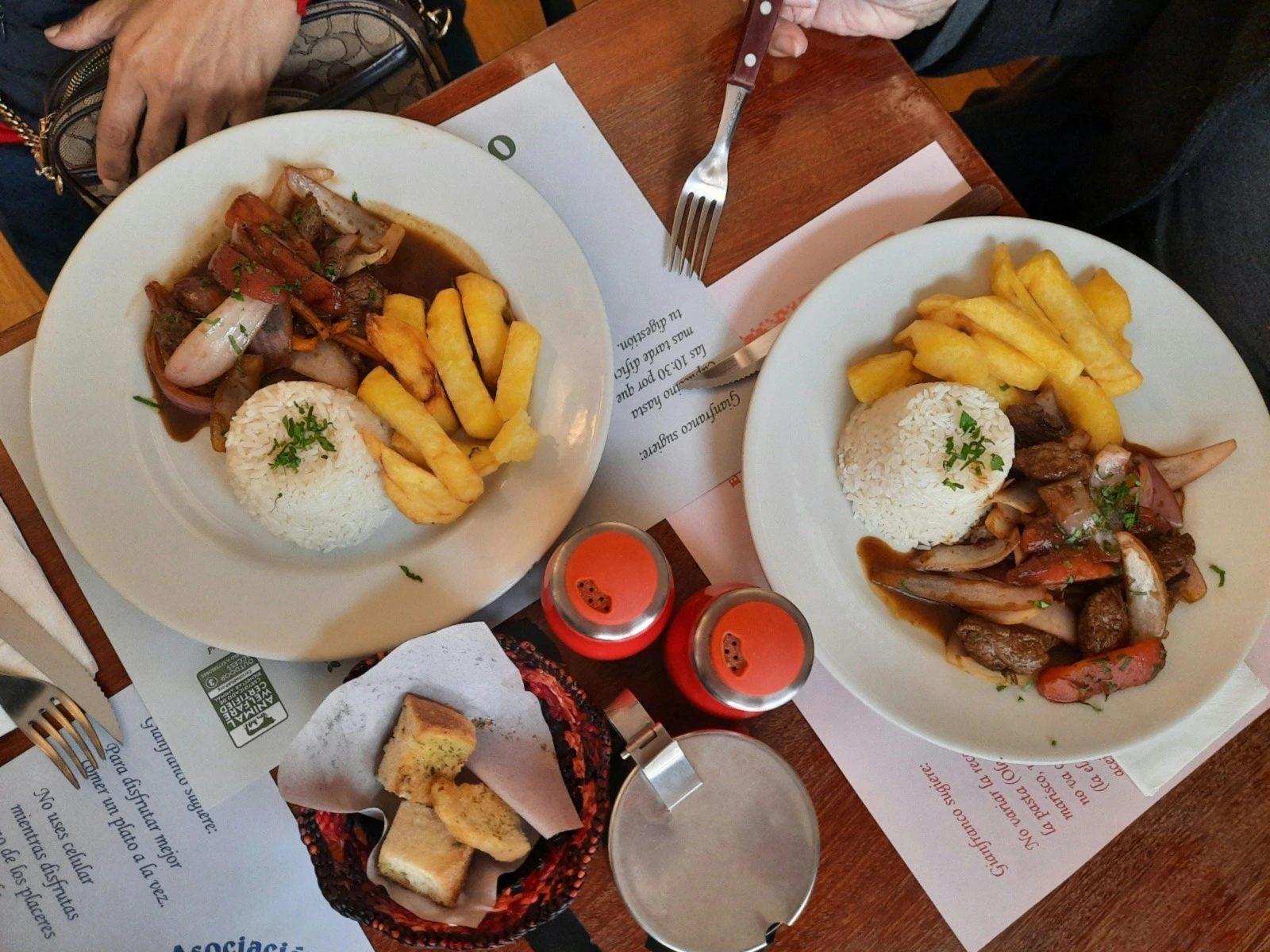
The beef, cut into thin strips, is quickly cooked at high temperature with onions, tomatoes, and yellow chili. The result is a perfect combination of textures and flavors. Additionally, the traditional fried potatoes that accompany lomo saltado offer a crunchy and delicious contrast, completing this culinary masterpiece.

Lima: The birthplace of Chinese-Peruvian fusion
In Lima, the capital of Peru, lomo saltado reached its peak, becoming a symbol of the culinary fusion between China and Peru. In this city, the dish is characterized by a sweet and sour flavor, thanks to the blend of soy sauce and vinegar. It is typically served with rice and fried potatoes, creating a perfect balance between sweet, salty, and acidic.

Arequipa: Regional variations of Lomo Saltado
Arequipa, known as the White City or Ciudad Blanca, is famous for its culinary creativity, and lomo saltado is no exception. In this region, it’s common to find variations of the dish that incorporate rocoto, a local and very spicy chili, or mote, a type of tender corn. These ingredients give a unique twist to the traditional recipe, offering a more intense and bold version.

Cusco: Lomo Saltado with Andean flavors
In Cusco, the former capital of the Inca Empire, lomo saltado adapts to local flavors by using alpaca meat, a native ingredient from the Andes. The use of quinoa and Andean herbs in the recipe gives it a whole new dimension, blending Incan traditions with modern influences.

Traditional recipes vs. Contemporary innovation
Over the years, lomo saltado has maintained its essence while evolving to meet contemporary tastes. Peruvian chefs have experimented with new cooking techniques and innovative presentations, while staying true to the spirit of this beloved dish.
Today, it’s common to find versions of lomo saltado that incorporate ingredients like quinoa, asparagus, or mushrooms. The creativity of chefs is reflected in the transformation of this classic dish, creating new gastronomic experiences that continue to celebrate the fusion of traditions and flavors.

The popularity of Lomo Saltado
Today, lomo saltado remains one of the most popular dishes in Peru, served in both high-end restaurants and casual eateries. The dish has also given rise to variations like Tallarín Saltado and even lomo saltado empanadas and sandwiches.
2023 Update: Renowned Peruvian chef Don Cucho La Rosa reaffirmed in a video that lomo saltado is not Chinese, but 100% Peruvian, with its origin linked to the traditional fondas of Chorrillos in Lima, where it began with a combination of native ingredients like tomatoes and fried potatoes.

Iconic restaurants to enjoy the best Lomo Saltado
Lomo saltado is a dish that has transcended Peru’s borders and can now be enjoyed in restaurants worldwide. In Lima, El Rincón de la Abuela and La Rosa Náutica are famous for their excellent preparation of lomo saltado, where the quality of the ingredients and the cooking technique combine to offer an exceptional flavor. In Arequipa and Cusco, according to the 2024 Summum Awards, restaurants like 13 Monjas and Cicciolina have adapted the recipe to their regional traditions, creating unique dishes that continue to attract both tourists and locals.

Gastronomic tour in Cusco with Kantu Peru Tours
If you’re planning to visit Peru and want to discover the rich Peruvian gastronomy for yourself, you can do so with Kantu Peru Tours’ Cooking Class in Cusco. This adventure begins at 9:00 am with a tour of the vibrant San Pedro Traditional Market, where you can interact with local vendors and buy fresh ingredients like fruits, vegetables, spices, and more. A skilled chef will guide you through every step, explaining the secrets of Peruvian cuisine and giving you the opportunity to take home authentic products for your cooking class.
Next, you’ll enjoy a hands-on class in an authentic kitchen, where you’ll learn to prepare the classic Pisco Sour and the delicious lomo saltado. Kantu Peru Tours ensures a personalized experience, allowing you to enjoy these dishes with your family or individually. It’s a unique opportunity to immerse yourself in Peru’s culinary culture with an exclusive and memorable touch!

Lomo Saltado is much more than just a dish; it is a celebration of Peru’s rich cultural and culinary heritage. Its unique fusion of Peruvian and Chinese ingredients reflects the creativity of local chefs and the historical interaction between cultures. When you enjoy this delicious dish, you’re not just tasting an iconic recipe; you’re connecting with centuries of tradition and culinary passion that have made lomo saltado a symbol of Peruvian gastronomy.
This iconic dish has transcended borders and won the hearts of people around the world, representing the best of criollo cuisine. From Kantu Peru Tours, we invite you to discover the authentic flavor of lomo saltado and immerse yourself in the history that makes it so special. Don’t miss the chance to taste this delicious dish during your next visit to Peru!





No comment yet, add your voice below!