

According to Andean traditions, Corpus Christi in Cusco is not just a religious celebration it is a spectacle of faith, color, and tradition that transforms the streets of the “Navel of the World” into a living canvas of Andean culture. In 2026, this centuries-old festivity will once again blend devotion, gastronomy, and folklore into a unique experience you won’t want to miss. Ready to immerse yourself in the magic of Cusco’s most solemn and joyful celebration? Keep reading to discover everything about Corpus Christi in Cusco with Kantu Perú Tours its history, traditions, dates, locations, food, recommendations, and more.
When is Corpus Christi in Cusco 2026?
Corpus Christi in Cusco 2026 is expected to be celebrated on Thursday, June 4, according to the liturgical calendar, making it one of the most important religious festivals in Peru. During this celebration, 15 saints and virgins from different parishes are carried in procession to the Cusco Cathedral, accompanied by musical bands, traditional dances, and large crowds of devotees who fill the streets with devotion and color. The result is a unique spectacle of religious faith, living tradition, and cultural syncretism in the heart of Cusco.

Two worlds of Corpus Christi in Cusco
Corpus Christi in Cusco represents the encounter between the Catholic faith brought by the Spanish and Andean spirituality. This celebration dates back to the 16th century when colonizers established it to replace the Inca festival of Inti Raymi (Festival of the Sun). However, the people of Cusco skillfully merged both traditions, creating a cultural expression unlike any other in the world.
In 2026, Cusco will commemorate 478 years since the first Corpus Christi celebration (1547), and the city is preparing with:
- New processional platforms (andas) carved by master artisans from San Blas.
- Temporary exhibitions at the Museum of Religious Art showcasing the history of the saints.
- Open workshops where visitors can observe the intricate embroidery work for the sacred images.

The 15 Saints and Virgins: Stories and Devotions
At the heart of Cusco’s Corpus Christi celebration are 15 Saints and Virgins, each arriving from different churches and temples across the city, accompanied by devoted parishioners. They gather in the Cusco Cathedral for the famous “Meeting of the Saints”, where they symbolically debate whether to punish or forgive the sins of the people. Among them, the most revered figures include:
→ Saint Anthony the Abbot – Patron saint of animals; farmers offer miniature pet figurines.
→ Saint Barbara – Protector against lightning, syncretized with the Inca god Illapa.
→ Virgin of Purification – Purifies homes with blessed candles and golden robes.
→ Saint Jerome – Symbol of bilingual wisdom; his heavy platform is carried by scholars.
→ Saint Christopher – Guardian of travelers; taxi drivers offer tiny car charms.
→ Saint Sebastian – Martyr against epidemics; venerated with arrows and prayers.
→ Saint Anne – Mother of Mary; women pray for fertility with baby figurines.
→ Saint Peter – Fishermen’s patron; carries the keys to heaven.
→ Saint Blaise – Healer of throat ailments; ceremonial necklaces are blessed in his honor.
→ Virgin of Bethlehem – Protector of childbirth; mothers offer newborn clothing.
→ Virgin of the Nativity – Blesses marriages with white flowers.
→ Saint James the Apostle – Celestial horseman linked to Inca thunder (Illapa).
→ Saint Teresa – Patroness of writers; receives quill pen offerings.
→ Saint Joseph – Earthly father of Jesus; artisans dedicate miniature tools.
→ Virgin of Remedies – Divine healer; receives wax ex-votos shaped like body parts.

Sacred gastronomy of Corpus Christi
The Chiri Uchu (cold spicy stew), the star dish of Cusco’s Corpus Christi, is a culinary celebration that encapsulates the diversity of the Inca Empire in a single bite. This unique dish combines roasted guinea pig from the Andes, cochayuyo seaweed from the coast, charki (dried meat), a corn tortilla from the Sacred Valley, and an Arequipa-style stuffed rocoto pepper, blending flavors and traditions from across Peru into one extraordinary meal.
This sacred fusion of ecosystems, cultures, and devotion can be tasted at:
→ San Pedro Market: “La Candelaria” stall—a family-run spot preserving the 50-year-old recipe. Best time: 10:00 AM–12:00 PM (before it sells out).
→ San Francisco Square: Budget-friendly, authentic versions at the municipal fair—follow the crowds to the best stalls.
→ Traditional Restaurants: Upscale gourmet twists at “Limo”, “Chicha”, and other top eateries during the festivities.

Tourist experiences during Corpus Christi in Cusco
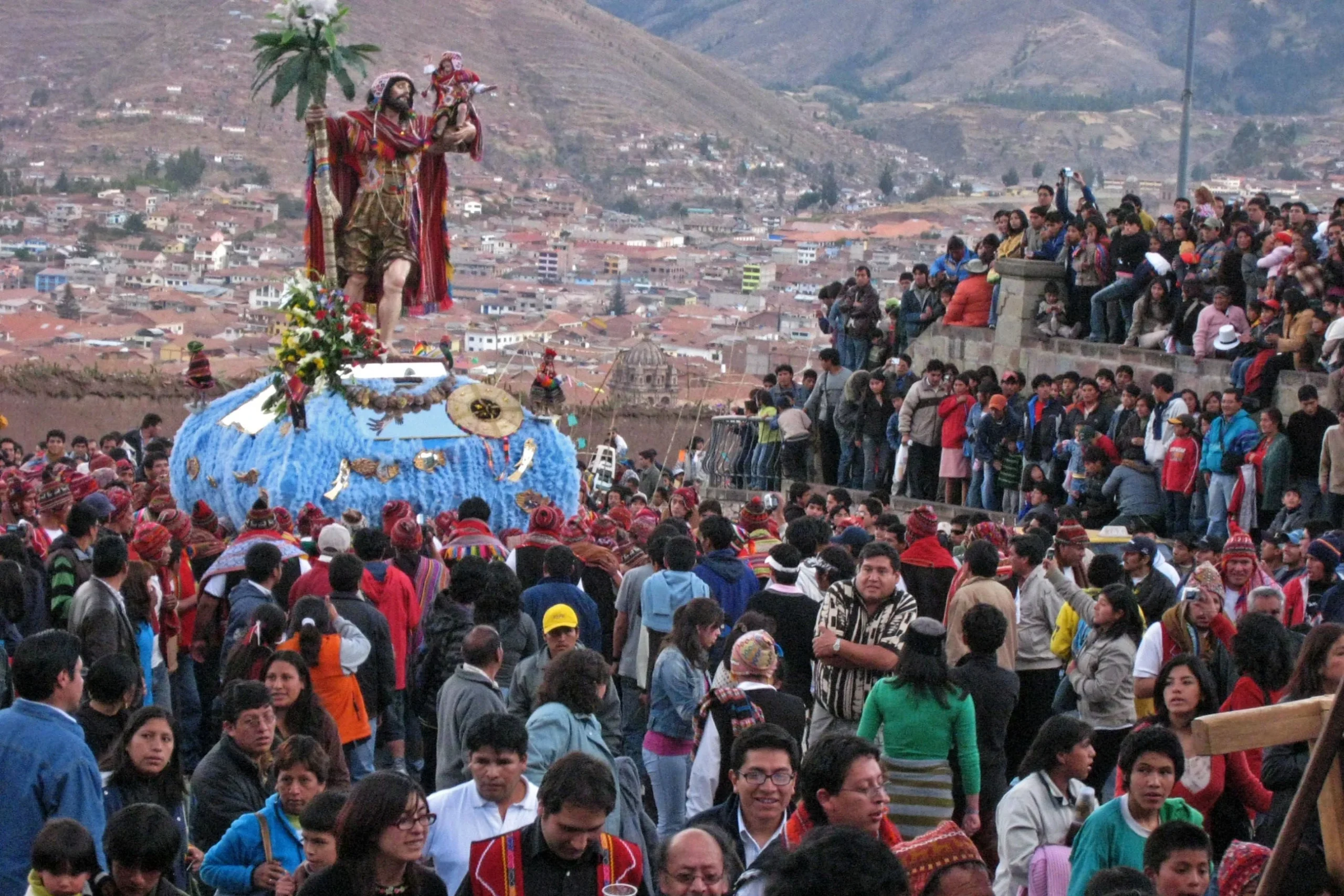
1. The Musical Procession of Saint Cristobal
This moving journey begins in San Blas (ascending the San Blas slope) and is filled with deep devotion. The faithful carry the saint downhill barefoot, an experience you can witness from start to finish in the heart of the city.
- Charangos and drums accompany the procession with lively rhythms.
- The “Singing Bearers”: Devotees chanting traditional coplas in Quechua.
- Magical moment: At Nazarenas Plaza, the procession pauses to bless vehicles.
2. The Festive Duel: Saint Jerome vs. Saint Sebastian
During Corpus Christi in Cusco, the street parades of Saint Jerome (wisdom) and Saint Sebastian (protector against epidemics) engage in an unspoken but thrilling competition as they journey from their respective churches in southern Cusco:
- Saint Jerome advances with brass bands, Qhapaq Chunchu dancers (adorned with jungle feathers), and showers of flower petals.
- Saint Sebastian responds with charangos, acrobatic Ch’unchu dancers, and ritual arrows planted in the ground.
📌 Fun Fact
The challenge is to see which procession arrives first and earns the loudest cheers upon entering the Cathedral.

3. The Gathering of the Saints in the Cathedral
At noon on the main day, the 15 saints and virgins enter the Cathedral in ceremonial order:
- Saint Anthony the Abbot (with his pig) is the first to open the doors, symbolizing protection over the community.
- Virgin of Remedies closes the procession, sealing the sacred gathering.
- The images remain inside for 8 days, receiving offerings and devotional songs before returning to their home churches.

4. The Grand Corpus Christi Procession in Cusco
After their gathering in the Cathedral, the 15 saints and virgins parade together in a majestic procession around Cusco’s Plaza de Armas, following a strict hierarchy, which is led by Saint Peter (as the first Pope) and concluding with the Virgin of Remedies. The procession takes place after the Quechua-language Mass on the main day, June 19, and the highlights are the following ones:
→ Illuminated platforms: Each image is adorned with fresh flowers, candles, and gold-embroidered robes.
→ Musical accompaniment: Bands play funeral marches and huaynos, while devotees toss flower petals and sing in Quechua.
→ Climactic moment: The blessing with the Holy Eucharist (solid gold monstrance) under a shower of petals.

Tips to make the most of this celebration
- Plan your visit in advance if you are traveling during the first week of June, since in 2026 Corpus Christi in Cusco will be celebrated on Thursday, June 4, and the eve falls on Wednesday, June 3. If you also want to combine this experience with other destinations such as Machu Picchu, it is best to organize your train tickets, entrance tickets, and transfers in advance.
- Bring small cash, as it may be useful for small purchases, typical snacks, or quick expenses during the day.
- If you want to better understand the symbolism of the celebration, hiring a private guide or a well-explained cultural tour can greatly enrich the experience, especially during the Entrance of the Saints, the main day, and the visit to the Cathedral.
- Take good care of your belongings and be prepared to walk among crowds, because the historic center, the Plaza de Armas, and the areas around the Cathedral usually gather large numbers of faithful devotees and visitors during the celebration.
- Take the opportunity to try chiriuchu in Plaza San Francisco during the key days of the festival.
- Always confirm the local program closer to the date, because although the liturgical solemnity in 2026 falls on June 4, the exact schedules, routes, and organizational details in Cusco may be adjusted depending on the official program.
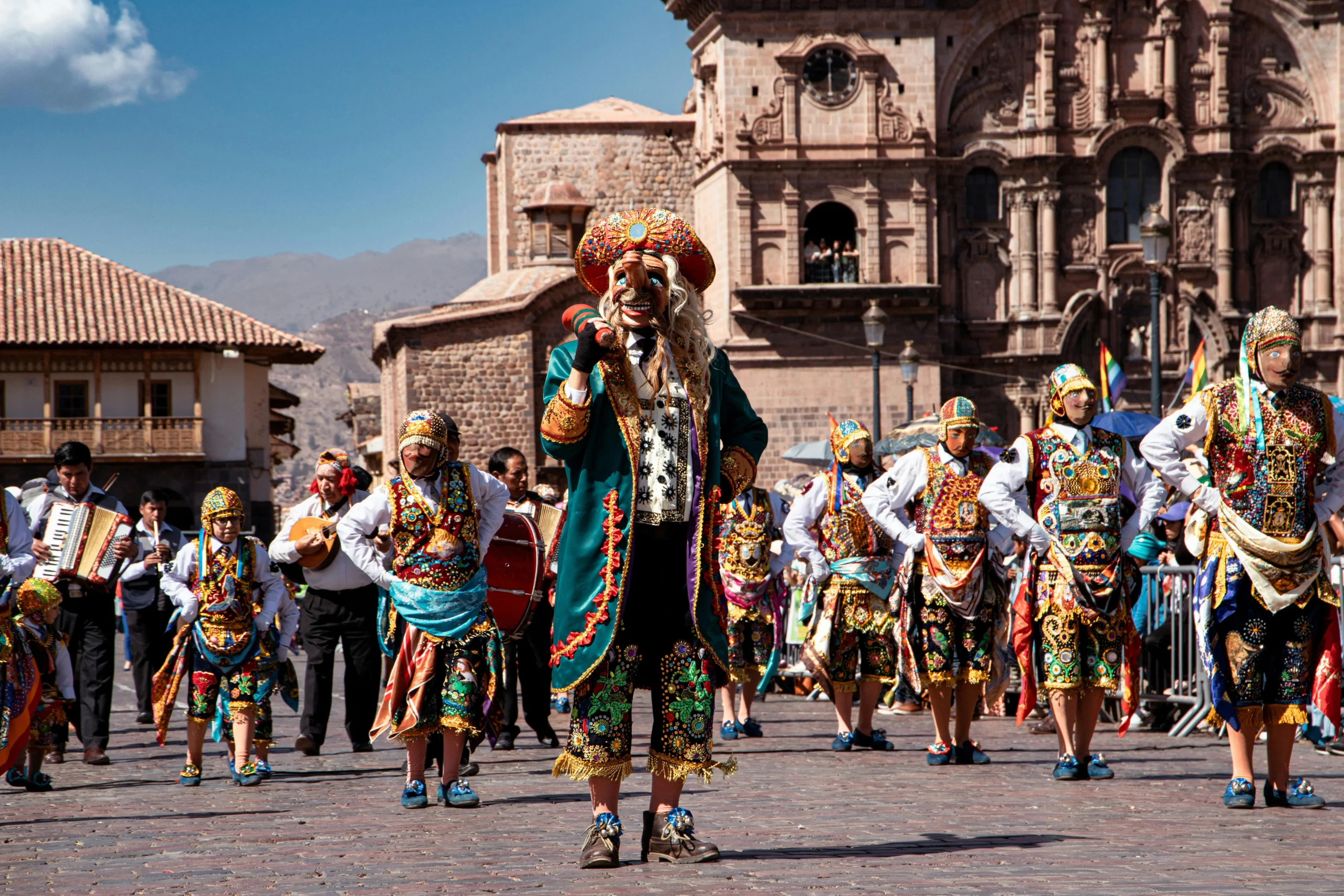
Corpus Christi in Cusco is far more than a religious event—it’s a living fusion of history, faith, and culture, where colonial heritage and Andean roots blend into a breathtaking spectacle of devotion and color. For travelers, it’s a rare opportunity to witness the most profound syncretism in the Americas, savor sacred gastronomy steeped in centuries-old traditions, and experience something that transcends conventional tourism.
By following these tips and planning, your trip will be unforgettable. And remember, for a complete and safe experience, Kantu Peru Tours offers comprehensive packages to visit Peru. We’re happy to assist with any questions or needs you may have!🌄✨





No comment yet, add your voice below!