
The 15 Saints of Corpus Christi in Cusco | Stories and Devotions 2025

Corpus Christi in Cusco is the ultimate expression of Andean syncretism, where 15 sacred images of saints and virgins parade in a stunning procession to the Cathedral, blending Catholic devotion with ancient traditions. With Kantu Perú Tours, discover the fascinating stories behind each image, experience authentic local traditions, and get practical tips to fully enjoy this vibrant celebration filled with color, music, gastronomy, and spirituality in 2025.
Gathering of the 15 Saints of Corpus Christi in Cusco
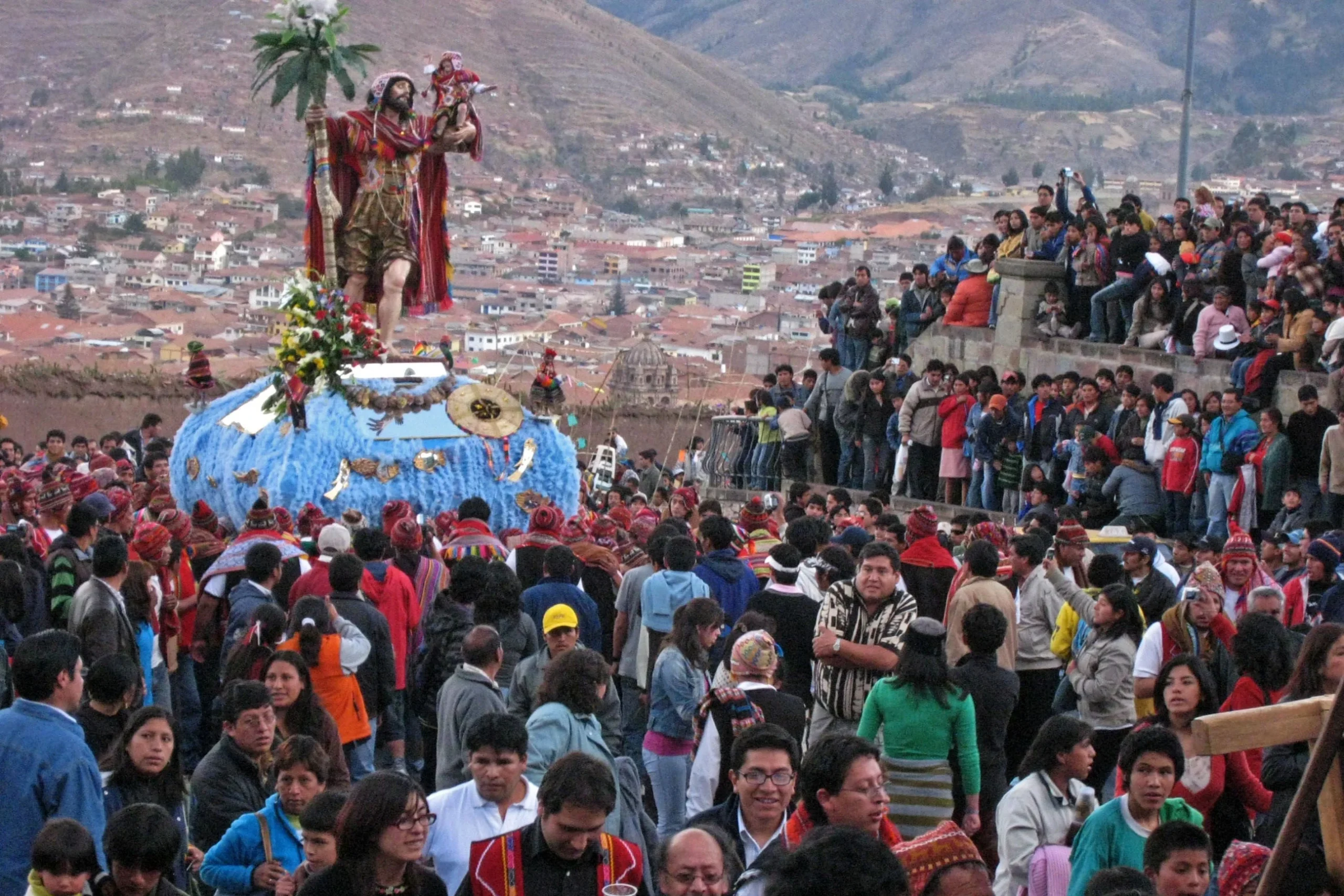
One of the most solemn and thrilling moments of Corpus Christi in Cusco is the gathering of the 15 sacred images of saints and virgins as they enter the Basilica Cathedral of the Virgin of the Assumption, an event known as “La Entrada de los Santos” (The Entry of the Saints). This ceremony marks the official start of the festivities and is a spectacle of deep religious and cultural significance.

The 15 Saints of Corpus Christi in Cusco entry ritual
On the day before Corpus Christi (June 18), according to Cusco’s festive calendar, between 12:00 PM and 5:00 PM, the breathtaking transfer takes place. Each image arrives from its home church in an individual procession, accompanied by its brotherhood of devotees, musical bands, traditional dancers, and faithful followers carrying candles and flowers. The images enter following a historic protocol of greetings and dances:
- Saint Antonio the Abbot enters first.
- Then Saint Jerronimo (from his namesake church).
- Followed by Saint Cristobal (from the Church of San Blas).
- The climax comes when the last image, the Virgen de los Remedios (Virgin of the Remedies), enters, and the Cathedral’s main doors are symbolically closed.

Fun facts about the Gathering
The gathering of the saints and virgins of Corpus Christi in Cusco serves to discuss the behavior of Cusco’s people throughout the year, deciding whether to punish or forgive them and planning a pious future for the community. Some additional intriguing details:
- The heaviest platforms require up to 30 carriers working in rotating shifts.
- The oldest mantle (belonging to the Virgen de Belén) dates back to 1734 and is only used on this day.
- Special technique: Carriers move with short, synchronized steps to avoid damaging the images.
- Since 1950, a logbook has been kept to record notable events from each gathering.

List of the 15 Saints of Corpus Christi in Cusco
1. Saint Antonio
→ Patronage: Protector of animals and farmers
→ History: His image features a pig at his feet, symbolizing protection over domestic animals. Farmers offer him medicinal herbs to bless their livestock.
→ Tradition: During Corpus Christi, devotees bring miniature animal figurines to be blessed.
→ Fun Fact: Some communities celebrate a “Pet Blessing Mass” alongside his image.

2. Saint Barbara
→ Patronage: Protector against lightning and storms
→ History: Her worship merged with that of the Inca god Illapa (god of thunder, lightning, and rain).
→ Attributes: Depicted with a tower (where she was imprisoned) and a lightning bolt.
→ Tradition: Miners and farmers pray to her for protection against storms.

3. Virgin of the Purification
→ Patronage: Purification and home protection
→ History: Linked to pre-Hispanic Andean purification rituals.
→ Tradition: Women offer blessed candles to protect their families.
→ Attire: Her mantle is embroidered with gold and silver threads, renewed yearly.

4. Saint Jeronimo
→ Patronage: Translators and scholars
→ History: Translated the Bible into Latin (Vulgate). In Cusco, he is associated with Quechua-Spanish wisdom.
→ Detail: His platform is one of the heaviest (130 kg), carried by academics and linguists.
→ Fun Fact: Students leave offerings of books before exams.

5. Saint Cristobal
→ Patronage: Travelers and transporters
→ History: According to tradition, he carried the Christ Child across a river.
→ Devotion: Bus and taxi drivers adorn their vehicles with his image.
→ Offerings: Miniature buses and vehicles are left at his feet.
6. Saint Sebastian
→ Patronage: Protector against epidemics
→ History: A martyr shot with arrows; his devotion grew during colonial plagues.
→ Tradition: During the pandemic, many devotees prayed to him for protection.
→ Depiction: A young man tied to a tree with arrows piercing him.

7. Saint Anna
→ Patronage: Mothers and pregnant women
→ History: Mother of the Virgin Mary and grandmother of Jesus.
→ Tradition: Women hoping to conceive offer small baby figurines.
→ Fun Fact: Her image wears a green mantle, symbolizing hope.

8. Saint Pedro
→ Patronage: Fishermen and holder of the keys to heaven
→ History: First Pope of the Catholic Church.
→ Tradition: Fishermen from Lake Titicaca make pilgrimages to his image.
→ Attribute: Carries two keys, symbolizing the Kingdom of Heaven.

9. Saint Blas
→ Patronage: Throat ailments
→ History: A physician and martyr bishop.
→ Tradition: On February 3rd, throat-shaped amulets are blessed to protect children.
→ Fun Fact: His image holds two crossed candles, a symbol of protection.

10. Virgin Belén
→ Patronage: Safe childbirth and newborns
→ History: A Marian devotion linked to the birth of Jesus.
→ Tradition: Mothers offer baby clothes in gratitude.
→ Attire: Blue mantle embroidered with silver stars.

11. Virgin of the Nativity
→ Patronage: Families and marriages
→ History: Represents the birth of the Virgin Mary.
→ Tradition: Newlywed couples ask for blessings on their union.
→ Fun Fact: Her platform is decorated with white flowers symbolizing purity.

12. Saint James the Apostle (Matamoros)
→ Patronage: Spain and conquerors
→ History: Legend says he appeared during battles.
→ Syncretism: Associated with the Inca god Illapa (thunder).
→ Depiction: A knight mounted on a white steed.

13. Virgin Immaculate Conception
→ Patronage: Writers and the sick
→ History: A mystic and Doctor of the Church.
→ Tradition: Literature students leave quills as offerings.
→ Attribute: Holds a book and a quill.

14. Saint Joseph
→ Patronage: Fathers and carpenters
→ History: Husband of Mary and foster father of Jesus.
→ Tradition: Artisans offer miniature tools.
→ Fun Fact: His image always carries a flowering staff.

15. Virgin of the Remedies
→ Patronage: Health and healing
→ History: A Marian devotion brought by the Spanish.
→ Tradition: The sick offer ex-votos (wax figures representing body parts).
→ Mantle: Embroidered with Andean medicinal plants.

Meaning of the joint procession
The joint procession of the 15 saints of Corpus Christi in Cusco embodies three profound meanings and this triad of meanings—unity, fusion, and permanence—makes Corpus Christi a true living cultural heritage of Peru:
1. Unity of the Christian Community – Transcending parishes and neighborhoods, it brings people together as one faithful community.
2. Religious Syncretism – A fusion where Catholic saints interact with Andean cosmology and the apus (sacred mountains).
3. Preservation of Colonial Traditions – A living legacy that has endured for five centuries.
Brotherhoods of the 15 Saints of Corpus Christi in Cusco
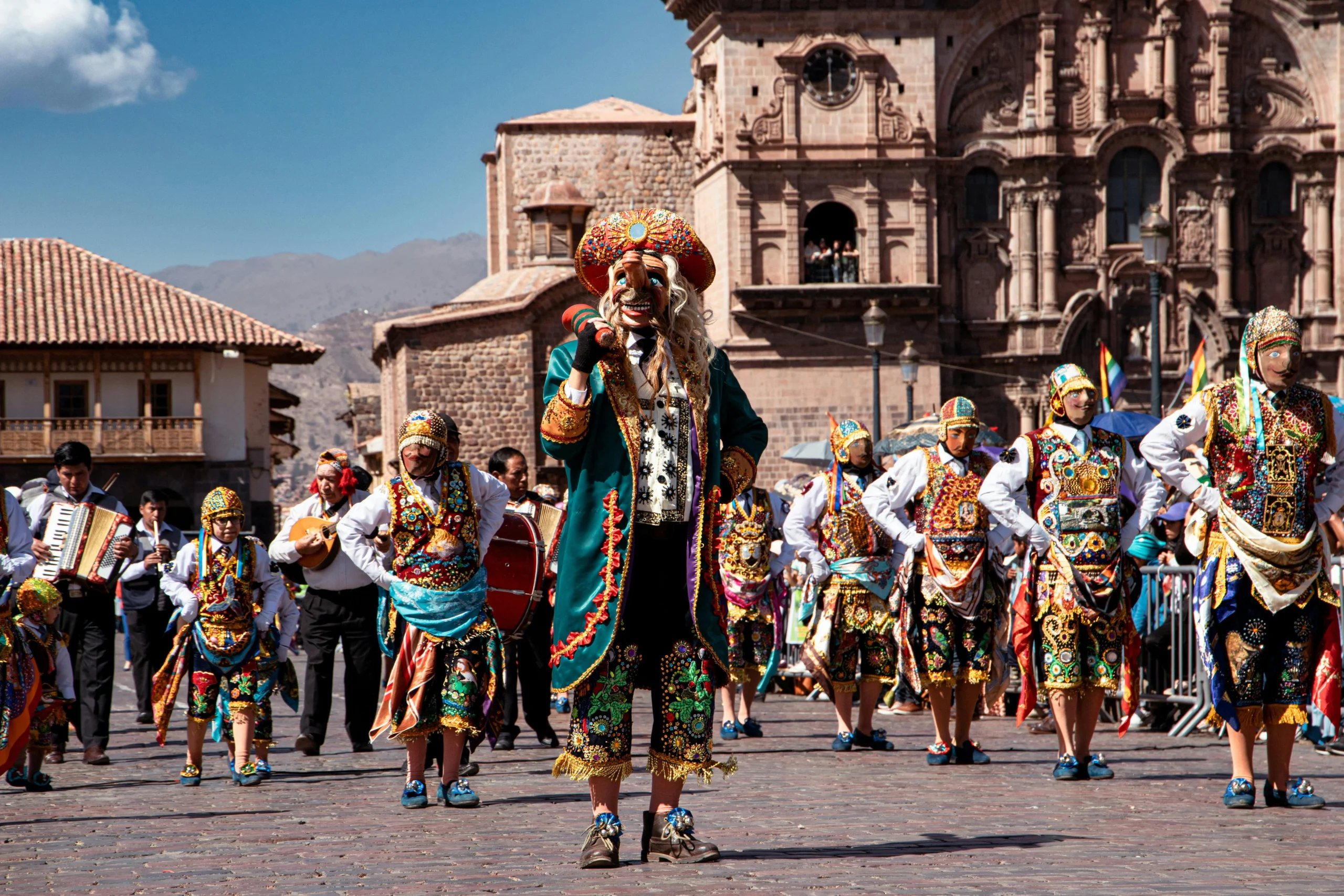
Each saint and virgin is cared for by a specific brotherhood, families who have maintained devotion to these images for generations. During Corpus Christi, these brotherhoods engage in friendly competition to present the most beautifully adorned platforms and the most elaborate garments for their patron figures.
📌 Note: Some of these images were carved in the 16th century by Indigenous artists trained in colonial art schools, blending European techniques with Andean sensibility.

What should I bring as a Tourist?
To comfortably enjoy the saints of Corpus Christi in Cusco festivities, consider bringing:
- Warm clothing (June is dry season but cold, especially at dusk).
- Sunscreen and a hat (Cusco’s sun is intense during the day).
- Water and snacks (though there are street vendors, it’s best to bring your own).
- A camera or phone with a full battery (the parade offers unique photo opportunities).
- Cash in local currency (some services like public restrooms or small cafés may not accept cards).
- Acclimatize 2-3 days in Cusco to prevent altitude sickness 3,350 masl.

Finally, Corpus Christi is far more than a religious celebration—it is the living expression of a tradition that merges Catholic fervor with Andean spirituality. During this spectacular event, the streets transform into a sacred stage, where the 15 revered saints and virgins of Corpus Christi in Cusco parade in vibrant processions, accompanied by music, dances, and a faith that has endured for centuries.
For a complete and safe experience, Kantu Peru Tours offers comprehensive packages to visit Peru. We’re happy to assist with any questions or needs you may have!





No comment yet, add your voice below!