
If you’re planning a trip to Peru, you probably already have ceviche, lomo saltado, or maybe a good ají de gallina on your must-try list. However, there’s a hidden culinary treasure in the Andes that few travelers know about: the Peruvian Huatia, an ancient cooking method that transforms humble potatoes into an irresistible delicacy, thanks to the heat of the earth and fire. Discover more about it with Kantu Peru Tours in this blog.
What exactly is the Peruvian Huatia?
It’s a traditional Andean earth oven where potatoes, meats, and other ingredients are cooked under hot stones and layers of soil. Its origins date back to pre-Inca times, when farming communities celebrated the harvest with this steaming delight. For travelers seeking authenticity, the Peruvian Huatia isn’t just a traditional food in Cusco—it’s an unforgettable cultural experience.

How is the Peruvian Huatia made?
First, it’s important to understand how this unique oven is prepared. Unlike a conventional grill, the Peruvian Huatia requires a precise ritual—with spectacular results: creamy, slightly smoky potatoes and meats so tender they melt in your mouth.
1. A hole is dug in the ground (usually in rural areas or crop fields).
2. The oven is built with compact mounds of earth.
3. The mounds and volcanic stones are heated with firewood until they turn black and reddish.
4. Potatoes, meats (such as lamb or guinea pig), and aromatic herbs are placed on the stones.
5. Everything is covered with more soil, sealing in the heat for slow, even cooking.

Accompaniments in the Peruvian Huatia
When it comes to ingredients, the Peruvian Huatia wouldn’t be the same without its stars: native potatoes, cheese, and ají or uchucuta (Andean chili sauce). Did you know Peru is home to over 3,000 varieties of potatoes, many of which are used in this dish?
→ Yellow potato (ideal for its buttery texture).
→ Black potato (intense flavor, perfect for underground cooking).
→ Peruanita potato (purple hues and a slightly sweet touch).

Variations of the Peruvian Huatia
Not all huatias are the same! If you travel to the Andes, ask for the local version—often prepared on June 24th in Cusco the same date as Inti Raymi Celebration. Each community has its own secret for making the Peruvian Huatia a unique experience. Depending on the region, this dish can vary:
→ Classic Huatia (just potatoes, the purest version).
→ Meat Huatia (guinea pig, lamb, or beef, typical in Cusco and Puno).
→ Mixed Huatia (with fava beans, fresh cheese, and oca root, common in Huancavelica).

The Andean Ritual: More Than Just Food
The Peruvian Huatia isn’t just a cooking method—it’s a ceremony. In many communities like Chinchero, it’s prepared during patron saint festivals, harvests, or family celebrations—where you can even take part with the Chinchero Experiential Tour.
→ Served with chicha de jora (fermented corn beer).
→ Often accompanied by traditional music (huaynos and Quechua songs).
→ Includes a thanksgiving to Pachamama (Mother Earth) before uncovering the oven.

Where to try the Best Peruvian Huatia?
If you want to try an authentic Peruvian Huatia, you could attempt making it yourself—but there are also countryside restaurants in the Sacred Valley that offer this experience. That said, the most authentic version will always be in the fields, prepared by skilled farmers. Here are the best places:
→ Cusco: In communities near Pisac or Chinchero.
→ Puno: During festivals like the Fiesta de la Candelaria.
→ Huancavelica: Where tradition remains almost untouched.

Traveler Tips
1. Order your Peruvian Huatia in advance (preparation takes about 2 hours).
2. Bring warm clothes (it’s usually eaten outdoors in cold areas).
3. Don’t miss the oven-unveiling moment (it’s spectacular for photos!).
4. Try the potatoes with skin on—underground cooking caramelizes the exterior.

Frequently Asked Questions
1. Is Peruvian Huatia the same as Pachamanca?
No. The Peruvian Huatia focuses mainly on potatoes cooked underground, while Pachamanca includes a wider variety of meats (pork, chicken, beef) and is wrapped in banana or bijao leaves for a different flavor.
2. Can Huatia be made without meat? (Is there a vegan option?)
Yes! The traditional version is almost vegan, as it’s based on potatoes, oca, and fava beans. Some communities even prepare it with just aromatic herbs and hot stones for a completely plant-based flavor.
3. Which potatoes are best for Peruvian Huatia?
Native potatoes like yellow potatoes, black potatoes, or peruanita potatoes are ideal for their creamy texture and natural sweetness. In Cusco and Puno, local varieties that withstand underground cooking are used.
4. What drinks pair best with Huatia?
→ Chicha de jora: Its slightly tangy flavor balances the earthiness of the Huatia.
→ Coca tea: Perfect for the cold highlands.
→ Spring water: In Andean communities, they drink pure water to preserve the authentic taste.
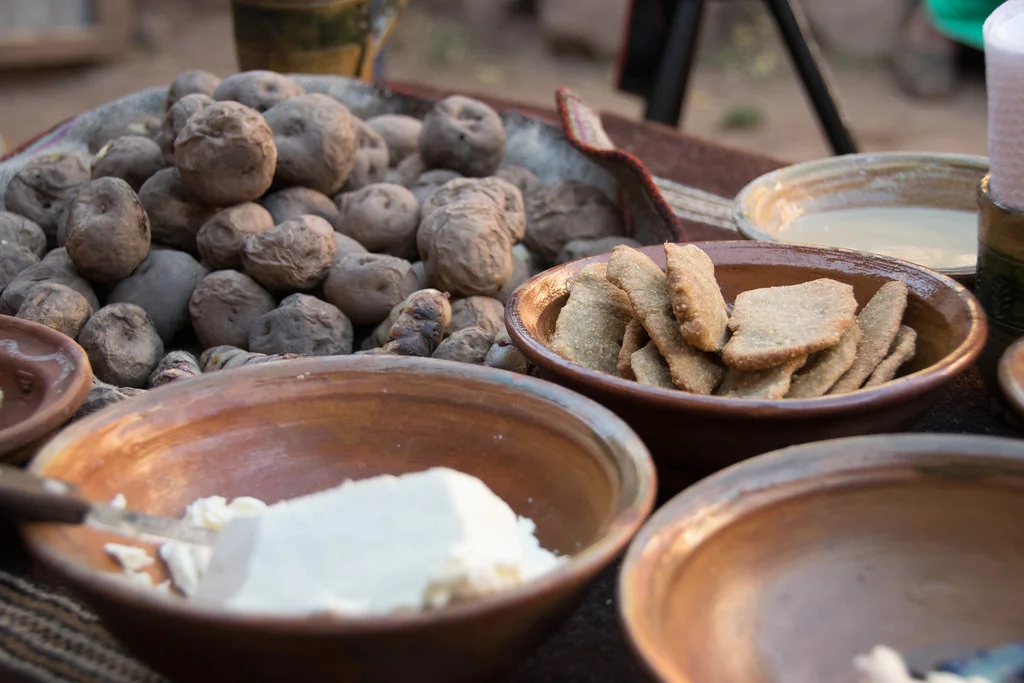
The Peruvian Huatia is much more than a dish—it’s a journey to Andean roots. If you’re looking for authentic flavors and genuine experiences in Peru, you can’t leave without trying this underground-cooked delicacy. Ready for this culinary adventure? The oven is waiting—all that’s left is for you to uncover it!
If you need more information or assistance in planning your adventure in Peru, don’t hesitate to contact us at Kantu Peru Tours. And if you found this guide helpful, feel free to share it with other travelers to help them enjoy a hassle-free experience!





No comment yet, add your voice below!