
The Uros Islands in Puno | The Floating Islands of Lake Titicaca
The Uros Islands are undoubtedly one of the most fascinating destinations in South America. Located on the majestic Lake Titicaca near Puno, these incredible artificial mini-islands made of totora reeds are not only a testament to ancient engineering but also home to a culture that has withstood the test of time. For this reason and more, if you’re planning a trip to Peru, this place is a must-visit. Discover everything you need to know in this practical guide by Kantu Peru Tours—its origin, importance, features, what to see, how to get there, tips, prices, and more. Keep reading!
Origin of the Uros Islands
To understand the importance of the Uros Islands, we must go back to pre-Inca times when the Uros were an indigenous people who inhabited the region before the expansion of the Inca Empire. They built these floating islands as a means of protection and isolation.
According to their oral tradition, the Uros are “the children of the lake,” beings who emerged from its waters and can never drown. These inhabitants are also known for their resistance to modernity. Although their original language (Pukina), which is quite similar to Quechua-speaking that has nearly disappeared, their identity remains alive thanks to tourism and their traditions.

How are the Floating Islands built?
One of the most surprising aspects of the Uros Islands is their construction. Unlike natural islands like Taquile or Amantaní, these are entirely artificial and require constant maintenance, with a lifespan of 20 to 30 years—though new layers of totora must be added every three months.
They use blocks of totora roots (called khili), which float naturally, and on this base, they place woven mats of dried totora to create a firm surface. Additionally, the islands are anchored with ropes and stones to prevent currents from displacing them.
What is life like on the Uros Islands?
Visiting the Uros Islands is like stepping into a world where time seems to have stood still. Despite modernity, its inhabitants maintain a traditional lifestyle:
→ Housing: Small huts made of totora with handwoven roofs.
→ Food: The food is based on fish from the lake (such as carachi and mauri) and the white part of the totora, which is rich in iodine.
→ Economy: Besides fishing, tourism is their main source of income, thanks to handicraft sales and boat rides.

Uros Floating Island Altitude
The floating islands of the Uros sit at an impressive altitude of 3,812 meters (12,507 feet) above sea level on the world’s highest navigable lake. This extreme elevation contributes to the region’s unique climate, with sunny days but cold nights year-round, and also to altitude sickness. The reduced atmospheric pressure and thinner air are noticeable as soon as you arrive in this singular lacustrine ecosystem.
Uros Islands’ location in Puno
The Uros Islands are located on Lake Titicaca, just 5 km from the city of Puno in southern Peru. Their privileged location makes them easily accessible from Puno, with a short boat ride of about 30 minutes. If you’re traveling from Cusco, the islands are approximately 380 km southeast of the city.

How to get to the Uros Islands
Option 1: Independent Travel: Ideal if you prefer to plan your trip at your own pace and save money:
1️⃣ Travel to Puno by bus (6-10 hrs, from S/30) – Enjoy Andean landscapes.
2️⃣ Take a boat from the port (3-4 hrs, S/30-80) – The views of Lake Titicaca are incredible!
3️⃣ Organize your stay on the island: Find a host family and try local food (everything is more affordable).
Option 2: Organized Tour: Perfect if you prefer everything to be ready for you, with no worries other than enjoying the experience:
1️⃣ Book your package (S/150-500) – Depending on the tour operator for Uros Islands, trips to the Uros may include everything from Cusco.
2️⃣ Relax and enjoy: Transportation, guide, meals, and lodging included.
3️⃣ Experience unique moments: Stay with local families and visit neighboring islands on a compact Lake Titicaca tour.

What activities can you do on the Uros Islands?
1. Guided Tour of the Islands: During the walk, you’ll learn about the process of cutting and stacking totora, the anchoring system, and the constant maintenance—renewing layers every few months. You’ll also discover how their community is organized, with spaces allocated for homes, common areas, and even small schools or chapels.
2. Handicraft Demonstration: Totora isn’t just for building islands—it’s also used to create utilitarian and decorative objects. The Uros are expert artisans who will show you how they weave rugs, bags, and hats, or craft miniature versions of their traditional reed boats.
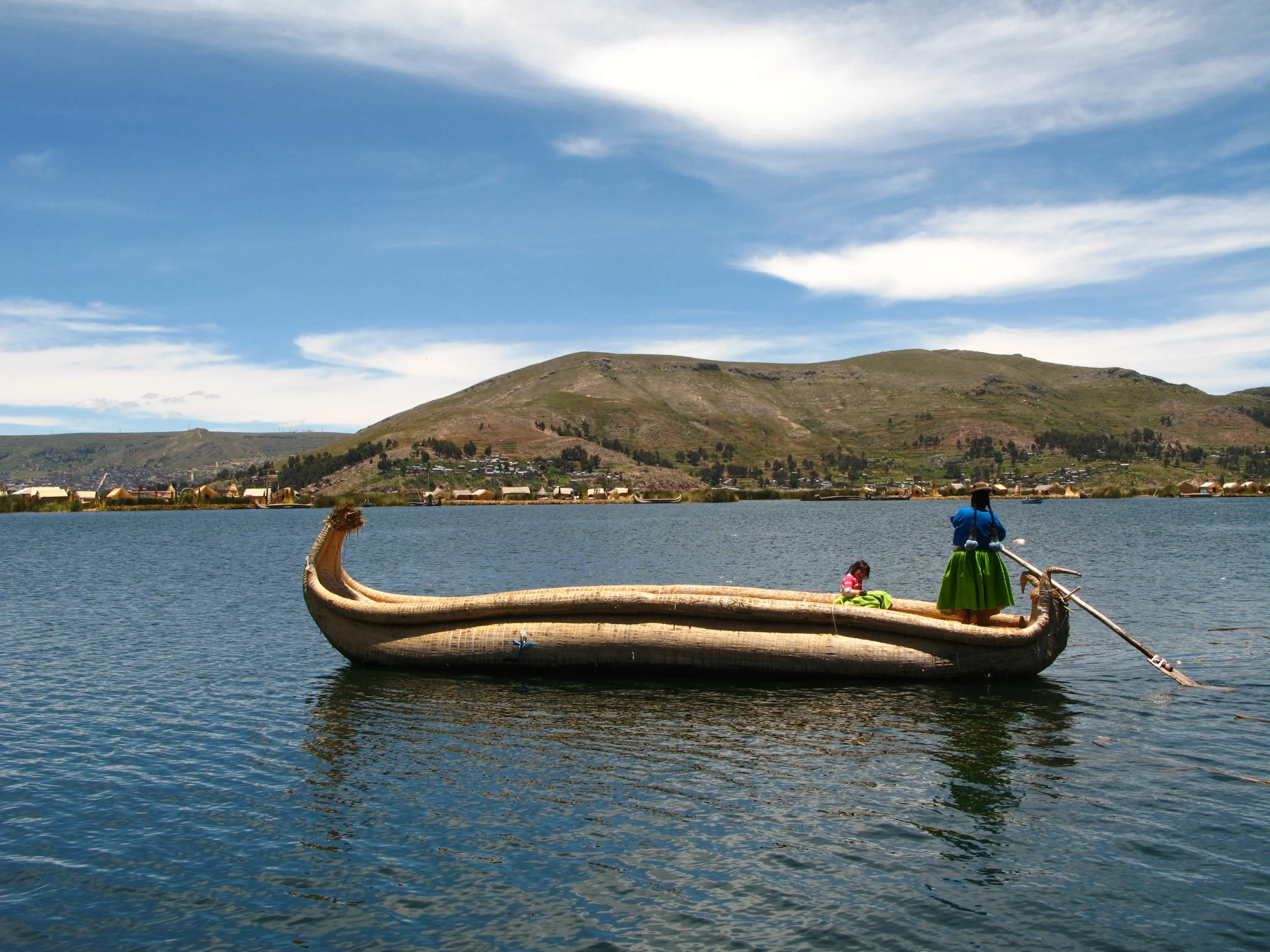
3. Ride on a Totora Reed Boat: Sailing on a boat made entirely of totora is a unique experience. Though the ride is usually short (15-20 minutes), it allows you to appreciate the naval engineering of this culture. Some boats are shaped like animals with cultural significance, adding a mystical element to the journey.
4. Buy Handicrafts: Taking home a souvenir made by the Uros is a direct way to support their economy. You’ll find jewelry made with seeds and stones from the lake, colorful textiles like chullos (Andean hats) and blankets, as well as totora carvings. The designs often hold important cultural symbolism.

Discover more wonders of Puno
If you have extra time, don’t miss these other incredible destinations near the Uros Islands in Puno:
→ Taquile Island: Famous for its textiles, Taquile Island was declared a UNESCO Cultural Heritage Site.
→ Amantaní Islands: Stunning views in the middle of Lake Titicaca.
→ Sillustani: An impressive pre-Inca cemetery with chullpas (funerary towers).

Fun Uros Island facts you didn’t know
1. The islands move: Though anchored, wind and currents can shift them slightly.
2. They use solar power: Some islands have solar panels for electricity.
3. No traditional toilets: Basic latrines are available on tourist-friendly islands.

Tips for a smooth visit in Puno
To make your experience on the Uros Islands unforgettable, follow these recommendations:
→ Bring cash: There are no ATMs, and families sell handicrafts.
→ Sun protection: The sun’s reflection on the lake is intense, even on cloudy days.
→ Cultural respect: Always ask permission before taking photos of locals.
→ Warm clothing: Evenings can get chilly, especially in winter (June-August).

Frequently Asked Questions
1. Can you spend the night on the Uros Islands?
Yes! Some families offer basic lodging in their traditional totora reed homes, often including dinner and breakfast.
2. What restroom facilities are available?
The most visited islands have basic eco-toilets (usually costing 1-2 soles). On less touristy islands, facilities are limited, so it’s best to use the restrooms in Puno before heading out.
3. Is it dangerous to walk on the floating islands?
Not dangerous, but be cautious—the surface is firm yet flexible, with slight movement when walking. Avoid running or jumping, and follow local guides’ instructions.
4. Is the totora reed boat ride worth it?
Absolutely! The 15-20 minute ride (around 10 soles per person) lets you appreciate the Uros’ ancestral boat-building skills. Some Lake Titicaca tours already include this experience.
5. Have the islands lost authenticity due to tourism?
It varies: Islands closer to Puno are more tourist-oriented, while remote areas maintain a more traditional way of life.

The Uros Islands are more than just a tourist spot—they’re a living legacy of a culture that has adapted without losing its essence. If you’re visiting Peru, this magical place is a must-see!
Did this blog inspire you to visit Puno? Please give it a 👍 like and share it with fellow adventurers! Still unsure how to plan your Peru trip? Kantu Peru Tours is happy to help! Ready for this adventure? The Uros Islands in Puno will leave you in awe! 🌿✨





No comment yet, add your voice below!