

- Vinicunca or Pallay Punchu? This is one of the most popular comparisons when deciding which rainbow mountain to visit in Cusco. Pick Vinicunca if you want the most iconic and photographed Rainbow Mountain. Choose Pallay Punchu if you prefer fewer crowds, a less demanding hike, and impressive panoramic views with less effort.
In this blog, together with Kantu Peru Tours, we share a clear and honest comparison to help you choose the option that best suits your time, energy, and travel style. Keep reading to discover which of these colorful mountains is the best fit for your adventure in the Cusco Andes.

Vinicunca or Pallay Punchu: Quick Comparison
MONTAÑA DE COLORES (VINICUNCA) |
PALLAY PUNCHU |
|
ALTITUDE |
Approx. 5,036–5,200 m (16,522–17,060 ft) | Approx. 4,700–4,790 m (15,420–15,715 ft) |
DURATION(Round- Trip) |
Approx. 3–4 hours | Approx 4 hours |
DIFFICULTY |
High | Low |
SCENERY |
Multicolored mountain landscape | Sharp ridgelines with panoramic views of Lake Langui–Layo |
CROWD LEVEL |
High | Low |
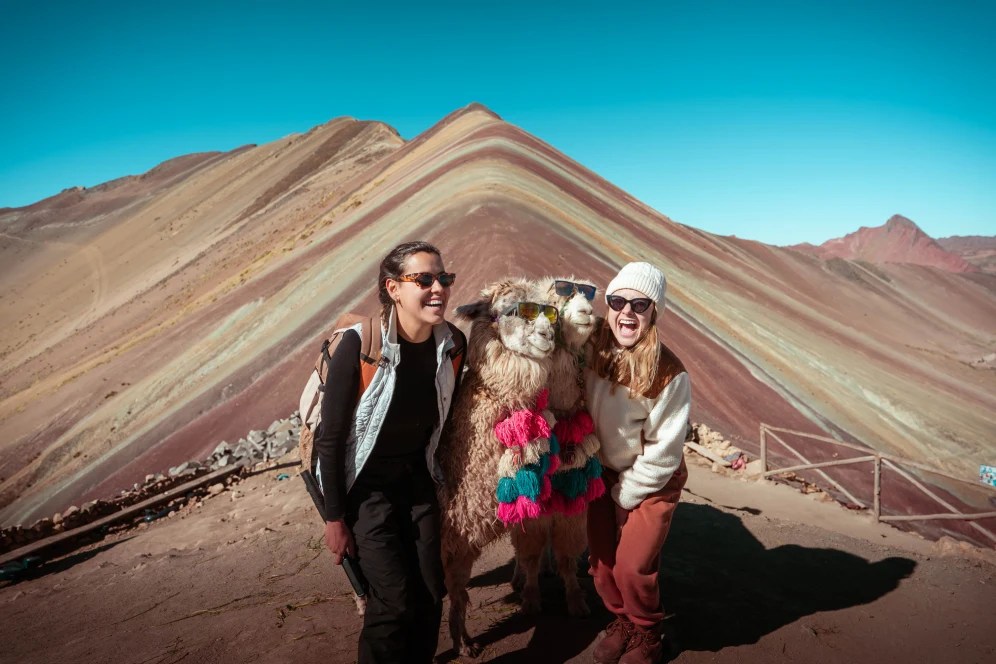
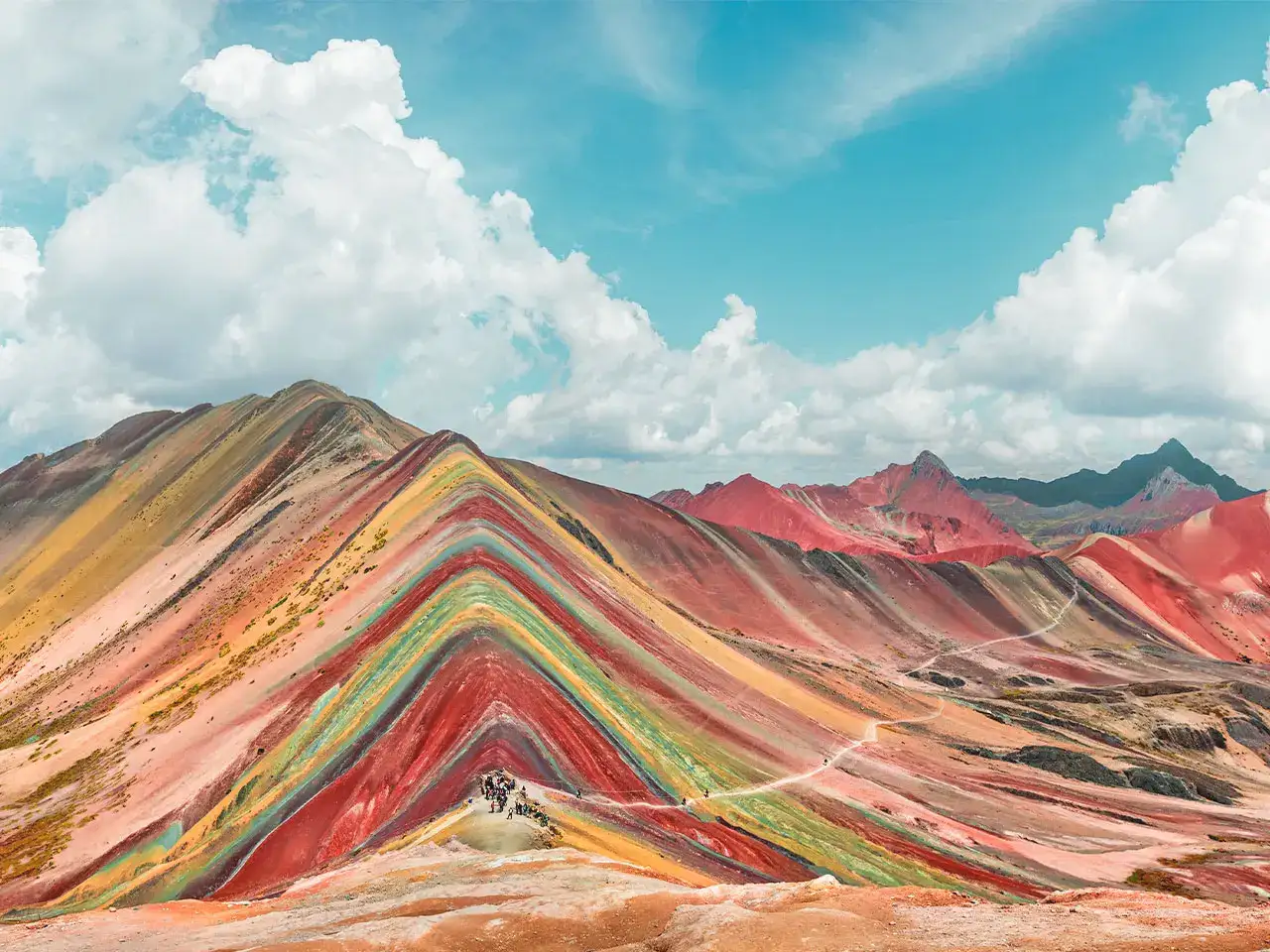
Vinicunca- Rainbow Mountain

What Is Vinicunca and Why Does It Have Colors?
If you’re comparing Vinicunca vs Pallay Punchu, it helps to understand why Vinicunca became so famous. Vinicunca’s colors aren’t “paint” they’re geology. Over thousands of years, layers of sediment rich in minerals, formed in ancient marine, lake, and river environments, accumulated and were compacted into the mountain. With time, water, wind, and humidity triggered chemical reactions: some minerals oxidized, others transformed, and the mountain’s natural stripes reds, yellows, greens, and violets emerged, creating the iconic landscape seen today.
-
- Fun fact: Geologists and experts say this phenomenon only became visible after the glaciers that once covered the mountain began to melt. Vinicunca used to receive constant snowfall, and the colorful layers weren’t fully exposed until the early 1990s.
Where Is Vinicunca Located and What Is Its Altitude?
It is located in the Cusco region of Peru, specifically in the province of Canchis, near Nevado Ausangate, and is visited at a high altitude of approximately 5,200 meters above sea level, which requires prior acclimatization.
-
- We offer you the Vinicunca day tour. We take care of all the details so you can enjoy a worry-free experience.
What to see in Vinicunca: viewpoints, landscapes, and the bonus of the Red Valley
-
- Traveler Tip: Plan ahead to secure better hotels and availability. Want to plan stress-free? Kantu Peru Tours will be happy to help you through the entire process.

Pallay Punchu (Rainbow mountain)
What is Pallay Punchu and why is it different from Vinicunca?
Pallay Punchu is often considered one of the most striking rainbow mountains in Cusco, while Vinicunca, depending on the light and season, can display softer tones. What truly sets Pallay Punchu apart is its sharp, pointed silhouette resembling the folds of a woven Andean poncho. That’s where its name comes from, along with its nickname, the “sharp mountain.”
Pallay Punchu is different from Vinicunca in three key ways:
- Relief: At Pallay Punchu, the color stripes appear on defined ridges and blade-like edges, creating a more dramatic view. Vinicunca is more rolling, with wide bands spread across smoother slopes.
- Altitude: Vinicunca sits around 5,200 m, which often feels more demanding. Pallay Punchu is visited at a lower elevation, which can be more manageable for some travelers.
- Crowds: Vinicunca is the most famous and usually attracts more visitors, while Pallay Punchu tends to stay quieter and more peaceful.

Where is Pallay Punchu located, and at what altitude can it be visited?
Pallay Punchu is located south of the city of Cusco, in the district of Layo, in the province of Canas, very close to Lake Langui–Layo. It sits at an altitude between 4,700 and 4,790 meters above sea level.
-
- The best option is to book a tour with a trusted agency, so you have the route, schedule, and transportation fully organized. At Kantu Peru Tours, we offer a 1-day Pallay Punchu tour and take care of every detail for a smooth, worry-free experience.
What to see in Pallay Punchu
If you’re choosing between Vinicunca or Pallay Punchu and want something different, Pallay Punchu stands out for:
- Blade-like ridges and sharp edges (its signature shape), with mineral stripes that create reddish, ochre, green, and yellow tones depending on the light.
- Langui–Layo Lake (Layo Lake) from above: it looks like a huge mirror, contrasting beautifully with the mountain’s colors.
- Surrounding Apus and peaks (many routes mention Apu Taqllo), adding an epic backdrop for photos.
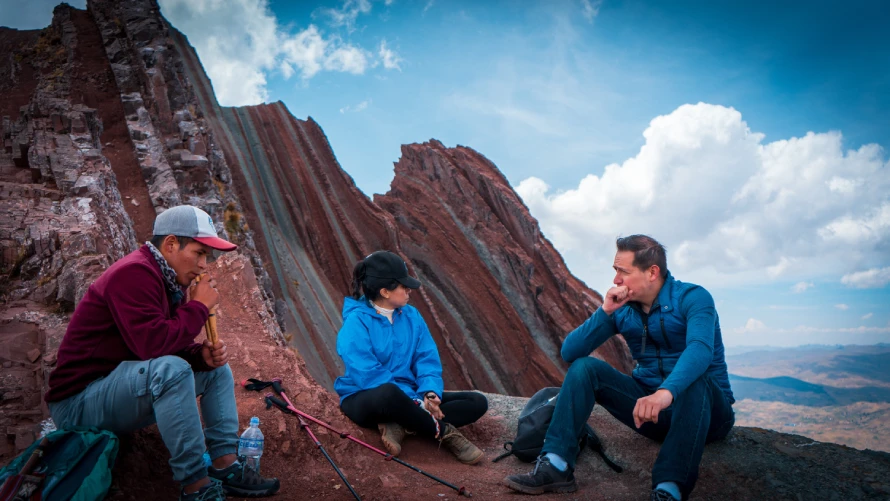
Altitude sickness on the trail: take breaks, stay hydrated, and keep a steady pace at Vinicunca and Pallay Punchu
Best Season for Vinicunca vs Pallay Punchu: Dry vs Rainy
| TEMPORADA | VINICUNCA | PALLAY PUNCHU |
| RAINY SEASON (NOVEMBER- MARCH) | Unpredictable weather with frequent rain. The landscape looks fresher and more vibrant, but the trail can become slippery. | Variable conditions: rain and mist are common; at higher elevations there may be hail or even snow. Fewer visitors, and if the sky clears, the colors appear more intense. |
| RECOMENDATIONS | Bring a waterproof poncho or jacket and proper hiking boots due to mud and slippery sections. | Wear waterproof clothing and be prepared for sudden visibility changes (clouds/fog). |
| DRY SEASON (April–October) | Mostly sunny days with better visibility for the classic photo. Higher tourist flow. | Clearer skies and more stable weather. Drier trails and a more comfortable hike. |
| RECOMMENDATIONS | Book in advance due to high demand (hotels and tours). | Clearer skies and more stable weather. Drier trails and a more comfortable hike. |
-
- 🔎 Fun Fact: Weather in high altitude areas can change very quickly. That’s why many travelers check SENAMHI before their tour to see if there will be clouds, rain, or clear skies in Cusco. If rain or mist appears, visibility can shift within minutes and so can your photos.
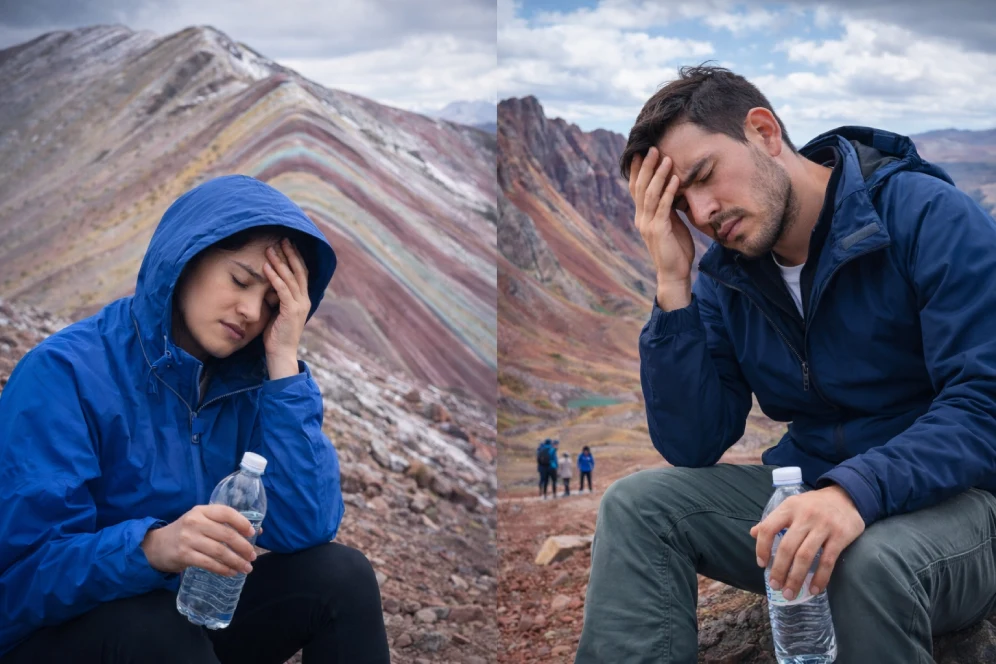
Altitude Sickness Tips for Vinicunca or Pallay Punchu
It’s essential to understand that the success of your hike to Vinicunca or Pallay Punchu depends entirely on proper acclimatization. At elevations above 4,700 meters, your body feels the change in air pressure and reduced oxygen levels, so it’s not a good idea to push yourself too hard on the first day.
- The most recommended approach is to stay in Cusco for at least one or two days before the tour so your lungs can adjust to the altitude. During this time, walk slowly, drink plenty of water, and avoid heavy meals.
- Taking these extra hours to adapt is the key to ensuring that, once you reach Vinicunca or Pallay Punchu, your only focus is enjoying the scenery and capturing the best photos.
What to Bring for Vinicunca or Pallay Punchu
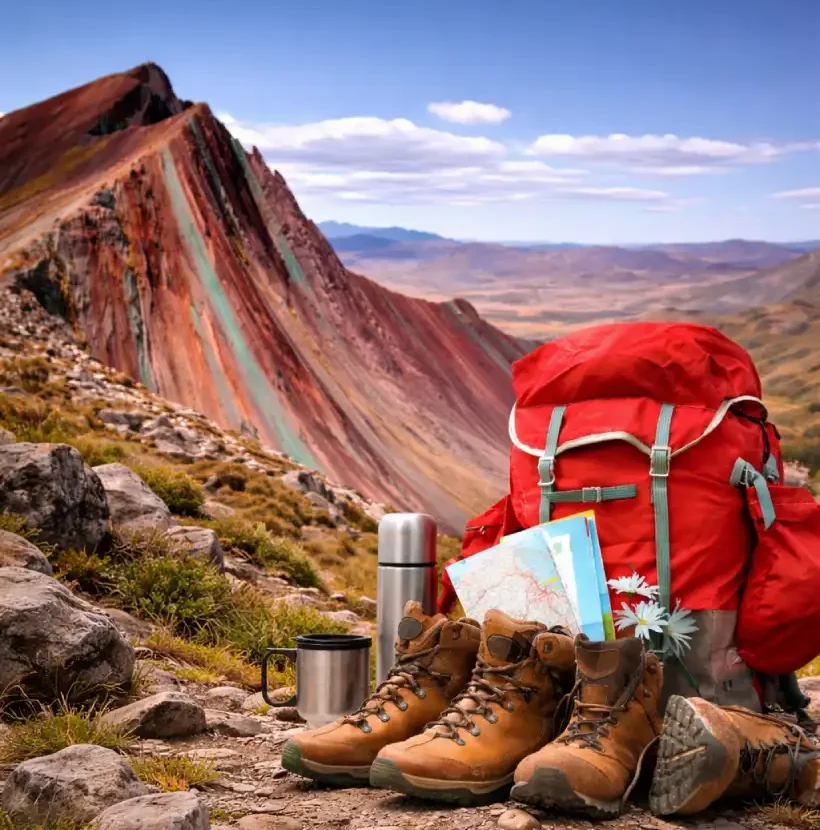
Clothing and Gear Checklist
If you’re still unsure whether to visit Vinicunca or Pallay Punchu, this checklist works for both:
-
-
Small daypack (water, snacks, essentials)
-
Extra cash in soles (optional souvenirs)
-
Hat or cap, sunglasses
-
Sunscreen (SPF 35+)
-
Comfortable walking shoes
-
Lightweight layers + warm clothing
-
Waterproof jacket or rain poncho (especially from October to March)
-
Camera and extra batteries
-
Which Is Better: Vinicunca or Pallay Punchu?

In the end, there isn’t one “best” option for everyone—only the one that fits you best. If you want the most famous Rainbow Mountain, the classic photo, and you don’t mind the effort or altitude, Vinicunca is the right choice. But if you prefer a different, sharper-looking landscape, a quieter atmosphere, and views over Lake Langui–Layo, Pallay Punchu may be your best plan.
The key when choosing Vinicunca or Pallay Punchu is to consider your time, fitness level, tolerance to altitude, and the type of experience you’re looking for. And if you’re still unsure, take your time to plan—so your trip is safe, smooth, and truly enjoyable.





No comment yet, add your voice below!